
Short Answer
The most reliable way to find your exact property boundary before installing a fence is to use a professional land survey or verified survey records. Deeds, maps, and existing markers can help, but only a current survey legally confirms boundary lines with accuracy sufficient for fence placement.
Why This Question Matters
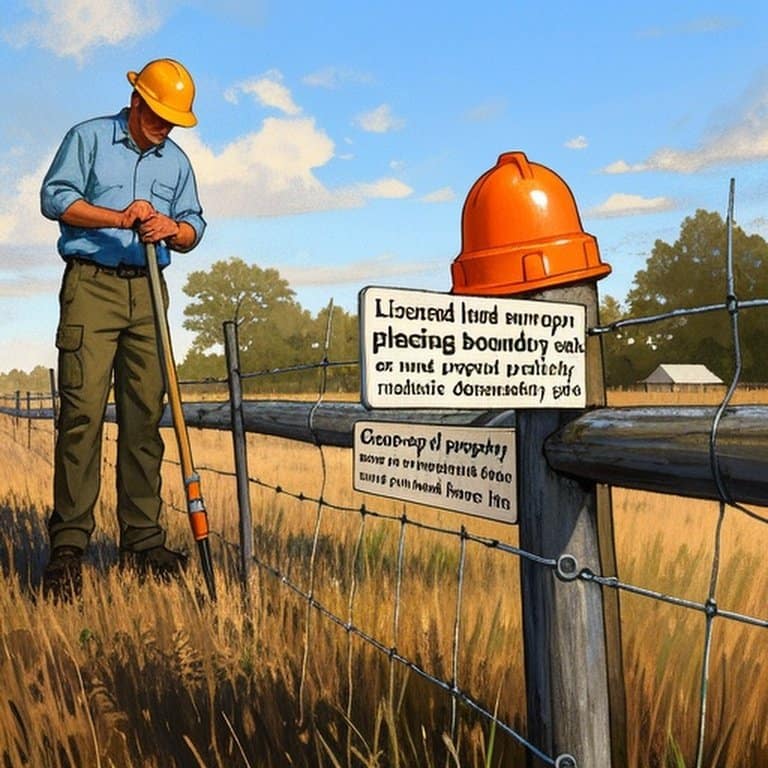
Most fence disputes don’t start with bad intent—they start with assumptions. Property owners often rely on old fences, tree lines, or online maps to guess boundaries, only to discover later that these markers were inaccurate. When a fence is placed even slightly off the true line, it can lead to forced removal, legal disputes, or loss of control over the fence. For livestock properties, a boundary mistake can also create safety and containment risks. Finding the boundary first is far cheaper and easier than fixing a mistake later.
Key Factors to Consider
- Accuracy and age of existing survey records
- Visibility and reliability of boundary markers
- Differences between legal boundaries and physical landmarks
- Local requirements for survey-based fence placement
- Risk tolerance for boundary-related disputes
Detailed Explanation
Property boundaries are defined by legal descriptions, not visible features. While fences, roads, trees, or hedgerows may appear to mark a boundary, they often reflect convenience rather than accuracy. Deeds and plat maps describe boundaries using measurements, bearings, and reference points that are not always obvious on the ground. Without proper interpretation, these documents can be misleading.
A licensed land surveyor uses these legal descriptions along with physical measurements to locate boundary lines precisely. Surveyors place markers—often stakes or pins—that legally identify corners and lines. These markers provide the most defensible reference for fence placement. In many areas, a recent survey is the only evidence that holds up if a dispute arises.
Online mapping tools and county GIS systems can be useful for general orientation, but they are not precise enough for construction decisions. Their margins of error are often several feet. Relying on them for fence placement creates significant risk, especially near neighboring land.
In practice, the safest approach is to confirm boundaries before building, even if the fence will be placed slightly inside the line. This step ensures clarity, protects your investment, and prevents conflicts that are far more costly to resolve later.
Using Existing Records and Markers Carefully
Property deeds, subdivision plats, and prior surveys can provide valuable information, but they require careful interpretation. Markers may be missing, moved, or buried over time. Older surveys may also reflect outdated reference points. These records are best used as supporting information, not final authority, unless confirmed by a professional surveyor.
Why Physical Landmarks Can Be Misleading
Natural features like trees, streams, or fence remnants often shift over time. What looks like a boundary may actually reflect historical use rather than legal ownership. Relying on landmarks alone is one of the most common reasons fences end up on the wrong property line. Legal boundaries rarely align perfectly with visible features.
Survey Timing and Practical Planning
Surveys are most effective when scheduled before fence layout begins. Once posts are set or wire is tensioned, even small boundary corrections become expensive. Planning the survey early allows you to design the fence with appropriate setbacks and avoids last-minute changes that disrupt installation schedules.
When This Works Well
- A recent survey is available or easily obtained
- Boundary markers are clearly placed and documented
- Fence design allows for small interior setbacks
- Neighbor disputes have not yet arisen
When This Is Not Recommended
- Relying solely on old fences or tree lines
- Using online maps as the primary boundary reference
- Installing fences before confirming legal boundaries
- Assuming long-term use equals legal ownership
Alternatives or Better Options
Building with an Interior Setback
Placing the fence several inches inside your property reduces dependence on perfect boundary accuracy.
Shared Survey or Boundary Confirmation
In some cases, neighbors may agree to confirm boundaries together, reducing future disputes.
Temporary Layout Before Final Installation
Marking a proposed fence line before construction allows time to verify boundaries and adjust if needed.
Cost / Safety / Practical Notes
A professional survey typically costs a fraction of fence relocation or legal dispute expenses. Moving a completed fence can double labor costs and compromise materials. For livestock fencing, boundary mistakes also introduce safety risks during removal or reinstallation, especially with tensioned or electric systems. From a practical standpoint, clear boundaries simplify maintenance, upgrades, and future property transactions. Surveys are not just a legal safeguard—they are a long-term operational investment.
📍 Video Demonstration
Quick Takeaway
If you don’t know exactly where your property line is, you don’t yet know where your fence should go.