
Short Answer
AC fence chargers plug into mains power and deliver the most consistent, highest output. DC chargers run on batteries and are portable but limited in runtime and power. Solar chargers combine batteries with panels, offering off-grid convenience but with performance that depends on sunlight and system sizing.
Why This Question Matters
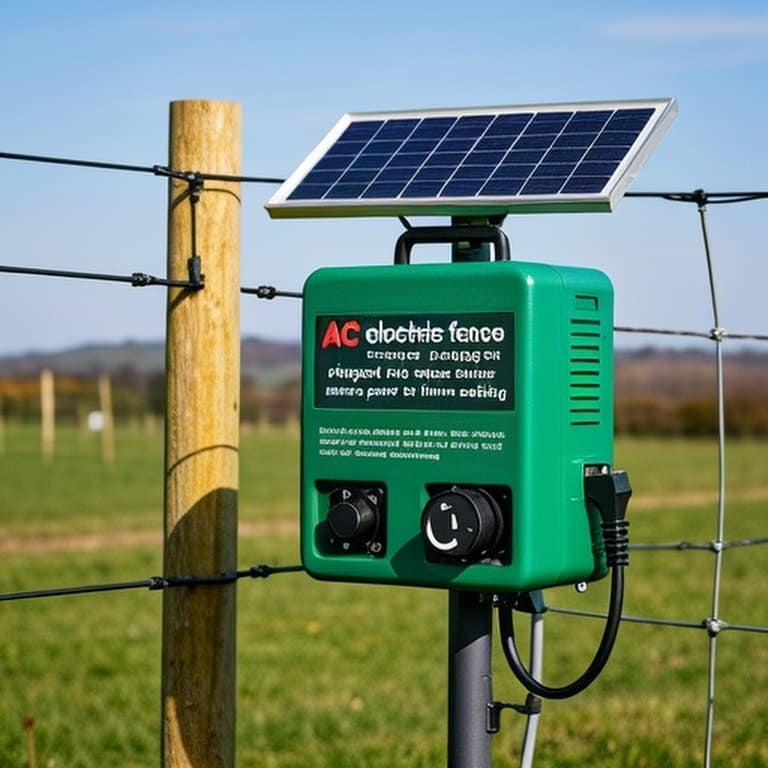
Choosing the wrong power type is a common reason electric fences underperform or fail entirely. Many users focus on price or portability without understanding how power source affects reliability, maintenance, and shock strength. A charger that works well in one setting can be frustrating in another. Replacing or upgrading chargers after installation adds cost and downtime. Understanding the real differences between AC, DC, and solar systems helps you choose a charger that fits how—and where—you actually use your fence.
Key Factors to Consider
- Access to reliable grid electricity
- Fence length and electrical load
- Livestock pressure and containment needs
- Portability and seasonal movement
- Maintenance tolerance and oversight
Detailed Explanation
AC fence chargers connect directly to household or farm power. They provide the most stable voltage and highest joule output, making them ideal for permanent perimeter fences and long runs. Because they recharge continuously, performance remains consistent regardless of weather or fence load. When grid power is available, AC chargers are usually the most reliable option.
DC fence chargers operate on batteries, typically 12-volt units. They are useful for temporary fencing, rotational grazing, or remote areas without electricity. Their main limitation is runtime. As batteries discharge, output weakens unless batteries are replaced or recharged regularly. DC chargers are practical for short-term or mobile setups but require active management.
Solar fence chargers combine a battery with a solar panel. They are designed for off-grid locations and reduce manual battery handling. Performance depends heavily on panel size, battery capacity, and sunlight availability. In strong sun, well-sized solar units perform reliably. In shaded areas or extended cloudy periods, output can drop unless systems are oversized. Solar chargers trade consistency for independence.
The key difference is not just power source, but consistency over time. AC offers constant output, DC offers mobility, and solar offers autonomy—with each choice involving trade-offs.
Reliability vs Convenience
AC systems prioritize reliability and minimal maintenance. DC and solar systems prioritize convenience and placement flexibility. Problems arise when convenience is chosen for permanent, high-load fences where reliability matters most.
Fence Load and Power Demands
Long fences, multiple wires, vegetation contact, and high-pressure livestock demand consistent energy delivery. These conditions favor AC or oversized solar systems. Small DC units struggle under sustained load.
Seasonal and Environmental Effects
Solar performance varies with season, latitude, shading, and weather. DC systems are unaffected by sun but depend entirely on battery health. AC systems are the least affected by environmental variation but depend on grid access.
When This Works Well
- AC chargers for permanent, high-demand fences
- DC chargers for short-term or mobile fencing
- Solar chargers for remote locations with strong sun exposure
- Systems sized above minimum requirements
When This Is Not Recommended
- Using DC chargers for long, permanent fences
- Undersized solar units in shaded or cloudy regions
- Choosing portability over reliability for containment fencing
- Ignoring long-term maintenance needs
Alternatives or Better Options
AC with Battery Backup
Combining AC power with battery backup maintains performance during outages.
Oversized Solar Systems
Larger panels and batteries improve consistency and reduce seasonal drops.
Hybrid Fence Layouts
Permanent AC-powered perimeters with DC or solar interior fencing balance reliability and flexibility.
Cost / Safety / Practical Notes
AC chargers typically offer the best performance per dollar when power is available. DC and solar systems cost more over time due to batteries and maintenance. Safety across all types is similar when systems are properly installed—shock duration is controlled, not continuous. In practice, mismatched power type is a bigger cause of failure than incorrect joule rating. Choosing the right system upfront prevents repeated upgrades and livestock challenges.
📍 Video Demonstration
Quick Takeaway
AC chargers deliver consistency, DC chargers deliver mobility, and solar chargers deliver independence—choose based on reliability needs, not convenience alone.