
Short Answer
An electric fence charger can effectively power about one-third to one-half of its advertised maximum distance under real-world conditions. Fence length, number of wires, vegetation contact, grounding quality, and livestock pressure all reduce range. For reliable performance, most systems require a charger rated well beyond the actual fence length.
Why This Question Matters
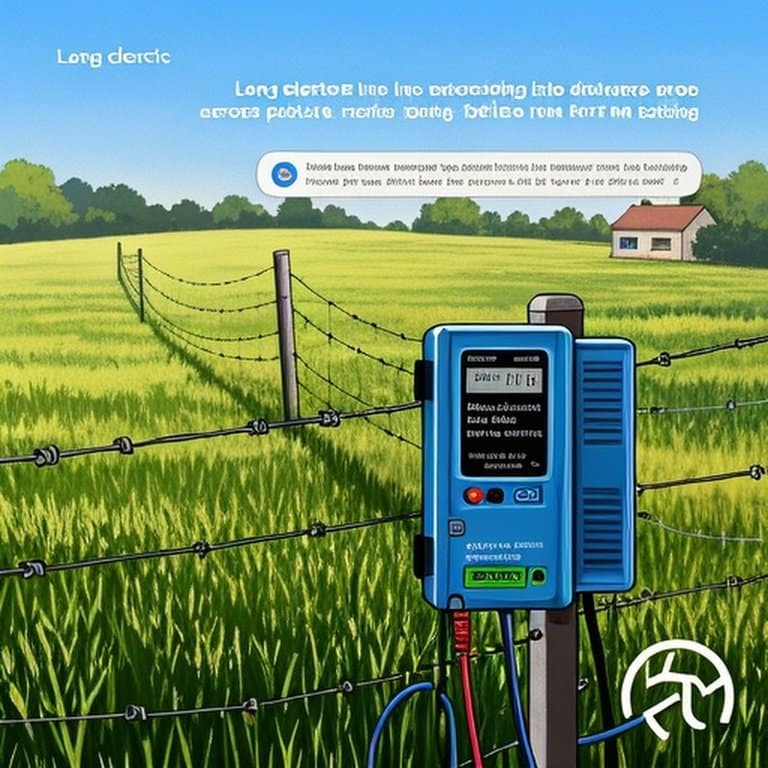
This question usually appears when a fence looks fine on paper but performs poorly in the field. Many owners assume the mileage rating on the charger box reflects real use, only to discover voltage drops at the far end of the fence. Weak shocks lead to livestock testing boundaries, escapes, and constant troubleshooting. Misjudging effective distance often results in replacing chargers or redesigning fences. Understanding realistic range expectations helps prevent underpowered systems and wasted investment.
Key Factors to Consider
- Advertised charger distance versus real electrical load
- Total fence length including all connected runs
- Number of wire strands and fence complexity
- Vegetation contact and seasonal growth
- Grounding system efficiency
Detailed Explanation
Electric fence chargers are rated under ideal laboratory conditions: single wire, no vegetation, excellent grounding, and minimal resistance. Real fences rarely meet these conditions. Each additional wire strand increases load. Gates, splices, and connectors add resistance. Vegetation touching the wire continuously drains energy.
Because of this, effective distance is always shorter than advertised. A charger labeled for 15 miles may reliably power only 5–7 miles of fence once real conditions are introduced. This reduction is normal and expected, not a defect.
Grounding plays a major role. Poor grounding shortens effective range more than almost any other factor. Even a high-joule charger cannot deliver energy efficiently without a complete circuit. Many “distance problems” are actually grounding problems amplified by long fence runs.
Livestock pressure also matters. High-pressure animals require stronger voltage at the far end of the fence, which shortens usable distance further. Experienced installers plan for worst-case conditions, not best-case ratings, when estimating how far a charger can power a fence.
Fence Layout vs Straight-Line Distance
Fence chargers do not power distance in a straight line—they power total connected wire length. A compact paddock system with many strands may place more load on a charger than a long, single-wire perimeter fence. Total wire length matters more than physical layout.
Vegetation and Seasonal Load Changes
Grass, weeds, and brush touching the fence create continuous energy drain. A fence that works in early spring may fail by midsummer if the charger is marginal. Planning distance capacity for peak vegetation avoids seasonal performance loss.
Voltage Drop at Fence Extremes
The farthest points from the charger experience the greatest voltage loss. If animals are challenging the fence at these locations, the charger may be reaching its practical limit even if the total fence length seems reasonable.
When This Works Well
- Charger is rated for at least twice actual fence length
- Grounding system is correctly installed
- Fence layout minimizes unnecessary connections
- Vegetation is routinely managed
When This Is Not Recommended
- Relying on advertised mileage ratings alone
- Powering long multi-wire systems with minimal capacity
- Ignoring grounding quality
- Expanding fence length without upgrading the charger
Alternatives or Better Options
Oversizing the Charger
Choosing a higher-capacity charger increases effective distance and stabilizes voltage at far ends.
Dividing Fence Zones
Large properties may benefit from multiple chargers serving shorter fence sections.
Improving Grounding Infrastructure
Additional ground rods often extend effective distance without changing chargers.
Cost / Safety / Practical Notes
Most distance-related failures are caused by undersized chargers rather than faulty equipment. The cost difference between marginal and adequately sized chargers is small compared to the expense of repeated escapes, repairs, or upgrades. From a safety perspective, weak fences increase livestock pressure and human intervention. Practically, planning conservative distance limits produces more reliable and lower-maintenance systems.
📍 Video Demonstration
Quick Takeaway
A fence charger’s real reach is determined by load and conditions, not box ratings—plan for far less than the advertised distance.