
Short Answer
Yes—a solar electric fence charger can be reliable year-round if it is properly sized, correctly installed, and matched to local sunlight conditions. Reliability depends on panel size, battery capacity, fence load, and seasonal sun exposure. Undersized systems are the main reason solar chargers fail during winter or extended cloudy periods.
Why This Question Matters
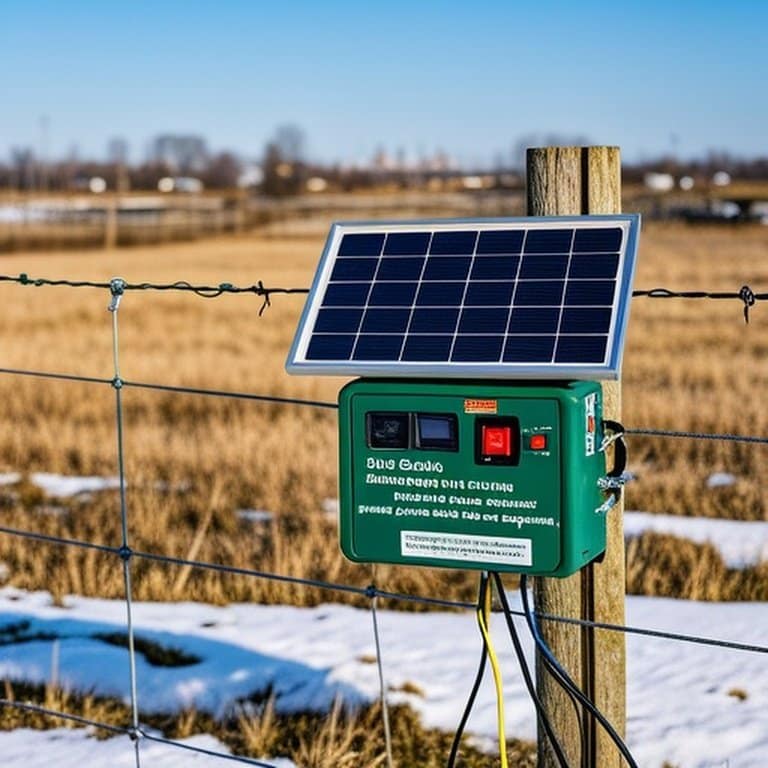
Solar chargers are often chosen for convenience, but reliability concerns usually appear after installation—especially in winter. Owners may experience weak shocks, dead batteries, or livestock testing the fence during cloudy weeks. Many assume solar technology itself is unreliable, when the real issue is system sizing or placement. Choosing the wrong solar setup can lead to fence failures at the worst possible time, when access is limited and livestock pressure is highest. Understanding when solar works—and when it struggles—prevents costly mistakes.
Key Factors to Consider
- Solar panel size relative to fence load
- Battery capacity and storage health
- Local sunlight hours and seasonal variation
- Fence length, wires, and vegetation contact
- Panel orientation, shading, and cleanliness
Detailed Explanation
Solar fence chargers rely on energy balance. During sunny periods, panels recharge the battery faster than the fence consumes power. During cloudy or short-day seasons, stored energy must carry the system through. Problems occur when daily consumption exceeds recharge over time.
Well-designed solar systems include oversized panels and batteries to handle worst-case conditions. In these setups, chargers can perform reliably year-round—even in cold climates—because the battery acts as a buffer. Cold temperatures reduce battery efficiency, making capacity even more important.
Undersized systems fail gradually. Voltage drops slowly, animals test the fence more often, and performance degrades without obvious warning. This is often misinterpreted as “solar doesn’t work in winter,” when the real issue is insufficient reserve capacity.
Placement matters as much as equipment. Panels must face optimal sun angles, avoid shading, and remain clean. Even partial shading can dramatically reduce charging efficiency. When these factors are addressed, solar chargers can be dependable for permanent and remote fencing.
Seasonal Sunlight vs Fence Demand
Winter brings shorter days and lower sun angles, while fence demand often stays constant or increases. Systems designed only for summer conditions frequently underperform in winter. Planning for the lowest-sun months is critical for year-round reliability.
Battery Health and Replacement Cycles
Batteries are the weakest link in solar systems. Over time, capacity declines even if panels perform well. A charger that once worked year-round may fail after several seasons if the battery is not replaced or upgraded.
Fence Load Amplifies Solar Limitations
Vegetation contact, multiple wire strands, and long fences increase energy draw. Solar chargers tolerate load poorly compared to AC systems unless they are intentionally oversized. Load management directly affects winter reliability.
When This Works Well
- Solar system is sized above minimum requirements
- Panels receive full sun exposure year-round
- Fence load is moderate and well maintained
- Battery condition is regularly monitored
When This Is Not Recommended
- Small solar units on long or high-load fences
- Shaded, wooded, or north-facing installations
- Areas with prolonged winter cloud cover
- Critical containment where failure is unacceptable
Alternatives or Better Options
Oversized Solar Systems
Larger panels and batteries greatly improve winter and cloudy-weather reliability.
Hybrid Solar + Battery Backup
Supplemental charging ensures consistent output during extended low-sun periods.
AC Chargers for Permanent Perimeters
Where grid power is available, AC offers unmatched year-round consistency.
Cost / Safety / Practical Notes
Solar chargers typically cost more upfront than AC units but save on wiring and access costs. Reliability issues almost always trace back to undersizing rather than technology limits. From a safety perspective, weak fences increase livestock pressure and escape risk. Practically, solar chargers work best when treated as power systems, not just portable devices—planned for worst-case conditions, not average days.
📍 Video Demonstration
Quick Takeaway
Solar fence chargers are reliable year-round only when they’re sized for winter, not summer.