
Short Answer
Yes, one electric fence charger can power multiple fences, provided the total fence load remains within the energizer’s effective capacity. All connected fences draw power from the same output, so wire length, number of strands, grounding quality, and vegetation contact collectively determine whether voltage stays strong enough across the system.
Why This Question Matters
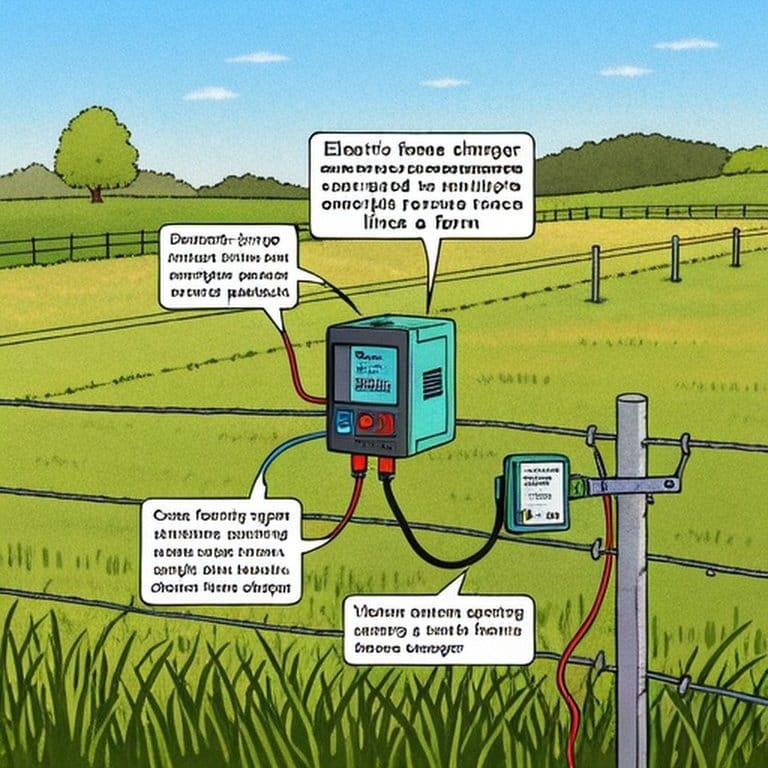
This question usually comes up when a fence system grows beyond its original design. What began as a single perimeter fence often expands into cross fencing, rotational grazing paddocks, or temporary enclosures. Many people assume adding another fence line is harmless if the charger is still “working.” In reality, voltage loss happens gradually and may not be obvious until animals begin testing the fence. Misunderstanding how shared chargers behave can lead to livestock escapes, safety risks, and repeated troubleshooting without fixing the real issue.
Key Factors to Consider
- Total combined wire length across all fences
- Number of energized strands per fence
- Vegetation contact and seasonal growth
- Grounding system size and quality
- Livestock pressure and fence interaction
Detailed Explanation
An electric fence charger delivers energy into the fence system as a whole, not to individual fence lines. When multiple fences are connected, they effectively become one larger electrical circuit. Every additional wire, splice, gate, and strand increases resistance and draws energy from the same source. As load increases, voltage gradually drops—especially at the farthest points from the charger.
This is why a charger may seem powerful near the energizer but weak at distant paddocks. The issue is not the number of fences, but the total electrical demand they create. A short, clean cross fence may add very little load, while a long fence with multiple hot wires and heavy vegetation contact can dramatically reduce performance.
Grounding becomes more critical as fences are added. A grounding system that worked well for one fence may be undersized for several. Poor grounding limits current flow and reduces shock strength everywhere, even if the charger itself is functioning perfectly.
Livestock behavior magnifies these effects. Animals that lean, rub, or challenge fences increase energy draw. In shared systems, this behavior on one fence can weaken voltage across all connected fences, making the entire setup less reliable.
Fence Layout and Energy Distribution
When multiple fences are powered from one charger, layout matters. Long runs, frequent turns, and poor connections increase resistance and uneven voltage distribution across the system.
System Expansion Over Time
Many fence systems expand gradually without reassessing charger capacity. What worked last season may become unreliable as new paddocks or strands are added.
Vegetation and Environmental Load
Shared chargers are more sensitive to weeds, moisture, and ground contact because energy losses accumulate across all connected fences.
When This Works Well
- Energizer is significantly oversized for current load
- Grounding system supports expansion
- Fence lines are well maintained
- Livestock pressure is moderate
When This Is Not Recommended
- Energizer is already near its practical limit
- Fence system has heavy vegetation contact
- High-pressure livestock areas share one charger
- Grounding is minimal or poorly installed
Alternatives or Better Options
Using Multiple Energizers
Separating fences into zones improves reliability and simplifies troubleshooting.
Upgrading to a Higher-Capacity Energizer
A larger charger handles future expansion with less voltage loss.
Improving the Grounding System
Additional ground rods stabilize shared systems but cannot replace proper energizer sizing.
Cost / Safety / Practical Notes
Running multiple fences from one charger can reduce equipment costs, but underpowered systems often cost more over time through livestock escapes, fence damage, and labor. In practice, many experienced operators oversize energizers or separate perimeter and interior fences onto different chargers. This approach improves reliability, reduces animal pressure on weak points, and provides redundancy if one system fails.
📍 Video Demonstration
Quick Takeaway
One energizer can power multiple fences, but only if it is sized for the total load, not the number of fence lines.