
Short Answer
The most common electric fence problems include low voltage, poor grounding, vegetation contact, faulty connections, and undersized energizers. These issues typically reduce shock effectiveness rather than stopping power entirely. In most cases, performance can be restored through targeted maintenance, improved grounding, vegetation control, or correcting fence layout and load problems.
Why This Question Matters
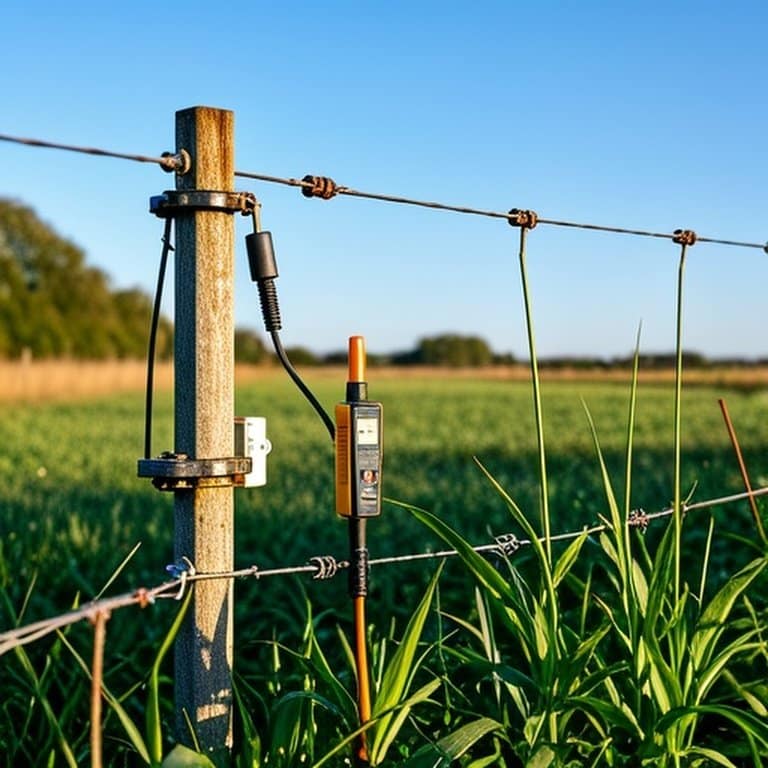
Electric fences rarely fail in obvious ways. Instead of completely shutting down, they often keep running while quietly losing effectiveness. This creates a false sense of security—animals begin testing the fence, predators push through weak spots, and owners assume behavior problems rather than fence problems. Many people respond by replacing energizers or adding hardware, when simpler fixes would solve the issue. Understanding the most common electric fence problems—and how they’re typically fixed—prevents wasted money, repeated troubleshooting, and avoidable containment failures.
Key Factors to Consider
- Actual voltage levels compared to livestock or predator requirements
- Grounding quality relative to soil type and moisture conditions
- Total fence length and number of connected fence branches
- Vegetation growth and seasonal contact with fence wires
- Condition of connections, insulators, and gate hardware
Detailed Explanation
Low voltage is the most frequently reported electric fence problem. In most cases, the energizer is still producing power, but energy is being lost before reaching the fence. Poor grounding is a leading cause—without a strong return path through the soil, even high voltage on the wire results in weak shocks. This issue becomes more severe in dry, sandy, or rocky soil and is often overlooked because grounding systems are rarely tested.
Vegetation contact is another major source of performance loss. Grass, weeds, and brush touching the fence wire act as continuous electrical drains. Each contact point siphons energy into the ground, reducing voltage along the entire fence line. The effect is gradual and widespread, which makes it easy to misdiagnose as an energizer or wire problem.
Faulty connections and hardware failures also contribute heavily. Loose clamps, corroded joints, cracked insulators, and worn gate handles all introduce resistance and leakage. Individually, these problems seem minor, but across long fence runs they compound quickly. Fences with frequent gates and splices are especially vulnerable.
Finally, system overload is a common design issue. Energizers are often undersized relative to total fence length, number of strands, or connected interior fences. While voltage may appear adequate near the energizer, it drops sharply at distant points. This creates uneven performance where the fence works well in some areas and fails in others, leading to inconsistent containment.
Grounding Problems and Their Fixes
Poor grounding is often the hidden cause behind persistent fence issues. Fixes usually involve adding more ground rods, increasing rod depth, improving soil contact, or relocating the grounding system to consistently moist soil. In some cases, grounding problems only appear seasonally, making them harder to identify without testing under load.
Vegetation and Environmental Interference
Vegetation-related problems fluctuate with weather and growth cycles. Fixes focus on regular mowing, herbicide use, or raising wire height to reduce constant contact. In high-growth areas, fence designs that anticipate vegetation pressure are far more effective than relying on increased energizer output.
Hardware and Connection Failures
Broken insulators, corroded wire joints, and poor gate connections are common failure points. Fixes usually involve replacing damaged components rather than adding new ones. High-quality connectors and proper strain relief reduce future maintenance needs and stabilize voltage across the system.
When This Works Well
- Fence systems with routine voltage testing and inspection schedules
- Designs that match energizer output to realistic fence load
- Grounding systems built for local soil and climate conditions
- Fence layouts with minimal unnecessary splices and branches
- Consistent vegetation management throughout the growing season
When This Is Not Recommended
- Relying on energizer upgrades instead of fixing root causes
- Ignoring grounding performance because voltage appears “high enough”
- Using lightweight temporary materials for permanent fencing
- Allowing vegetation to accumulate before addressing voltage loss
- Expanding fence length without reevaluating system capacity
Alternatives or Better Options
In some cases, redesigning the fence layout offers better long-term reliability than repeated repairs. Looping fence systems or dual-feed designs distribute voltage more evenly across long runs. Splitting large properties into multiple independently powered zones can also reduce cumulative load and simplify troubleshooting.
Cost / Safety / Practical Notes
Most electric fence problems are maintenance-related, not equipment failures. From a cost perspective, fixing grounding, clearing vegetation, and improving connections usually delivers better results than replacing energizers. Safety is also a concern—weak fences increase the risk of livestock escape and human injury during troubleshooting. Practically, the most reliable fence systems are those designed with realistic expectations and maintained before problems become visible.
📍 Video Demonstration
Quick Takeaway
Most electric fence problems come from energy loss, not power failure. Poor grounding, vegetation contact, faulty connections, and system overload are the most common causes—and they are usually fixable without major upgrades. Effective fences depend more on design and maintenance than on energizer size.