
Short Answer
Yes, weather and rain can significantly affect electric fence performance. Rain can improve grounding and increase shock effectiveness, but it can also increase energy loss through vegetation, wet insulators, and poor connections. Extreme weather conditions such as drought, freezing temperatures, or storms often cause voltage fluctuations rather than complete fence failure.
Why This Question Matters
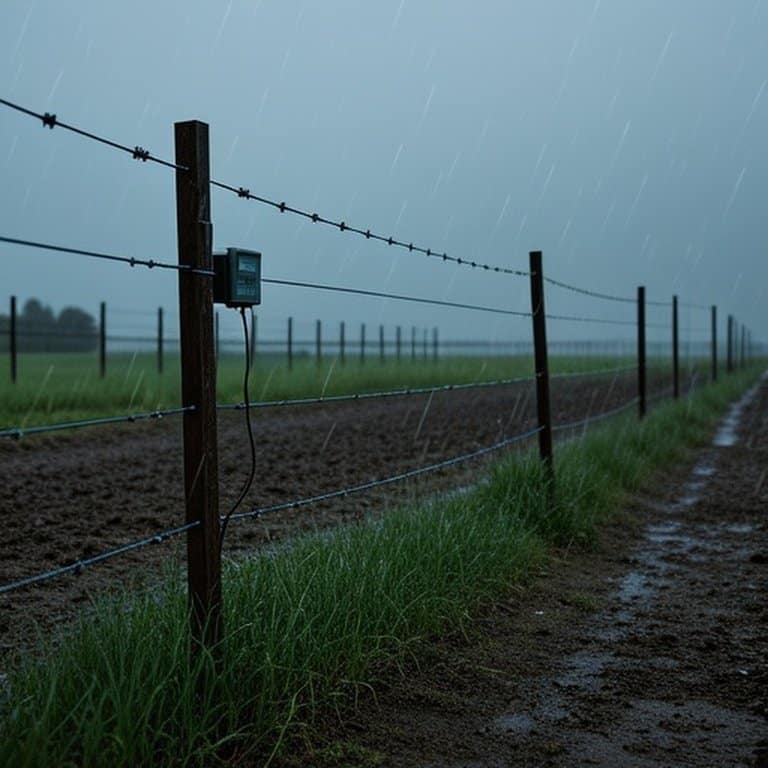
Electric fences are exposed systems, and their performance changes with weather more than many owners expect. A fence that works well one week may feel weak or unreliable the next, even though nothing appears broken. Rain is often blamed for fence problems, while drought, frost, and storms are overlooked. Misunderstanding how weather affects electric fences leads to unnecessary repairs, incorrect upgrades, or unsafe assumptions about containment reliability. Knowing what weather actually does to fence performance helps owners respond correctly instead of guessing.
Key Factors to Consider
- Soil moisture levels and their impact on grounding efficiency
- Vegetation growth and wet plant contact with fence wires
- Insulator condition during rain, frost, or contamination
- Seasonal temperature changes affecting soil conductivity
- Storm-related damage to wires, posts, and connections
Detailed Explanation
Weather affects electric fences primarily through grounding and energy leakage. Rain often improves grounding because moist soil conducts electricity more efficiently. After rainfall, many fences actually deliver stronger shocks because the return path through the ground is improved. This is why some fences appear to “work better” during wet conditions, even without any changes to the energizer or wire.
However, rain also increases energy loss. Wet vegetation touching the fence wire becomes a more effective conductor, draining power continuously. Grass, weeds, and brush that cause minor losses when dry can significantly reduce voltage when wet. Over long fence runs, this leakage compounds and can offset the grounding benefits of rain, especially in high-growth areas.
Dry weather introduces a different problem. In drought conditions, soil conductivity drops sharply, reducing grounding effectiveness. Even with high voltage on the fence wire, animals may feel a weaker shock because the electrical circuit cannot complete efficiently. Frozen ground causes similar issues by insulating the soil and limiting current return. These conditions often lead to seasonal performance problems that disappear after rain or thawing.
Storms and extreme weather introduce mechanical risks. High winds, heavy rain, and snow can loosen connections, crack insulators, or push vegetation into contact with the fence. Lightning strikes can damage energizers or grounding systems. These issues are often mistaken for weather-related performance changes when they are actually physical damage caused by weather events.
How Rain Changes Grounding Performance
Rain typically improves grounding by increasing soil moisture, which lowers electrical resistance. This can temporarily mask underlying grounding deficiencies. Fences that rely on rain to perform well often struggle during dry periods, revealing the need for additional or deeper ground rods.
Seasonal Effects on Fence Reliability
Seasonal shifts affect vegetation growth, soil moisture, and temperature. Spring and summer often increase vegetation-related leakage, while winter and drought stress grounding systems. Reliable fences are designed to perform acceptably under the worst seasonal conditions, not just ideal ones.
Weather-Related Hardware Issues
Moisture can expose weaknesses in insulators, connectors, and splices. Cracked or contaminated insulators may leak current when wet, even if they appear fine when dry. Regular inspection after storms helps catch these failures early.
When This Works Well
- Fence systems with grounding designed for dry and frozen soil
- Regular vegetation control before and after rainfall
- High-quality insulators that resist moisture leakage
- Weather-resistant connections and protected energizer placement
- Routine testing after storms or seasonal changes
When This Is Not Recommended
- Assuming rain always weakens fence performance
- Ignoring grounding improvements because the fence works in wet weather
- Relying on seasonal rain to compensate for poor design
- Leaving vegetation unmanaged during rainy periods
- Skipping inspections after storms or extreme weather events
Alternatives or Better Options
In regions with extreme seasonal variation, enhanced grounding systems provide more consistent performance than relying on weather conditions. Additional ground rods, alternative grounding locations, or hybrid fence designs reduce sensitivity to soil moisture changes. In high-growth climates, fence layouts that minimize vegetation contact outperform systems that depend on frequent clearing alone.
Cost / Safety / Practical Notes
Weather-related fence issues are often misdiagnosed as equipment failure. From a cost perspective, improving grounding and vegetation control usually delivers better results than upgrading energizers. Safety-wise, fences that fluctuate with weather increase the risk of animal escapes and unpredictable shocks. Practically, the most reliable approach is testing fence voltage during both wet and dry conditions to understand true performance limits.
📍 Video Demonstration
Quick Takeaway
Weather and rain don’t break electric fences—but they expose weaknesses. Rain can improve grounding while increasing leakage, and dry or frozen conditions often reduce shock effectiveness. Consistent performance depends on design and maintenance, not favorable weather.