
Short Answer
Most permanent electric fences use 2–5 strands, depending on livestock type, pressure level, and whether the fence is interior or perimeter. For trained cattle, 2–3 strands are often sufficient. Perimeter fences, mixed livestock, or higher pressure areas usually require 4–5 strands to ensure visibility, respect, and year-round reliability.
Why This Question Matters
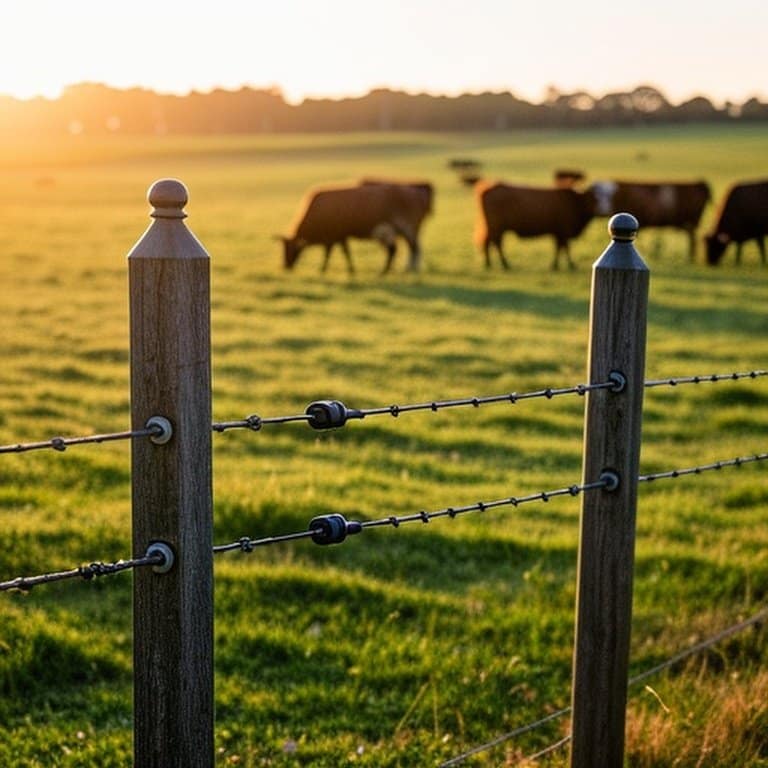
Strand count is one of the most common—and costly—design mistakes in permanent electric fencing. Too few strands invite testing, leaning, and escapes. Too many strands increase cost, complexity, and maintenance without improving performance. Because strand decisions affect materials, labor, voltage demand, and animal behavior, getting this right at the design stage prevents future rebuilds. This question matters because the “right” number of strands is not universal; it depends on how animals behave, how the fence is used, and how much failure you can tolerate.
Key Factors to Consider
- Livestock species and size determine contact height needs
- Perimeter fences require more redundancy than interior fences
- Animal training level reduces required strand count
- Terrain and visibility affect accidental contact frequency
- Predator or external pressure increases strand requirements
Detailed Explanation
The purpose of strand count in permanent electric fencing is not to create a physical wall, but to ensure reliable contact and visual respect. Each strand increases the chance that an animal will touch a hot wire before committing to forward movement. Once animals are trained, fewer strands are needed to maintain containment.
For trained cattle in interior paddocks, two strands—placed at appropriate heights—can be very effective. A third strand is often added for better visibility or to account for uneven terrain. This setup balances cost, simplicity, and performance. Problems arise when this minimal design is used for perimeter fencing or untrained animals.
Perimeter fences face higher consequences if they fail. Animals may be motivated by feed, herd pressure, or external stimuli. Adding strands increases redundancy and discourages testing. Four or five strands provide multiple contact points, improve visual presence, and reduce the chance of animals slipping under or pushing through.
More strands also increase electrical load. Each additional wire requires proper tensioning, insulation, and voltage delivery. Undersized energizers or poor grounding can turn a multi-strand fence into an unreliable system. This is why strand count should always be matched with energizer capacity and grounding quality.
By the end of this explanation, the takeaway should be clear: the correct number of strands is the minimum needed to create consistent respect under worst-case conditions—not the maximum you can afford.
Video Demonstration
How Cattle Behavior Affects This Choice
Cattle test fences slowly and deliberately. If they encounter a weak visual barrier or inconsistent shock, they learn to lean or step through. Fewer strands can work well with trained cattle because animals avoid contact altogether. Untrained or pressured cattle require more strands to prevent exploratory behavior. Strand placement and consistency matter as much as strand count—poorly placed wires fail regardless of quantity.
Calves vs Mature Cattle Considerations
Calves often respect two-strand systems, but permanent fencing should be designed for mature cattle. Adult animals are taller, heavier, and less sensitive to marginal voltage. A fence built for calves may require costly upgrades later. Designing from the start with additional strands for mature height and pressure avoids rebuilding and extends fence lifespan.
Terrain, Visibility, and Pressure Zones
Uneven terrain increases the chance of animals slipping under or over wires. Additional strands improve coverage in dips, rises, and corners. Gates, water points, and feeding areas experience higher pressure and often need extra strands locally, even if the rest of the fence uses fewer wires. Visibility is critical—more strands improve visual deterrence.
When This Works Well
- Livestock are trained to electric fencing
- Fence is used for interior paddock division
- Terrain is relatively flat and visible
- Voltage and grounding are consistent
- Pressure from predators or neighbors is low
When This Is Not Recommended
- Fence serves as a perimeter boundary
- Livestock are untrained or highly pressured
- Terrain is uneven or heavily wooded
- Voltage consistency cannot be guaranteed
- Failure consequences are high
Alternatives or Better Options
Rather than increasing strand count everywhere, many systems use variable strand density. Fewer strands are used on straight interior runs, while corners, gates, and high-pressure areas receive additional wires. Another option is combining permanent electric fencing with a physical barrier on perimeters, reducing the need for excessive strands while maintaining security.
Cost, Safety, and Practical Notes
Each additional strand increases material, labor, and electrical demand. While more strands can improve reliability, they also require better grounding and energizer capacity. From a safety standpoint, properly tensioned and insulated multi-strand fences are safe for animals and people, but cluttered or poorly designed systems increase maintenance risk. The most cost-effective design uses the fewest strands necessary to achieve consistent respect under worst-case conditions.
Quick Takeaway
Permanent electric fencing typically requires 2–5 strands, depending on livestock, pressure, and fence purpose. Interior fences often succeed with fewer strands, while perimeter fences benefit from more redundancy. The goal is not maximum wire—it’s consistent, reliable respect.