
Short Answer
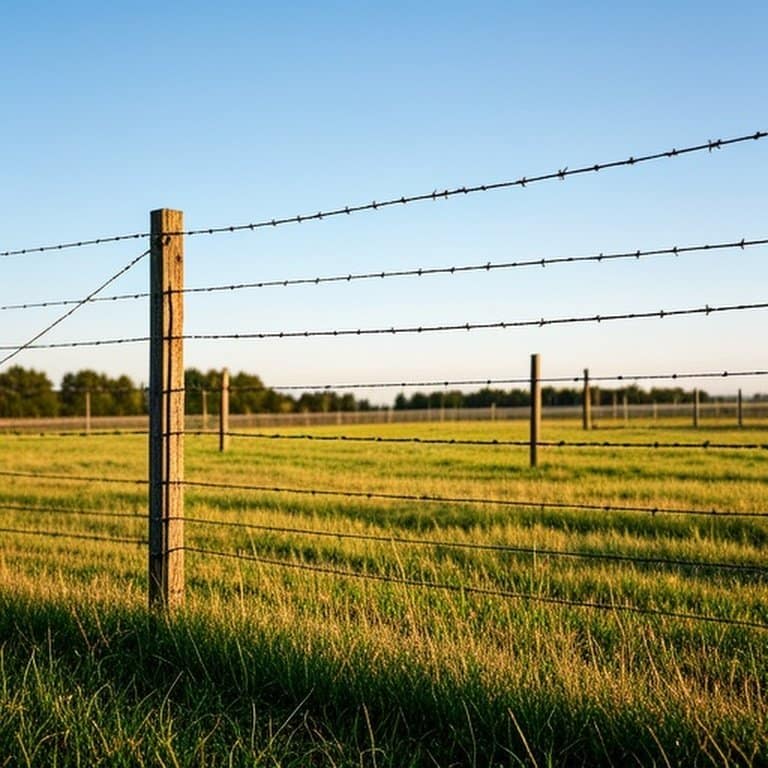
Barbed wire fencing typically costs $1,200 to $3,500 per acre, depending on fence layout, number of strands, post spacing, terrain, and labor method. Simple square pastures with flat ground fall on the lower end, while irregular fields, rocky soil, tighter post spacing, or hired labor can push costs much higher. Acreage alone never tells the full story.
Why This Question Matters
“Cost per acre” is one of the most searched fencing questions—and one of the most misunderstood. Many landowners budget fencing based on acreage, only to discover mid-project that fencing costs are driven by linear feet, not land size. Two properties with the same acreage can have dramatically different fencing costs due to shape, slope, and design choices.
Understanding realistic per-acre costs for barbed wire helps you avoid under-budgeting, compare fence types fairly, and decide whether barbed wire is truly the most economical option for your land and livestock. Accurate expectations prevent costly redesigns and delays once construction begins.
Key Factors to Consider
- Total perimeter length relative to acreage
- Number of wire strands and fence height
- Post spacing and type (wood vs steel)
- Terrain difficulty and soil conditions
- DIY installation versus hired labor
Detailed Explanation
Barbed wire fencing costs per acre vary because fencing is built around the edges, not across the land. A square 10-acre pasture requires far less fencing than a long, narrow 10-acre parcel. As perimeter length increases, so do material and labor costs—even when acreage stays the same.
Materials are the first major cost driver. Barbed wire itself is relatively inexpensive, but total material costs include posts, braces, staples, gates, and corner assemblies. Most livestock fences use three to five strands of wire, and each additional strand increases cost linearly. Post spacing also matters: posts every 12 feet cost far more than posts spaced at 20 feet, even before labor is considered.
Labor often equals or exceeds material cost. DIY installation can reduce per-acre costs significantly, especially on flat ground with driveable soil. Hiring professional crews increases reliability and speed but raises the per-acre total—particularly in rocky or sloped terrain where installation slows dramatically.
Terrain acts as a multiplier. Flat pasture allows fast post driving and minimal bracing. Hills, gullies, trees, and hard soil increase equipment needs, labor hours, and post density. Corners, gates, and changes in elevation require heavy bracing, which adds lumber, wire, and skilled labor that many estimates overlook.
For this reason, barbed wire fencing may be inexpensive per foot, but surprisingly expensive per acre on complex land. Smart layout planning often saves more money than choosing cheaper materials.
Video Demonstration
How Cattle Behavior Affects This Choice
Cattle behavior directly affects how much barbed wire fencing you need per acre. Calm, well-trained cattle allow fewer strands and wider post spacing, keeping costs low. These animals respect boundaries and apply minimal pressure to fence lines.
High-pressure cattle change the equation. Animals that push, crowd, or challenge fences require tighter post spacing, additional wire strands, or reinforced corners—all of which raise per-acre cost. Poor fence respect often leads to repairs, which increases long-term expense beyond initial installation.
Matching fence strength to cattle behavior avoids overbuilding while preventing costly failures.
Calves vs Mature Cattle Considerations
Fencing designed for calves usually costs more per acre than fencing for mature cattle. Young animals require lower wire heights, closer spacing, or alternative fencing types, which increases material and labor per linear foot.
Many producers budget barbed wire fencing for mature cattle but forget that calving areas and replacement heifers may require upgrades. Retrofitting fences later often costs more than building appropriately from the start.
If calves will use the pasture, per-acre cost estimates should reflect higher safety and containment requirements.
Terrain, Visibility, and Pressure Zones
Terrain complexity increases per-acre fencing costs rapidly. Slopes, rocky soils, and irregular boundaries require closer post spacing and additional bracing. Pressure zones—such as corners, gates, water access points, and trails—demand stronger construction regardless of acreage size.
Visibility also affects cost. Adding markers or top wires improves fence respect and reduces repairs, slightly increasing upfront expense but lowering long-term costs.
Ignoring pressure zones leads to failures that erase initial savings.
When This Works Well
- Large, square or regularly shaped pastures
- Flat or gently rolling terrain
- Mature cattle with good fence respect
- Perimeter fencing with limited traffic
- DIY installation using wide post spacing
When This Is Not Recommended
- Small or irregular parcels with long perimeters
- Steep, rocky, or heavily wooded terrain
- Calving areas or young livestock pastures
- High-pressure or mixed-species systems
- Budgets based only on acreage estimates
Alternatives or Better Options
High-tensile electric fencing
Often costs less per acre due to wide post spacing and reduced material use, especially for interior paddocks.
Hybrid fencing systems
Using barbed wire on perimeters and electric fencing inside lowers total cost while improving flexibility.
Woven wire fencing
Higher upfront cost per acre but lower injury risk and reduced maintenance for young or mixed livestock.
Cost, Safety, and Practical Notes
Always treat “cost per acre” as a planning estimate, not a final number. Measure fencing in linear feet first, then calculate materials and labor. Budget extra for corners, gates, and terrain transitions—these areas account for a disproportionate share of total cost.
From a safety perspective, cheaper fencing that causes injuries or frequent repairs often costs more over time. Barbed wire remains one of the lowest-cost perimeter fencing options, but only when matched to appropriate livestock and land conditions.
Smart design choices usually save more money than cheaper materials.
Quick Takeaway
Barbed wire fencing typically costs $1,200–$3,500 per acre, but the real drivers are perimeter length, terrain, post spacing, and labor—not acreage itself. Accurate budgeting starts with measuring fence lines, not counting acres.