
Yes, composite fencing can be strong enough for livestock when it is properly designed, installed, and matched to animal behavior. Its strength comes from controlled flexibility rather than rigid resistance, allowing it to absorb pressure without breaking. However, it is not a universal solution and performs best in moderate-pressure containment scenarios.
Why This Question Matters
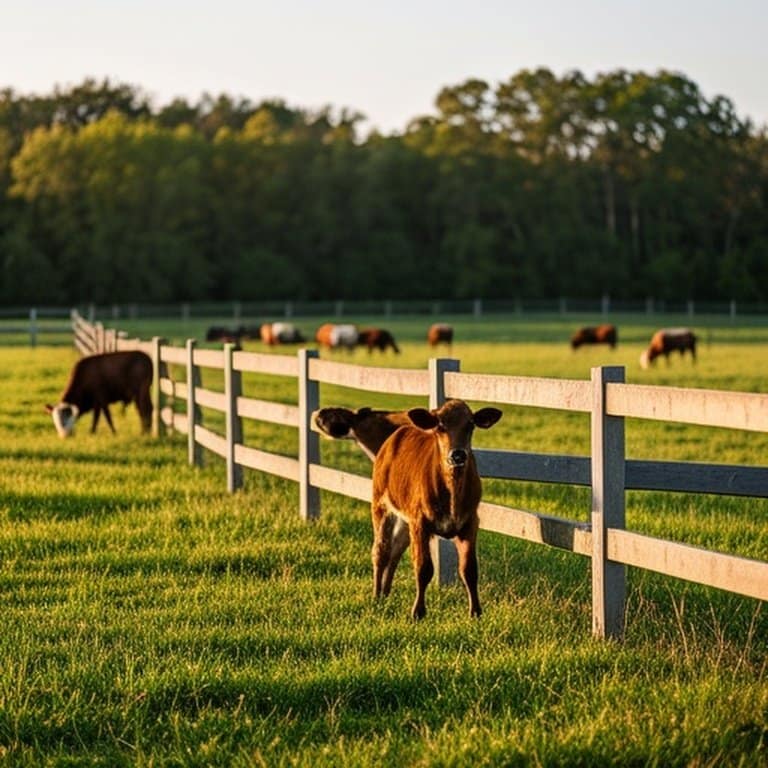
Livestock fencing fails most often not because materials are weak, but because expectations are mismatched. Composite fencing is frequently marketed as “stronger than wood” or “better than wire,” which creates confusion for livestock owners making long-term decisions. If composite fencing cannot reliably contain animals, the result is escapes, injuries, and costly retrofits.
This question matters because strength in fencing is not just about force resistance—it includes flexibility, recovery after pressure, and behavioral response from animals. Understanding what “strong enough” actually means prevents both overconfidence and unnecessary rejection of a viable fencing option.
Key Factors to Consider
- Type of livestock pressure: steady leaning versus sudden impact or repeated testing
- Fence design and support: post spacing, corner reinforcement, and anchoring method
- Material flex behavior: ability to bend and return without permanent deformation
- Pressure concentration zones: gates, corners, feeding areas, and water access points
- Integration with deterrents: visual barriers or electric reinforcement when needed
Detailed Explanation
Composite fencing is engineered to handle force differently than traditional fencing materials. Instead of relying on rigid strength like wood or tensile resistance like wire, composite materials are designed to flex under load and recover their shape afterward. This makes them well suited for livestock that apply consistent, moderate pressure rather than explosive force.
In real-world conditions, most livestock interactions with fencing involve leaning, rubbing, or slow pushing. Composite fencing performs well in these scenarios because it absorbs energy without snapping, splintering, or permanently bending. This behavior reduces damage and lowers the risk of injury, particularly compared to broken wood rails or sharp wire ends.
However, composite fencing does have limits. It is not designed to stop high-speed impacts, panic-driven charges, or repeated aggressive testing without reinforcement. Its strength depends heavily on system design. Proper post spacing, secure corners, and correct tensioning are essential. Without these elements, even high-quality composite materials can fail prematurely.
When installed correctly and used in appropriate settings, composite fencing is strong enough for many livestock operations. The key is understanding that its strength is functional rather than absolute. It works by discouraging continued pressure through controlled movement, not by acting as an immovable barrier. Once this distinction is clear, the performance claims around composite fencing become much easier to evaluate realistically.
How Cattle Behavior Affects This Choice
Cattle behavior plays a critical role in determining whether composite fencing is strong enough. Calm, pasture-trained cattle typically apply slow, consistent pressure to fences, such as leaning or rubbing. Composite fencing handles this well by flexing slightly and signaling resistance without escalating the animal’s response.
Problems arise when cattle are unfamiliar with boundaries, stressed, or crowded. In these cases, animals may test fences repeatedly or push in groups, increasing localized force. Composite fencing can still perform, but only if supported by proper post spacing and reinforced pressure zones. Behavioral management matters as much as material choice. A fence that works perfectly for one herd may fail for another if behavior patterns differ.
Calves vs Mature Cattle Considerations
Calves and mature cattle interact with fencing in fundamentally different ways. Calves are lighter but more curious, often pushing, nibbling, or attempting to pass through flexible barriers. Composite fencing can be effective here, as its flex discourages climbing or squeezing without causing injury. Visibility is especially important to prevent exploratory pressure.
Mature cattle exert far greater force, particularly when leaning or crowding. For them, composite fencing must be part of a properly engineered system. Posts must be strong, corners reinforced, and spans kept within design limits. Composite materials themselves may be strong enough, but only when the supporting structure matches the animal’s size and mass.
Terrain, Visibility, and Pressure Zones
Terrain influences how force is distributed along a fence line. On uneven or sloped ground, composite fencing may experience uneven tension, increasing stress on specific sections. Additional posts or hybrid designs are often necessary in these conditions.
Visibility also affects strength indirectly. Fences that animals can clearly see are tested less frequently. Pressure zones such as corners, gates, and feeding areas experience repeated force regardless of material. In these zones, composite fencing should be reinforced or paired with rigid components to maintain overall system strength.
When This Works Well
- Moderate stocking density with animals accustomed to fenced boundaries
- Operations prioritizing injury reduction and material longevity
- Perimeter or interior fencing with controlled access points
- Environments where wood rot or metal corrosion are major issues
- Systems designed with proper post spacing and reinforced corners
When This Is Not Recommended
- High-stress containment involving aggressive or panicked animals
- Crowded conditions where multiple animals push simultaneously
- Installations lacking adequate posts or corner reinforcement
- Situations requiring rigid, immovable barriers
- Temporary fencing needs requiring frequent relocation
Alternatives or Better Options
High-tensile wire fencing offers superior resistance to sustained force and is often better suited for large herds or high-pressure containment, though it requires precise installation and regular maintenance.
Traditional wood fencing provides immediate rigidity and strong visual boundaries but degrades faster and presents higher injury risk when damaged.
Hybrid systems combining composite rails with electric or wire reinforcement often deliver the best balance, using flexibility for safety and rigidity where strength demands are highest.
Cost, Safety, and Practical Notes
Composite fencing typically involves higher upfront material costs than basic wire systems, but it can reduce long-term expenses by minimizing repairs and animal injuries. Its safety profile is one of its strongest advantages, as flexible materials reduce cuts, entanglement, and panic-related injuries.
Practically, composite fencing should never be evaluated in isolation. Its performance depends on the entire system, including posts, spacing, and reinforcement. When used intentionally and installed correctly, it offers reliable strength for many livestock scenarios. When misapplied, it can fail just as predictably as any other fencing material.
Quick Takeaway
Composite fencing is strong enough for livestock when its flexible strength is matched to animal behavior, terrain, and system design. It is not about resisting all force, but about managing pressure safely and consistently over time.