
High-tensile wire fencing is a livestock fencing system made from high-carbon steel wire designed to be tightly tensioned and remain under constant load. Unlike regular wire fencing, it relies on strength and elasticity rather than multiple loose strands, resulting in fewer wires, longer lifespan, and lower long-term maintenance when installed correctly.
Why This Question Matters
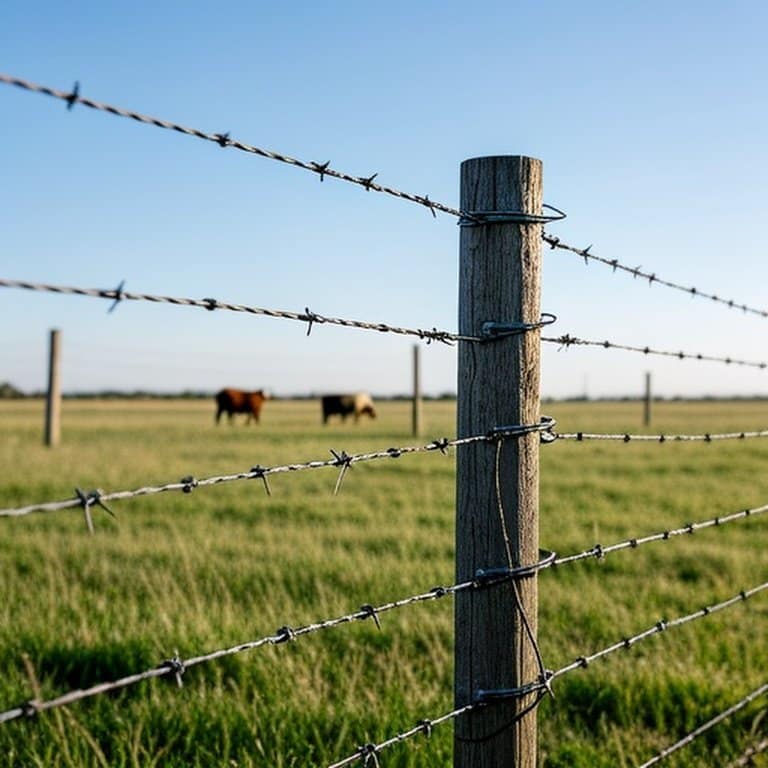
Many producers assume high-tensile wire is simply a thicker or stronger version of regular smooth or barbed wire. In reality, it behaves very differently once installed. Choosing between high-tensile and regular wire affects installation complexity, maintenance workload, safety, and long-term cost.
This question matters because fencing failures are often caused by using the wrong system for the job, not by poor materials. Understanding the structural and behavioral differences helps livestock owners avoid constant re-tensioning, sagging fences, and premature replacement.
Key Factors to Consider
- Steel composition: high-carbon steel versus low-carbon conventional wire
- Tension level: designed to stay tight under continuous load
- Number of strands: fewer lines needed for effective containment
- System design: dependence on strong braces and anchors
- Maintenance approach: upfront precision versus ongoing adjustments
Detailed Explanation
High-tensile wire fencing differs from regular wire fencing primarily in how it manages force. Regular wire systems—such as low-carbon smooth wire or barbed wire—are installed with relatively low tension. Over time, these wires stretch, sag, and lose effectiveness, requiring periodic tightening or replacement.
High-tensile wire is made from high-carbon steel that can be tensioned to much higher levels without permanent stretching. Once properly installed, it maintains consistent tension across long distances. This allows fewer strands to control livestock effectively while keeping fence height and alignment stable over time.
Another major difference lies in system requirements. High-tensile fencing depends heavily on well-built end braces, corner assemblies, and strong posts. These components absorb and distribute the stored energy in the wire. Regular wire fencing is more forgiving of weaker bracing but sacrifices durability and consistency as a result.
High-tensile wire is often associated with electric fencing, but electricity is optional rather than defining. The key distinction is tension, not electrification. When installed correctly, high-tensile fencing offers a cleaner fence line, longer service life, and reduced maintenance compared to regular wire systems. When installed poorly, however, failures are more severe due to the energy stored in the wire. This makes correct design and installation essential.
How Cattle Behavior Affects This Choice
Cattle behavior aligns well with high-tensile wire fencing when animals are pasture-trained and familiar with boundaries. Most cattle apply slow, steady pressure by leaning or rubbing rather than repeated charging. High-tensile wire resists this pressure by maintaining tension instead of sagging, which discourages further testing.
Problems arise when cattle are overcrowded, stressed, or unfamiliar with fencing. In these situations, group pressure can overcome non-electrified high-tensile systems. Pairing high-tensile wire with electricity improves reliability by changing animal behavior rather than increasing physical resistance. Behavioral predictability is often more important than animal size when deciding between high-tensile and regular wire.
Calves vs Mature Cattle Considerations
Calves are lighter and more curious, often testing fences visually or attempting to slip through gaps. High-tensile wire can work well, but strand spacing must be designed to prevent pass-through. Thin wires may also require markers to improve visibility.
Mature cattle exert greater force but in more predictable ways. High-tensile wire handles adult pressure better than regular wire because it resists stretching and maintains fence height. Regular wire often sags over time under adult weight, increasing maintenance demands and escape risk.
Terrain, Visibility, and Pressure Zones
High-tensile wire adapts well to rolling terrain but requires careful tension management. On slopes, uneven load distribution can occur if post spacing is not adjusted. Regular wire may appear easier initially but degrades faster on uneven ground.
Visibility plays a key role. Thin, tight wires benefit from markers or electric offsets to reduce accidental contact. Pressure zones such as gates, corners, and feeding areas must be reinforced in all systems, but failures in high-tensile fencing are more dramatic if bracing is inadequate.
When This Works Well
- Large pasture systems with predictable livestock movement
- Operations seeking long-term durability and low maintenance
- Properly braced perimeter fencing
- Situations where sagging wire is a recurring problem
- Systems paired with electric deterrence
When This Is Not Recommended
- Temporary fencing needs
- Installations without strong corner or end bracing
- Projects lacking precision installation capability
- Low-visibility layouts without markers or electricity
- Short-term fencing with minimal planning
Alternatives or Better Options
Woven wire fencing provides strong physical barriers with less reliance on tension but uses more material and requires more maintenance.
Barbed wire fencing has low upfront cost but stretches and degrades faster under livestock pressure.
Hybrid systems combining high-tensile wire with electric offsets often deliver the best balance of durability, safety, and containment.
Cost, Safety, and Practical Notes
High-tensile wire fencing typically costs more upfront than regular wire due to stronger materials and installation requirements. Over time, however, reduced maintenance and longer lifespan often offset the initial expense. Safety depends heavily on correct tensioning, bracing, and visibility. Poorly installed systems pose higher risk because of stored energy in the wire.
Practically, high-tensile fencing rewards precision and planning. When designed and installed correctly, it becomes one of the most economical and durable livestock fencing systems available. When shortcuts are taken, its disadvantages become more pronounced than those of regular wire.
Quick Takeaway
High-tensile wire fencing differs from regular wire by relying on strength and controlled tension rather than multiple loose strands, delivering longer lifespan and lower maintenance—but only when installed with proper design and precision.