
PVC fencing typically lasts 20–30 years outdoors on farms when used in low-pressure applications and mild to moderate climates. Its lifespan depends heavily on UV exposure, temperature extremes, livestock pressure, and installation quality. While PVC does not rot or rust, it can become brittle or crack under repeated stress or impact.
Why This Question Matters
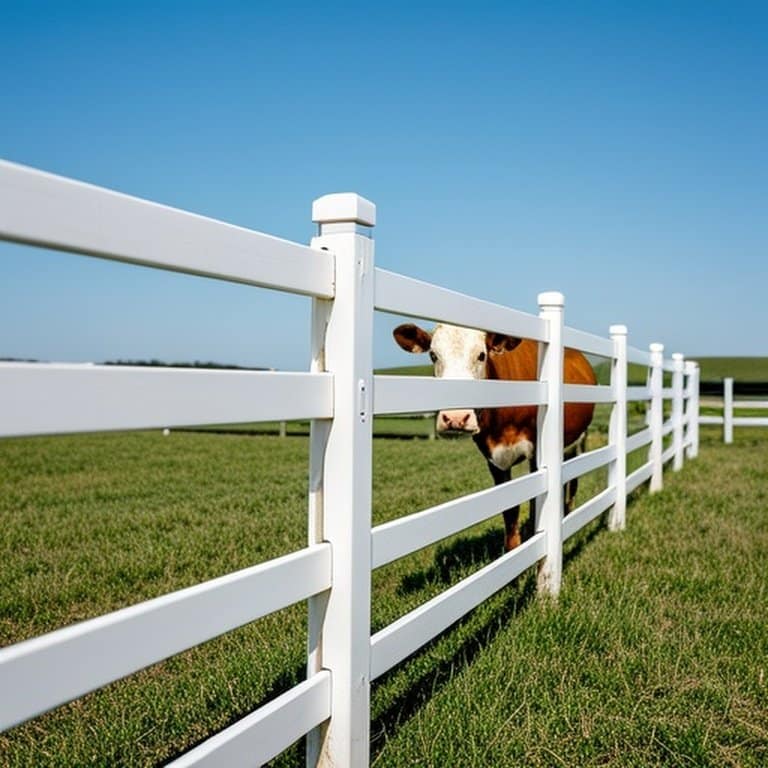
PVC fencing is often marketed as “long-lasting” or “lifetime,” but those claims are usually based on residential or decorative use—not real farm conditions. On farms, fences face livestock pressure, equipment contact, weather extremes, and uneven terrain.
This question matters because misunderstanding lifespan leads to poor return on investment. A fence that lasts 30 years in a backyard may fail much sooner in a pasture. Knowing how long PVC fencing realistically lasts outdoors helps producers decide where it makes sense—and where it becomes an expensive replacement cycle rather than a durable solution.
Key Factors to Consider
- Livestock pressure: repeated leaning or rubbing shortens lifespan
- Climate extremes: cold increases brittleness, heat increases flex
- UV exposure: long-term sun affects plastic stability
- Installation quality: poor post alignment accelerates failure
- Fence role: decorative boundary versus primary containment
Detailed Explanation
PVC fencing does not degrade the same way wood or metal does. It does not rot, rust, or suffer insect damage, which gives it an inherent durability advantage in wet or humid environments. Under ideal conditions—flat ground, minimal livestock contact, and moderate climate—PVC fencing can remain structurally intact and visually consistent for several decades.
However, lifespan on farms is rarely determined by chemical degradation alone. Mechanical stress is the dominant factor. Livestock apply force through leaning, rubbing, and crowding, especially near gates, feeding areas, and corners. PVC’s rigid structure tolerates limited flex but does not absorb repeated force well. Over time, this leads to cracking at joints, rail failure, or post movement—often suddenly rather than gradually.
Climate further narrows PVC’s effective lifespan. In cold regions, PVC becomes more brittle, increasing the likelihood of cracking from impact. In hot climates, it softens slightly, increasing deflection and joint stress under load. UV stabilizers slow sun damage, but they do not eliminate long-term material fatigue.
Another key factor is repairability. Wood and wire fences often show early warning signs—sagging, bending, loosening—that allow incremental repairs. PVC fencing tends to look fine until it fails, at which point full panel or rail replacement is usually required. This replacement-based maintenance model affects perceived lifespan as much as material durability.
In practical farm use, PVC fencing lasts longest when it is treated as a low-stress, low-contact system, not as a primary livestock barrier.
How Cattle Behavior Affects This Choice
Cattle behavior has a direct impact on PVC fencing lifespan. Calm, pasture-trained cattle that respect boundaries may rarely touch the fence, allowing PVC to last decades. In contrast, cattle that crowd fences, scratch frequently, or push toward feed areas apply repeated lateral force that accelerates failure.
Once cattle learn a fence flexes, pressure increases. PVC does not “wear in” gradually—it reaches a fatigue point and breaks. Electrification or behavioral management can extend lifespan significantly by reducing physical contact, but without these controls, PVC fencing often fails well before its material age limit.
Calves vs Mature Cattle Considerations
Calves exert less force and are less likely to damage PVC fencing directly, especially in short-term or controlled enclosures. Visibility reduces accidental contact, which helps extend lifespan.
Mature cattle dramatically reduce PVC longevity. Adult weight, momentum, and herd pressure place sustained stress on rails and joints. In mature-cattle environments, PVC fencing lifespan is often dictated by mechanical failure rather than weathering.
Terrain, Visibility, and Pressure Zones
PVC fencing performs best on flat, uniform terrain. Slopes and uneven ground introduce stress points where rigid rails cannot adjust naturally. These areas often become early failure points.
Visibility is a strength of PVC, reducing accidental collisions. However, pressure zones—gates, corners, water access—override this advantage. These locations experience repeated force that shortens lifespan regardless of material quality.
When This Works Well
- Flat terrain with stable soil
- Low-pressure livestock environments
- Decorative or perimeter fencing
- Mild to moderate climates
- Areas with minimal livestock contact
When This Is Not Recommended
- Primary containment for mature livestock
- High-pressure feeding or watering areas
- Cold climates with impact risk
- Uneven or sloped terrain
- Operations expecting frequent fence modification
Alternatives or Better Options
Wire fencing offers longer functional lifespan under livestock pressure.
Wood fencing requires more maintenance but allows incremental repairs.
Hybrid systems using PVC for visibility and wire or electric fencing for strength often deliver better long-term value on farms.
Cost, Safety, and Practical Notes
PVC fencing offers long material life but a narrower functional lifespan on farms. Its biggest cost risk is replacement after sudden failure rather than gradual repair. From a safety standpoint, smooth surfaces reduce cuts, but breakage can create immediate containment issues.
Practically, PVC fencing lasts longest when its role is chosen carefully. Treating it as a low-contact system rather than a universal farm fence is the key to achieving its full lifespan.
Quick Takeaway
PVC fencing can last 20–30 years outdoors on farms, but only when used in low-pressure applications—its real lifespan is defined more by livestock behavior and terrain than by material durability.