
PVC fencing offers farms and ranches a low-maintenance, weather-resistant, and animal-safe fencing option, but it comes with higher upfront costs and limited scalability. It performs best in controlled areas or where appearance and safety matter more than flexibility, while large-scale livestock operations often find wire-based systems more practical.
Why This Question Matters
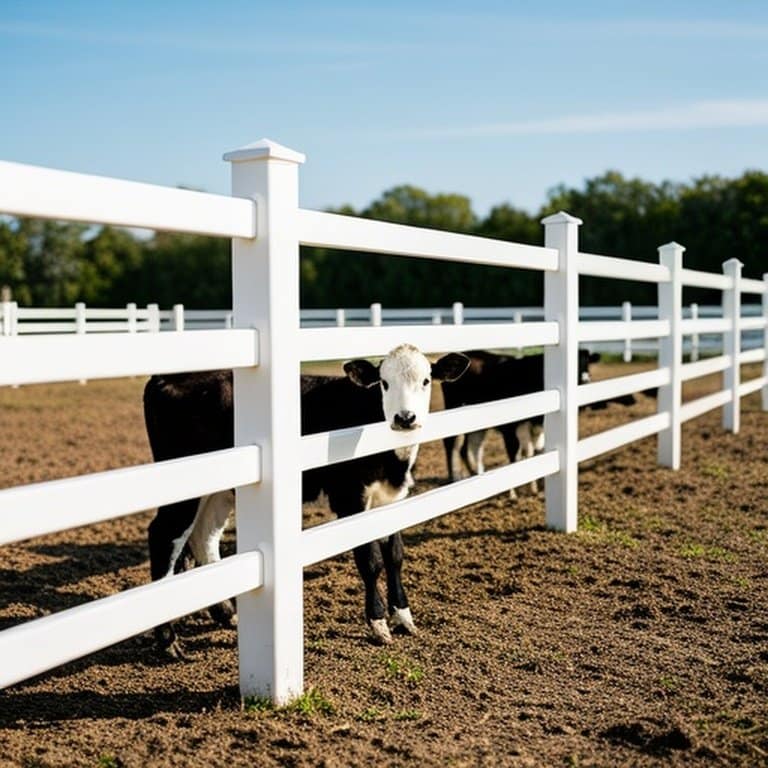
Choosing fencing for a farm or ranch is a long-term decision that affects animal safety, labor demands, and operating costs for decades. PVC fencing is often marketed as a “set it and forget it” solution, which makes it attractive to landowners tired of repairing wood or rusted wire. However, its advantages are situational.
When used in the wrong context—such as large pastures or high-pressure livestock environments—it can become an expensive mistake. Understanding the true pros and cons helps producers match PVC fencing to the right use cases instead of assuming it is a universal upgrade.
Key Factors to Consider
- Upfront cost: PVC materials cost significantly more than wire or wood
- Livestock pressure: not designed for constant pushing or crowding
- Maintenance profile: low routine upkeep but costly repairs
- Scale of use: performs best in small or medium enclosures
- Terrain compatibility: rigid structure limits flexibility on uneven ground
Detailed Explanation
The primary advantage of PVC fencing is low routine maintenance. Unlike wood, it does not rot, splinter, or require painting. Unlike metal, it does not rust or corrode. For farms that value reduced upkeep—especially in visible or frequently accessed areas—this is a real benefit. PVC also offers smooth surfaces with no sharp edges, which improves animal safety and reduces injury risk compared to barbed or woven wire.
Another strength is weather resistance. Quality PVC fencing handles moisture, insects, and most environmental exposure well, making it suitable for regions with high humidity or frequent rainfall. Its consistent appearance over time is also appealing for ranches that combine livestock operations with agritourism or residential use.
However, these benefits come with meaningful trade-offs. Cost is the biggest drawback. PVC fencing costs substantially more per foot than traditional wire systems, and that gap widens as fence length increases. For large farms, the investment often outweighs the practical benefits.
Structural rigidity is another limitation. PVC fencing does not flex under pressure the way wire does. When livestock lean, rub, or crowd against it, stress concentrates at posts and joints. In high-pressure zones—such as gates, corners, or feeding areas—this can lead to cracking or breakage that requires full component replacement rather than simple repairs.
Finally, scalability and adaptability are weak points. PVC fencing is not ideal for rotational grazing, frequent layout changes, or expanding operations. Once installed, it is far less forgiving than wire-based systems, making it better suited for permanent, low-pressure applications rather than dynamic working ranches.
How Cattle Behavior Affects This Choice
Cattle behavior plays a major role in determining whether PVC fencing is a good fit. Cattle naturally lean, scratch, and crowd—especially near gates, water sources, and mineral stations. PVC fencing handles occasional contact well but is not designed for repeated force over large areas.
In herds where movement is frequent or stocking density is high, pressure builds quickly at specific points. Unlike tensioned wire, PVC cannot distribute that force along the fence line. Over time, this increases the risk of joint failure or post damage. For calm cattle in low-density enclosures, PVC can work. For active herds, behavior alone often disqualifies it as a primary fencing solution.
Calves vs Mature Cattle Considerations
PVC fencing performs noticeably better with calves and lighter livestock. Lower body weight reduces stress on rails and posts, making breakage less likely. This is why PVC is sometimes used around calving pens, small holding areas, or training paddocks.
Mature cattle present a different challenge. Their weight, strength, and tendency to push as a group significantly increase structural demands. In these situations, PVC fencing may remain intact for years—or fail suddenly after a single high-pressure event. For operations dominated by mature livestock, PVC should be used selectively rather than as a primary containment system.
Terrain, Visibility, and Pressure Zones
PVC fencing works best on flat, uniform terrain where post spacing and alignment remain consistent. Slopes, dips, and uneven soil increase installation complexity and reduce long-term reliability.
Visibility is a clear advantage. Animals see PVC fencing easily, which can reduce accidental collisions. However, pressure zones such as corners and gates still require reinforcement. On working farms, these reinforcements often negate PVC’s simplicity and increase total cost.
When This Works Well
- Small to medium livestock enclosures
- Low-pressure areas like paddocks or pens
- Farms prioritizing appearance and safety
- Flat terrain with stable soil conditions
- Mixed-use properties combining livestock and residential space
When This Is Not Recommended
- Large pasture perimeters
- High-density or high-movement herds
- Operations requiring frequent fence changes
- Uneven or rocky terrain
- Cost-sensitive commercial ranching systems
Alternatives or Better Options
High-tensile wire fencing offers superior scalability and cost efficiency for working ranches.
Woven or barbed wire fencing provides reliable containment with lower upfront investment.
Electric fencing excels in rotational grazing systems and flexible layouts.
Hybrid systems using PVC only in high-visibility or safety-critical zones often deliver the best balance.
Cost, Safety, and Practical Notes
PVC fencing is safest when viewed as a specialized tool, not a universal solution. It reduces routine maintenance and improves animal safety in the right context, but its higher material cost and limited flexibility restrict its role on large farms and ranches.
From a safety standpoint, PVC is excellent when intact but less forgiving when it fails. Repairs are more expensive and less adaptable than wire systems. Practically, most successful agricultural uses of PVC fencing involve selective placement, not full-property installation.
Quick Takeaway
PVC fencing offers clear benefits in safety and maintenance, but its cost and rigidity limit its usefulness for large-scale or high-pressure livestock operations