
Short Answer
For most livestock fencing, 12.5 to 14 gauge welded wire mesh works best, depending on animal size and pressure. Lighter gauges (14–16) suit sheep, goats, and interior fencing, while heavier gauges (12–12.5) are required for higher-stress areas or larger animals. Gauge choice must match behavior, post spacing, and fence purpose.
Why This Question Matters
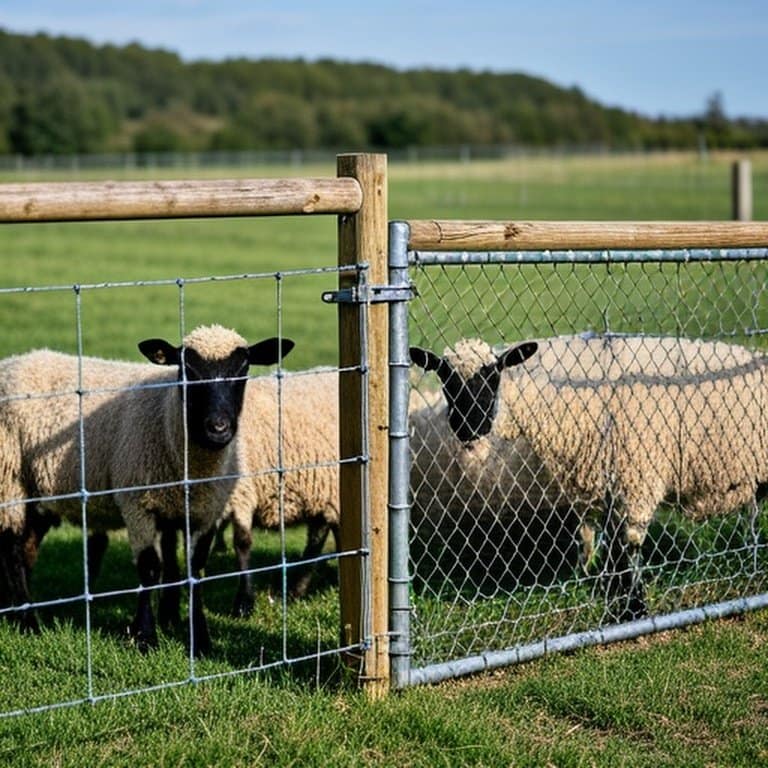
Wire gauge is one of the most misunderstood aspects of welded wire fencing. Many livestock fence failures happen not because the design was wrong, but because the wire was too light for the pressure it faced. Thinner wire bends, fatigues welds faster, and shortens fence lifespan. Choosing the right gauge affects safety, maintenance costs, and long-term reliability. Since welded wire mesh does not flex like woven wire, gauge selection becomes even more critical. Understanding gauge differences allows livestock owners to avoid underbuilding fences that look solid on day one but fail under real conditions.
Key Factors to Consider
- Livestock size and typical pressure behavior
- Fence role: perimeter, interior, or pen containment
- Post spacing and corner bracing strength
- Expected lifespan and maintenance tolerance
- Terrain and localized stress zones
Detailed Explanation
Wire gauge measures thickness, with lower numbers indicating thicker, stronger wire. In welded wire mesh fencing, gauge directly influences how well the fence resists bending and weld fatigue. Because welded mesh is rigid, thinner wire does not have the flexibility to absorb pressure, making gauge selection especially important.
For sheep and goats, 14-gauge welded wire mesh is commonly sufficient when installed with proper post spacing. These animals are lighter, and uniform openings help reduce entanglement risks. In interior fencing or pens, where pressure is limited and controlled, lighter gauge mesh performs reliably and keeps material costs reasonable.
Larger livestock or higher-pressure environments require heavier wire. For areas where animals lean, rub, or crowd—such as gates, corners, or feeding zones—12.5-gauge or even 12-gauge mesh provides the added strength needed to resist deformation. This is particularly important if welded mesh is used where woven wire might otherwise be recommended.
The short answer holds because gauge alone does not guarantee performance. A heavier gauge can compensate for limited flexibility, but only when combined with proper installation. Conversely, even thick wire will fail if posts are too far apart or corners are poorly braced. Gauge selection should always be made in the context of how and where the fence will be used.
How Livestock Behavior Affects This Choice
Livestock behavior determines how much stress a welded wire fence experiences. Animals apply pressure gradually through leaning and rubbing, not sudden impacts. Lighter livestock tend to test fences less aggressively, making moderate gauge wire sufficient. However, repeated contact in the same location accelerates metal fatigue, especially in thinner gauges.
Because welded wire mesh concentrates stress at weld points, behavior-driven pressure quickly exposes underbuilt fencing. Heavier gauge wire reduces bending and slows weld failure but does not eliminate the need for proper design. Understanding how animals interact with the fence helps determine whether a lighter gauge is acceptable or a heavier gauge is necessary for durability.
Calves vs Mature Cattle Considerations
For calves and young livestock, 14-gauge welded wire mesh often performs well due to lower body weight and reduced pressure. Uniform spacing improves safety during early growth stages. Many failures occur when the same fence is expected to hold animals as they mature.
Mature cattle exert significantly more force, making lighter gauges unsuitable. Even 12.5-gauge welded wire may struggle in high-pressure zones without reinforcement. When planning for growth, selecting a heavier gauge from the start can prevent costly rebuilds or upgrades.
Terrain, Visibility, and Pressure Zones
Flat terrain allows consistent tension and even load distribution, enabling lighter gauge wire to perform adequately. Uneven ground introduces stress points that magnify wire thickness limitations. Visibility is a benefit of welded mesh, but it does not reduce structural stress in pressure zones.
Corners, gates, and feeding areas concentrate force regardless of gauge. In these locations, heavier wire combined with closer post spacing is essential to prevent deformation and weld failure.
When This Works Well
- 14-gauge mesh for goats, sheep, and interior fencing
- Heavier gauges for reinforced pens and high-contact areas
- Installations with close post spacing and solid bracing
- Controlled livestock movement and stocking density
- Regular inspection and maintenance access
When This Is Not Recommended
- Light gauge wire for perimeter fencing with large livestock
- Wide post spacing without reinforcement
- High-pressure zones using minimal gauge wire
- Uneven terrain without structural adjustments
- Low-maintenance systems expecting flexibility
Alternatives or Better Options
Woven wire fencing offers greater forgiveness under pressure and may allow lighter wire to outperform heavier welded mesh. High-tensile systems provide strength with controlled flexibility when properly tensioned. Electric fencing reduces physical stress by shaping animal behavior rather than relying on wire thickness alone. These options often outperform welded wire mesh in demanding livestock environments.
Cost, Safety, and Practical Notes
Heavier gauge welded wire mesh increases material costs and weight, raising installation labor expenses. However, underbuilding with light gauge wire often leads to earlier failure and higher long-term costs. From a safety perspective, thicker wire reduces sharp deformation but can still create hazards if welds break. Practically, selecting the correct gauge is about balancing upfront cost with realistic pressure expectations and maintenance capacity.
Quick Takeaway
Choose welded wire mesh gauge based on livestock pressure, not just animal type. For goats and sheep, 14-gauge often works well. For higher-stress areas or larger animals, 12.5-gauge or heavier is necessary—combined with proper installation to ensure long-term performance.