
Short Answer
Yes, welded wire mesh can be effective for predator control when properly designed and installed, especially for small predators and in confined areas. Success depends on mesh opening size, wire gauge, ground anchoring, and reinforcement at pressure points. On its own, welded wire mesh is best for low to moderate predator pressure, not as a standalone solution against persistent or large predators.
Why This Question Matters
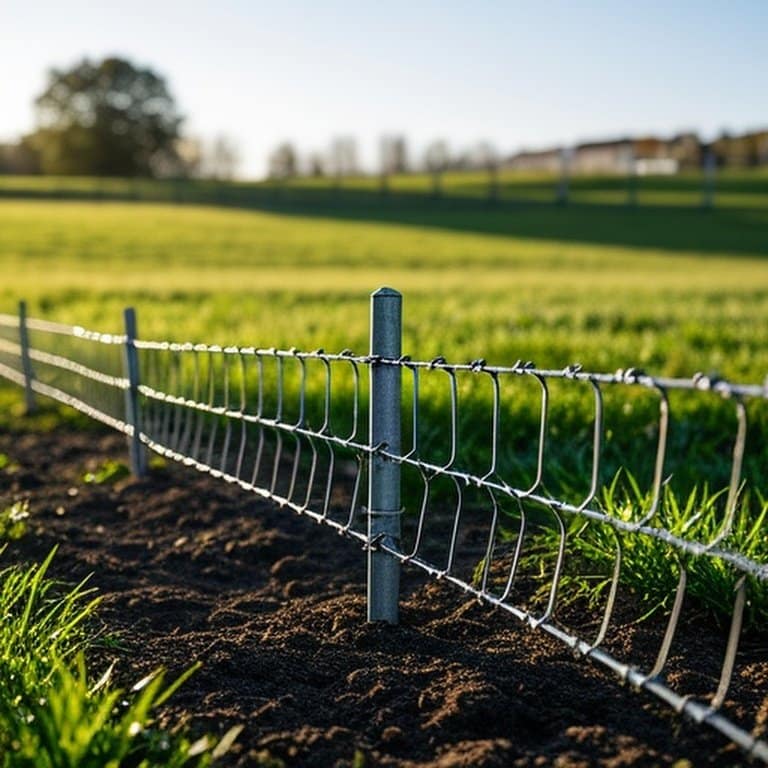
Predator losses are one of the most costly and emotionally frustrating problems for farms and ranches. Many livestock owners turn to welded wire mesh believing that “solid wire” automatically equals predator-proof fencing. In reality, predator behavior is very different from livestock behavior. Digging, climbing, chewing, and probing exploit weaknesses that welded wire mesh may or may not address. Understanding when welded wire mesh works—and when it fails—prevents false security, wasted investment, and ongoing livestock losses. This question matters because predator control is about system design, not just material strength.
Key Factors to Consider
- Mesh opening size relative to predator size
- Wire gauge and weld strength
- Ground contact, burial, or apron design
- Fence height and climb resistance
- Integration with electric or deterrent systems
Detailed Explanation
Welded wire mesh can block predators by creating a physical barrier with uniform openings that prevent animals from squeezing through. Small-opening mesh is particularly effective against raccoons, foxes, skunks, and similar-sized predators when installed correctly. Visibility and rigidity help maintain a clear boundary, reducing exploratory breaches.
However, predator control stresses fencing in different ways than livestock containment. Predators test fences deliberately, focusing on weak points such as ground edges, corners, and attachment points. Welded wire mesh does not flex, so once a weld breaks or wire bends, the opening often enlarges quickly. This makes installation quality critical.
Ground-level protection is the most common failure point. Predators dig under fences far more often than they push through them. Welded wire mesh used for predator control must either be buried, bent outward as an apron, or paired with a ground deterrent. Without this, even heavy mesh provides limited protection.
Climbing is another concern. Welded wire mesh is easy for many predators to climb unless height, overhangs, or electrified offsets are added. The short answer holds because welded wire mesh can work—but only as part of a deliberate predator-control design. Used alone, it solves some problems while leaving others exposed.
How Livestock Behavior Affects This Choice
Livestock behavior indirectly affects predator pressure. Animals clustered near fences—especially young or vulnerable livestock—attract predators to specific locations. These repeated visits focus stress on the same fence sections.
Welded wire mesh performs better when livestock are calm and evenly distributed. Panic movement, crowding, or nighttime pressure can push animals against fences, weakening attachment points and creating vulnerabilities predators exploit. Predator control fencing must account for how livestock use space, not just where predators approach.
Young Animals vs Mature Livestock Considerations
Predator control is most critical for young animals. Small livestock require smaller mesh openings to prevent predators from reaching through or pulling animals toward the fence. Welded wire mesh performs well here when openings are tight and edges are secure.
As livestock mature, direct predation risk decreases, but fence pressure often increases. A fence weakened by livestock pressure becomes easier for predators to breach. Designing welded wire mesh to handle both livestock pressure and predator probing is essential for long-term effectiveness.
Terrain, Visibility, and Pressure Zones
Flat terrain simplifies predator control by allowing consistent ground contact. Uneven ground creates gaps that predators exploit. Visibility helps livestock avoid fence collisions but has little effect on predator determination.
Pressure zones—corners, gates, and low spots—are where predators focus effort. Welded wire mesh must be reinforced in these areas or paired with deterrents to remain effective.
When This Works Well
- Small predators such as raccoons, foxes, and skunks
- Poultry yards and lambing or kidding pens
- Small-opening mesh with ground anchoring
- Short fence runs with regular inspection
- Combined with electric offsets or deterrents
When This Is Not Recommended
- Large predators like coyotes or dogs without reinforcement
- Long perimeter fencing without ground protection
- High-dig or high-climb pressure environments
- Poorly maintained or lightly installed fencing
- Situations requiring zero-tolerance predator exclusion
Alternatives or Better Options
Electric fencing is often more effective for predator control because it targets behavior rather than strength. Hardware cloth provides superior protection for small enclosures. Combination systems—welded wire mesh paired with electric offsets or buried aprons—offer the most reliable long-term results. For high-risk areas, layered defense consistently outperforms single-material solutions.
Cost, Safety, and Practical Notes
Welded wire mesh offers moderate upfront cost but requires additional materials for effective predator control. Smaller openings and heavier gauges increase price and installation effort. Safety benefits include preventing reach-through attacks on young animals, but broken welds can create sharp hazards if neglected. Practically, welded wire mesh is best treated as a component of a predator-control system rather than a standalone barrier.
Quick Takeaway
Welded wire mesh can be used for predator control, but only when properly designed, reinforced, and maintained. It works best as part of a layered system that addresses digging, climbing, and probing behaviors—not as a single-line solution.