
Short Answer
To install welded wire mesh fencing properly, you must set strong posts at close spacing, brace corners firmly, stretch the mesh evenly without over-tensioning, and secure it consistently along the entire fence line. Proper installation focuses on alignment, support, and stress distribution, because welded wire mesh relies on structure—not flexibility—to perform correctly.
Why This Question Matters
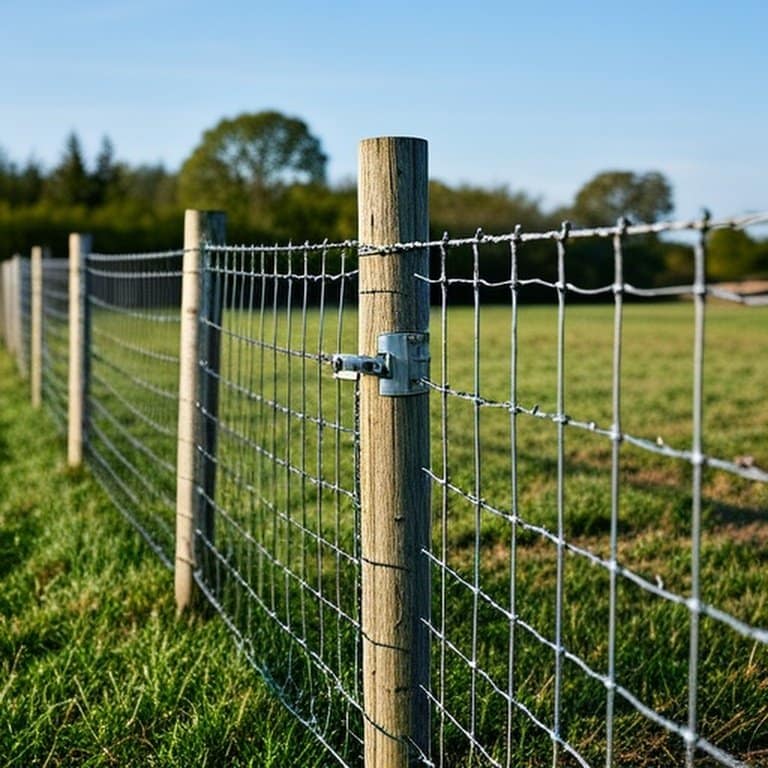
Most welded wire mesh fence failures are caused by poor installation, not weak materials. Because welded wire does not flex like woven wire, small mistakes—wide post spacing, weak corners, uneven ground contact—lead to early deformation and broken welds. Many installers treat welded mesh like generic wire fencing, which shortens its lifespan dramatically. This question matters because correct installation is the difference between a fence that lasts decades and one that fails within a few seasons, especially in livestock environments where pressure is constant.
Key Factors to Consider
- Post spacing and depth determine structural support
- Corner and end bracing absorb most fence tension
- Proper tension prevents sagging without stressing welds
- Terrain alignment affects long-term durability
- Fastener type and spacing control load transfer
Detailed Explanation
Installing welded wire mesh properly starts with post layout. Because the mesh is rigid, posts must be closer together than with flexible fencing—typically every 6 to 8 feet. Posts should be set deep enough to resist lateral force, especially in livestock areas where animals lean or rub. Corners and ends must be heavily braced, as welded wire transfers tension directly into these points.
Once posts are set, the mesh must be aligned carefully before fastening. Unlike woven wire, welded mesh cannot self-adjust. Any misalignment during installation becomes a permanent stress point. The mesh should follow the terrain smoothly, with adjustments made through post placement rather than bending the wire.
Tensioning is critical but often misunderstood. Welded wire mesh should be pulled snug and straight, not stretched aggressively. Over-tensioning increases stress at welds and accelerates fatigue. The goal is uniform contact with posts, not maximum tightness.
Fastening completes the system. Staples, clips, or ties should be evenly spaced and secure without crushing the wire. Skipped fasteners create localized stress, while overtightening damages coatings. The short answer holds because welded wire mesh performs well only when installation spreads force evenly across the entire structure.
How Cattle Behavior Affects This Choice
Cattle exert slow, sustained pressure through leaning and rubbing rather than sudden impacts. Improper installation magnifies this pressure by concentrating force at weak points. Wide post spacing or weak corners allow movement that quickly fatigues welds.
A properly installed fence anticipates this behavior by reinforcing high-contact zones and maintaining consistent support along the line. Installation quality matters more with cattle than with smaller livestock because behavior-driven pressure is constant and cumulative.
Calves vs Mature Cattle Considerations
For calves, installation tolerances are slightly more forgiving due to lower pressure. Welded wire mesh installed with moderate post spacing can perform well in pens or nursery areas.
As cattle mature, installation margins disappear. Posts must resist greater force, and corners must be capable of absorbing sustained tension. A fence installed “just well enough” for calves often fails once animals reach full size, making future upgrades expensive.
Terrain, Visibility, and Pressure Zones
Flat terrain simplifies installation and improves longevity. Uneven ground introduces bending forces that welded mesh does not tolerate well. Adjustments should be made through stepped post placement rather than forcing the mesh to follow the ground.
Pressure zones—corners, gates, feeding areas—require extra posts and tighter fastening. Visibility helps reduce accidental impacts but does not replace structural reinforcement.
When This Works Well
- Interior fencing or pens with controlled livestock movement
- Flat or gently sloped terrain
- Projects with strong corner bracing
- Installations with close post spacing
- Situations with regular inspection access
When This Is Not Recommended
- Long perimeter fencing without reinforcement
- High-pressure cattle environments
- Uneven terrain without stepped installation
- Wide post spacing to reduce cost
- Low-maintenance systems expecting flexibility
Alternatives or Better Options
Woven wire fencing is more forgiving during installation and better suited to long perimeter runs. High-tensile wire systems allow wider post spacing and lower material costs when properly tensioned. Electric fencing reduces structural demand by shaping animal behavior instead of resisting force. These options often outperform welded wire mesh where installation precision is difficult to maintain.
Cost, Safety, and Practical Notes
Proper installation increases upfront labor costs but significantly extends fence lifespan. Cutting corners on posts or bracing often doubles long-term cost through repairs or replacement. Safety improves with correct installation, as uniform tension reduces sharp deformation and entanglement risks. Practically, welded wire mesh should be installed as a structural system, not treated as simple wire fencing. The trade-off is higher precision in exchange for predictable performance.
Quick Takeaway
Welded wire mesh fencing succeeds or fails based on installation quality. Strong posts, solid bracing, careful alignment, and controlled tension are essential. When installed properly, it performs reliably; when shortcuts are taken, failure is almost guaranteed.