
Short Answer
For most livestock applications, woven wire fencing is the better all-around choice because it flexes under pressure and distributes force more evenly. Welded wire fencing can work well for small livestock, pens, and low-pressure areas, but it is less forgiving under constant stress. The better option depends on animal behavior, fence location, and installation quality.
Why This Question Matters
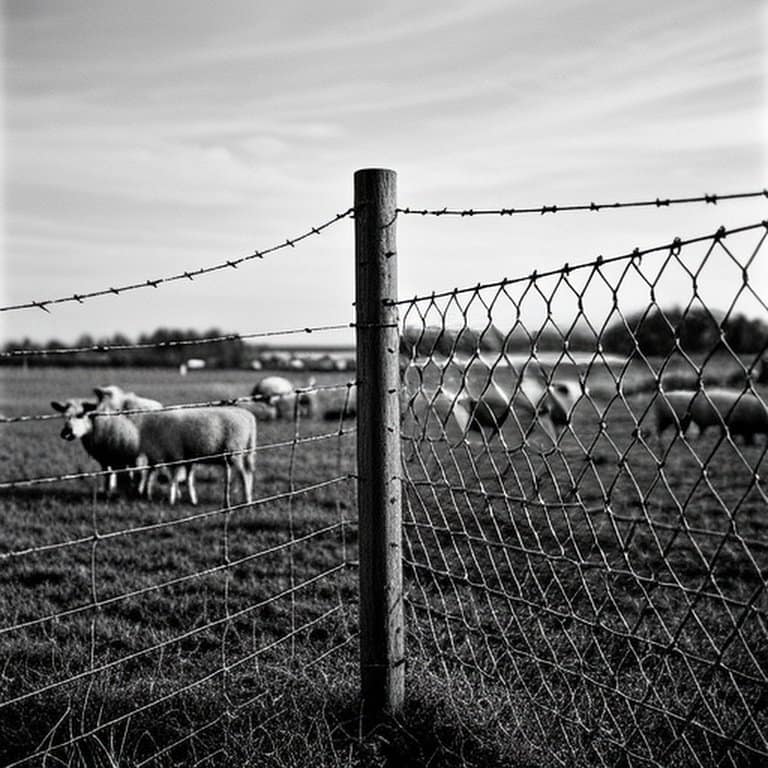
Welded wire and woven wire fences often look similar, but they fail in very different ways. Choosing the wrong one can lead to broken wires, sagging fences, animal injuries, or repeated repairs. Many livestock owners select fencing based on price or availability without understanding how livestock pressure, terrain, and long-term use affect performance. This question matters because fencing is a structural system, not just a barrier. Understanding how these two fence types behave under real conditions helps prevent costly mistakes and ensures livestock safety over the life of the fence.
Key Factors to Consider
- Flexibility versus rigidity under sustained livestock pressure
- Fence role: perimeter containment or interior division
- Livestock size, strength, and behavior patterns
- Installation tolerance and margin for error
- Long-term maintenance and repair demands
Detailed Explanation
Woven wire fencing is made by weaving horizontal wires around vertical stay wires, allowing the fence to flex when animals push against it. This flexibility spreads force across a wide area, reducing stress on individual wires and posts. As a result, woven wire is highly forgiving and well suited for perimeter fencing where livestock regularly test boundaries.
Welded wire fencing, by contrast, uses rigid welds at each wire intersection. This creates uniform openings and a clean appearance, but it also concentrates force at fixed points. When animals lean or rub repeatedly, stress transfers directly to welds and posts. Over time, this can cause weld breakage or panel deformation if installation is not robust.
In low-pressure environments—such as pens, corrals, or interior fencing—welded wire performs reliably. Visibility helps animals recognize boundaries, and uniform spacing improves safety for smaller livestock. However, in long runs or high-pressure zones, welded wire is less tolerant of installation errors and animal behavior.
The short answer holds because flexibility equals durability in most livestock environments. Woven wire absorbs pressure and recovers, while welded wire resists pressure until it fails. That difference defines which fence performs better over time.
How Livestock Behavior Affects This Choice
Livestock interact with fences using body weight, not precision. Leaning, rubbing, crowding, and testing boundaries apply slow, sustained force. Woven wire responds by flexing and redistributing pressure, which reduces fatigue and failure.
Welded wire does not flex. When animals apply pressure repeatedly in the same area, stress builds at weld points and posts. This makes welded wire more sensitive to herd behavior, stocking density, and management practices. In calm, well-managed environments, welded wire may perform well. In competitive or crowded conditions, woven wire is far more forgiving.
Calves vs Mature Cattle Considerations
Welded wire fencing is often suitable for calves and young livestock. Uniform openings reduce entanglement risk, and lower body weight places less stress on the fence. In these situations, welded wire can be a practical and safe choice.
As livestock mature, pressure increases rapidly. Mature cattle generate sustained force that welded wire struggles to absorb without heavy reinforcement. Woven wire adapts better to this transition, making it a more scalable option when fencing must perform reliably as animals grow.
Terrain, Visibility, and Pressure Zones
Uneven terrain favors woven wire because it can be tensioned across slopes and dips. Welded wire requires more precise alignment and struggles where ground conditions vary. Visibility is an advantage of welded wire, especially near handling areas.
Pressure zones—corners, gates, feeding areas—are where fence failures usually begin. In these locations, woven wire’s flexibility provides a critical safety margin that welded wire often lacks unless heavily reinforced.
When This Works Well
- Woven wire for long perimeter fencing
- Mixed or mature livestock herds
- Uneven or sloped terrain
- Areas with repeated livestock pressure
- Installations prioritizing durability over appearance
When This Is Not Recommended
- Welded wire for high-pressure perimeter fencing
- Crowded feeding or watering zones
- Wide post spacing without reinforcement
- Situations requiring minimal maintenance
- Large herds with aggressive behavior
Alternatives or Better Options
High-tensile wire systems offer strength with controlled flexibility when properly tensioned. Electric fencing shifts containment from physical strength to behavior control and often reduces pressure on physical fences. Combination systems—woven wire with electric offsets—frequently outperform either option alone in demanding livestock environments.
Cost, Safety, and Practical Notes
Welded wire fencing often costs more per foot and requires closer post spacing, increasing labor costs. Woven wire typically offers better long-term value due to fewer failures and repairs. From a safety standpoint, welded wire improves visibility and uniformity for small animals, while woven wire reduces injury risk from sudden fence collapse. Practically, success depends on matching fence behavior to livestock behavior, not simply choosing the strongest-looking material.
Quick Takeaway
If you need a forgiving, durable fence for most livestock situations, woven wire is usually the better choice. Welded wire works best in controlled, low-pressure environments where visibility and uniform spacing matter more than flexibility.