
Short Answer
High-tensile wire fencing generally requires the least maintenance when properly installed and matched to livestock behavior. Its flexibility, heavy galvanization, and wide post spacing reduce sagging, breakage, and frequent repairs. Other wire fences—woven, welded, and barbed—typically demand more ongoing adjustment, patching, or replacement under comparable conditions.
Why This Question Matters
Maintenance cost is often invisible until it becomes overwhelming. Time spent tightening wires, replacing posts, fixing breaks, or chasing escaped livestock adds up quickly. Many fences fail not because they are weak, but because they demand more attention than the operation can realistically provide. This question matters because the “least maintenance” fence is usually the one that best fits real-world labor limits, livestock pressure, and terrain—not necessarily the one with the lowest upfront cost or thickest wire.
Key Factors to Consider
- How the fence responds to repeated livestock pressure
- Frequency of tension adjustment or wire repair
- Post spacing and structural stability over time
- Corrosion resistance in local climate
- Tolerance for vegetation and ground movement
Detailed Explanation
High-tensile wire fencing requires the least maintenance because it is designed to flex rather than resist force. When livestock push or lean against the fence, the wire absorbs the pressure and returns to shape instead of stretching permanently or breaking. This reduces the need for re-tensioning and repair. Heavy galvanization further slows corrosion, even in challenging environments.
Woven wire fencing generally requires moderate maintenance. Its flexible mesh distributes pressure well, but heavier material and closer post spacing mean more components that can loosen over time. Repairs are usually localized and gradual, but inspection and occasional tightening are still necessary—especially in high-pressure zones.
Welded wire fencing demands higher maintenance in most livestock settings. Rigid welds fatigue under repeated stress, leading to broken intersections or sagging panels. Once welds fail, repairs often involve replacing entire sections rather than simple adjustments. Ground contact and corrosion at weld points further increase maintenance needs.
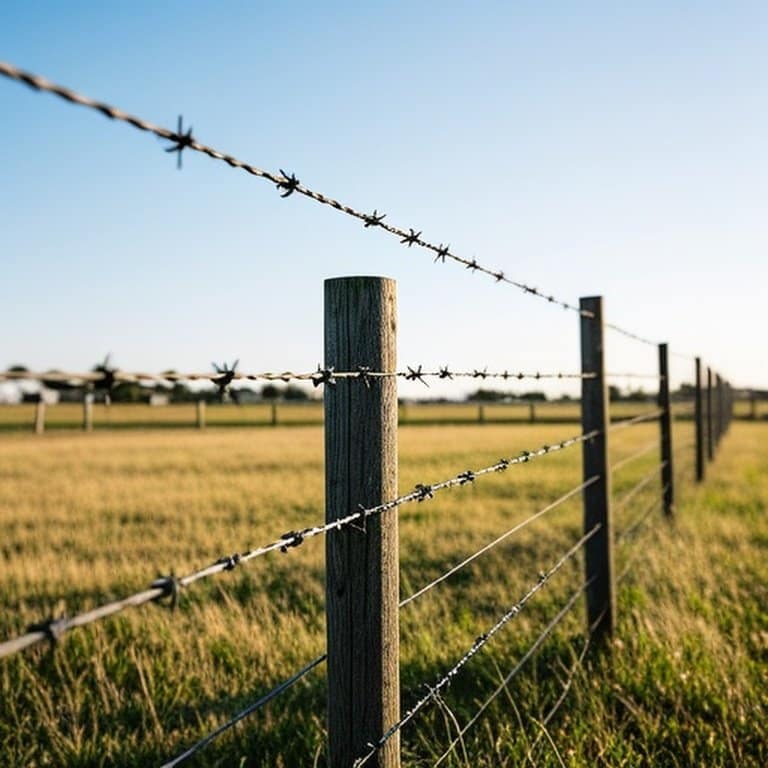
Barbed wire often appears low-maintenance but typically requires frequent attention. Stretching, broken barbs, and animal contact lead to regular repairs. Injuries can also force fence replacement earlier than planned. While simple to fix, barbed wire consumes time through constant small interventions.
The short answer holds because flexibility plus corrosion resistance minimizes maintenance. High-tensile fencing avoids the two biggest drivers of upkeep: permanent deformation and frequent breakage.
How Cattle Behavior Affects This Choice
Calm, trained livestock dramatically reduce fence maintenance regardless of material. However, real-world herds lean, rub, and crowd—especially near feed and water. Flexible systems like high-tensile wire handle this behavior without constant adjustment.
Rigid systems accumulate damage from repeated contact. Welded wire fails at fixed points, while barbed wire stretches and snaps. Operations with unpredictable livestock behavior benefit most from fencing that tolerates pressure instead of resisting it.
Calves vs Mature Cattle Considerations
Young livestock apply less force, allowing most fences to perform with minimal maintenance initially. As animals mature, pressure increases, and maintenance demands diverge sharply.
High-tensile fencing scales well across life stages, maintaining tension with minimal intervention. Welded and barbed wire often require increased attention as animals grow, leading to higher long-term maintenance costs.
Terrain, Visibility, and Pressure Zones
Uneven terrain increases maintenance for all fence types, but flexible systems adapt better to ground movement and seasonal changes. Welded wire struggles most in dips and rises, while high-tensile systems tolerate variation when properly braced.
Pressure zones—corners, gates, feeding areas—drive most maintenance. Reinforcing these areas early reduces overall upkeep regardless of fence choice.
When This Works Well
- High-tensile wire for long perimeter fencing
- Operations with limited labor availability
- Calm or behavior-trained livestock
- Well-braced installations on stable terrain
- Situations prioritizing long inspection intervals
When This Is Not Recommended
- High-tensile without proper installation skill
- Welded wire in high-pressure livestock areas
- Barbed wire where injuries trigger replacements
- Any fence neglected in pressure zones
- Systems chosen without considering behavior
Alternatives or Better Options
Combination systems often reduce maintenance further. High-tensile wire with electric offsets minimizes physical contact, extending wire life. Woven wire paired with electric deterrents reduces pressure and repair frequency. In small enclosures, non-wire barriers may outperform wire entirely. The lowest-maintenance solution is often layered rather than singular.
Cost, Safety, and Practical Notes
Low-maintenance fencing reduces labor cost more than material cost. High-tensile wire requires precise installation but rewards it with long service intervals. Woven wire trades higher upfront cost for predictable, manageable upkeep. Welded wire and barbed wire often appear simple but demand more frequent fixes. From a safety standpoint, fewer repairs also mean fewer injury risks to both livestock and handlers. Practically, the best low-maintenance fence is one that aligns with how much time you can realistically spend maintaining it.
Quick Takeaway
If minimizing maintenance is the priority, high-tensile wire fencing is usually the best choice when installed correctly. Its flexibility, durability, and resistance to fatigue reduce ongoing repairs. The least maintenance fence is not the strongest-looking one—it’s the one that quietly keeps working with minimal attention.