
Short Answer
Post-and-rail fences use horizontal rails attached to posts with open gaps between them, while board fences use closely spaced or solid vertical or horizontal boards for greater coverage. Post-and-rail is more affordable and decorative, whereas board fencing provides stronger containment, better visibility control, and improved safety for certain livestock.
Why This Question Matters
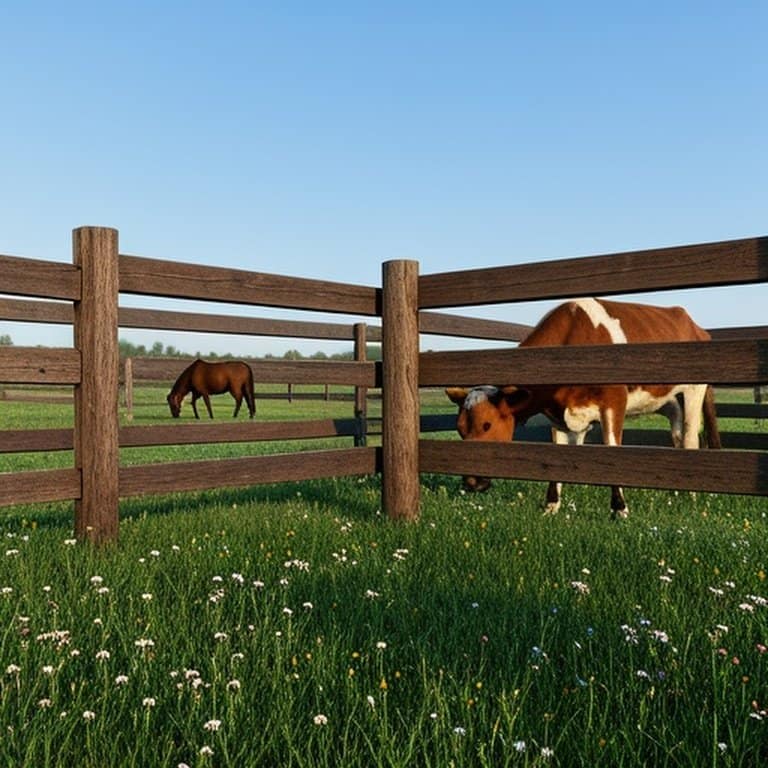
Many farm and ranch owners choose wood fencing for appearance and durability, but the structure type significantly affects performance. The difference between post-and-rail and board fencing impacts containment strength, livestock safety, predator resistance, and overall cost. Horses, cattle, and smaller livestock respond differently to fence visibility and spacing. Choosing the wrong style may lead to animals pushing through gaps, getting limbs caught, or requiring costly reinforcement. Understanding structural differences upfront prevents expensive retrofits and ensures the fence matches both the livestock and the purpose of the enclosure.
Key Factors to Consider
- Rail spacing and gap width
- Livestock size and behavior patterns
- Fence height and visibility needs
- Structural strength under pressure
- Budget and long-term maintenance costs
Detailed Explanation
Post-and-rail fencing consists of vertical posts with two to four horizontal rails spaced apart. This design creates open gaps that allow visibility through the fence. It is commonly used for horses because it is highly visible, reducing accidental collisions. However, the open spacing means smaller animals may slip through unless additional wire mesh is added.
Board fencing, often called plank fencing, uses wider boards placed closer together. Some designs create near-solid walls, while others maintain narrow spacing. The reduced gap size improves containment for smaller livestock and increases structural resistance against animals that lean or push.
Strength is another distinction. Board fences distribute pressure more evenly across wider surfaces. Post-and-rail systems concentrate force on the rails themselves, which may loosen over time if animals lean repeatedly. For cattle or animals prone to pressure behavior, board fencing generally offers more durability.
Cost differs as well. Post-and-rail uses fewer materials and is usually less expensive per linear foot. Board fencing requires more lumber and labor, increasing upfront cost but often providing improved containment. Maintenance demands are similar, though board fences may require repainting or sealing over larger surface areas.
The short answer holds because post-and-rail prioritizes visibility and affordability, while board fencing prioritizes containment and structural strength. The better option depends on livestock type, predator pressure, and budget.
How Cattle Behavior Affects This Choice
Cattle often lean, rub, and push against fences. Post-and-rail designs can weaken over time under repeated pressure, particularly if rails are widely spaced. Board fencing distributes contact force more evenly, reducing rail displacement.
For high-traffic areas such as feeding zones, board fencing generally performs better. Reinforced posts and proper bracing are essential regardless of design. If cattle density is high, structural strength becomes a priority over aesthetics.
Calves vs Mature Cattle Considerations
Calves are more likely to slip through wide gaps in post-and-rail fencing. If using this style, additional wire mesh may be required to prevent escape.
Board fencing, especially with narrow spacing, better contains younger livestock without additional reinforcement. Mature cattle are less likely to slip through gaps but may still test fence strength through leaning or crowding behavior.
Terrain, Visibility, and Pressure Zones
On uneven terrain, post-and-rail fences may create larger bottom gaps unless carefully adjusted. Board fencing can be installed closer to ground level, reducing escape risk.
Visibility plays an important role for horses. Post-and-rail allows animals to see beyond the enclosure, which may reduce stress. Board fencing limits sightlines, which can be beneficial near roads but may create pressure points in herd-dense areas.
When This Works Well
- Post-and-rail for horse paddocks prioritizing visibility
- Board fencing for cattle requiring stronger containment
- Decorative perimeter fencing near homes
- Areas with low predator pressure
- Reinforced corners and properly spaced posts
When This Is Not Recommended
- Post-and-rail without mesh for small livestock
- High predator areas without added deterrents
- Uneven terrain creating large bottom gaps
- High-pressure cattle zones without reinforcement
- Budget-limited projects needing minimal maintenance
Alternatives or Better Options
Hybrid fencing systems combine post-and-rail with welded wire mesh for added containment. High-tensile wire with wood posts offers lower cost and strong performance for large pastures. Solid board fencing with an electric offset wire can improve predator deterrence without sacrificing strength.
Cost, Safety, and Practical Notes
Post-and-rail fencing typically costs less due to reduced lumber use, making it attractive for large areas. Board fencing requires more material and labor, increasing installation expense. However, containment efficiency may reduce future modifications. Safety varies by species. Horses benefit from visible rails to prevent collision injuries. Cattle require strength to withstand pressure. Routine inspection of rails, boards, and fasteners is essential to prevent structural failure. Proper post depth and bracing determine long-term durability more than fence style alone.
Quick Takeaway
Post-and-rail fencing emphasizes visibility and affordability, while board fencing emphasizes containment strength and reduced gaps. The best choice depends on livestock type, pressure behavior, terrain, and budget priorities.