
Short Answer
For most livestock applications, 12.5-gauge woven wire is the best all-around choice. It provides strong resistance to stretching and animal pressure while maintaining long-term durability. Lighter 14-gauge options may work for sheep or low-pressure areas, but cattle and mixed livestock operations generally benefit from heavier gauge wire.
Why This Question Matters
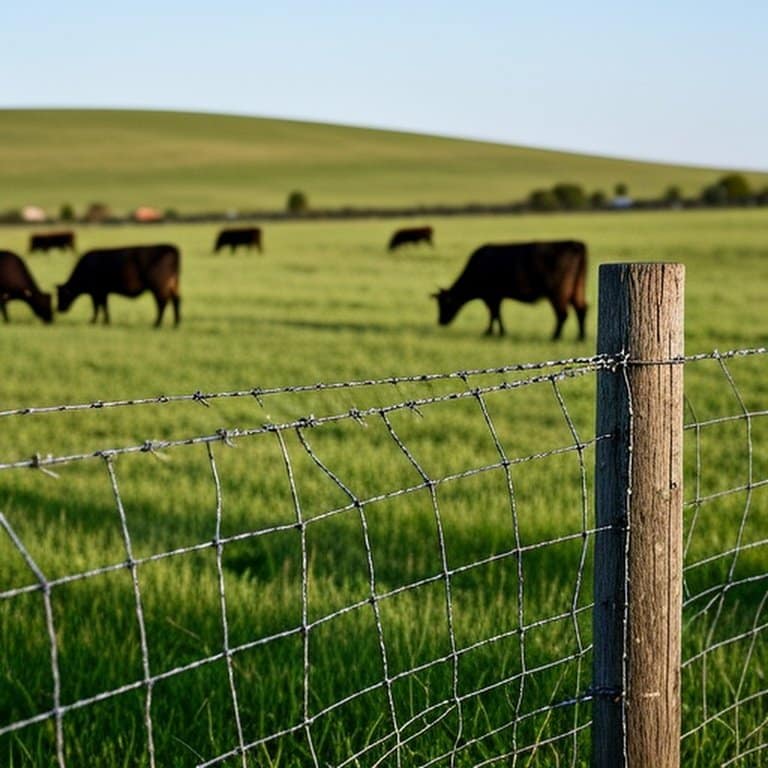
Choosing the wrong wire gauge can shorten fence lifespan, increase maintenance, and lead to livestock escapes. Gauge determines both strength and resistance to deformation under pressure. Many buyers focus only on mesh spacing, overlooking that thinner wire stretches and fatigues faster—especially with cattle. Selecting the correct gauge from the start reduces long-term repair costs and ensures the fence performs as intended for the specific livestock type and environment.
Key Factors to Consider
- Lower gauge numbers mean thicker, stronger wire
- Cattle require heavier gauge than sheep or goats
- High-pressure areas need stronger wire than open pasture
- Proper tensioning is as important as wire thickness
- Galvanization quality affects lifespan more than gauge alone
Detailed Explanation
Wire gauge refers to the thickness of the steel wire used in woven fencing. In fencing, lower numbers indicate thicker wire. A 12.5-gauge fence is thicker and stronger than 14-gauge. Thicker wire resists stretching when livestock lean or push against it. Over time, thinner wire may elongate, causing sagging that weakens the entire fence structure.
For cattle, especially mature animals, 12.5-gauge woven wire is typically recommended for perimeter fencing. Cattle apply consistent pressure through leaning and rubbing. Thicker wire distributes stress more effectively and maintains tension longer. In high-contact areas like corners or near feeding zones, heavier gauge significantly reduces deformation.
Sheep and goats apply less brute force but are more persistent testers. In low-pressure pastures, 14-gauge woven wire may be sufficient if properly tensioned and braced. However, goats in particular may climb or challenge fence integrity, so heavier gauge still provides better longevity in mixed-species systems.
It’s also important to understand that gauge alone does not determine performance. Proper installation—strong corner braces, correct post spacing, and adequate tension—is equally critical. Even heavy wire will fail prematurely if poorly braced. Conversely, well-installed lighter gauge wire in low-pressure environments can perform acceptably for many years.
How Cattle Behavior Affects Gauge Choice
Cattle exert sustained horizontal pressure on fences. When animals lean repeatedly, thinner wire begins to stretch microscopically. Over time, that stretching becomes visible sagging. Heavier gauge wire resists this elongation, maintaining structural integrity longer.
If livestock are trained and an electric offset is added, pressure decreases significantly. In such systems, slightly lighter gauge wire may perform adequately. Without electric deterrence, however, heavier gauge is the safer long-term choice.
Calves vs Mature Cattle Considerations
Calves are lighter and apply less force, but they exploit weaknesses at the bottom of fences. While gauge affects strength, mesh spacing often matters more for young livestock. Graduated spacing prevents calves from slipping through lower openings.
For sheep and goats, kids and lambs require tighter bottom spacing. Gauge influences durability but not containment size. In mixed-age systems, pairing appropriate mesh design with 12.5-gauge wire creates both strength and security.
Terrain, Visibility, and Pressure Zones
Uneven terrain increases stress points along a fence line. Wire may be overtightened on hills or loosely fitted in dips. Heavier gauge wire tolerates uneven tension better than lighter options.
Pressure zones—such as near water or feed—age faster regardless of gauge. Reinforcing these sections with electric offsets or additional bracing can significantly extend fence lifespan.
When This Works Well
- Cattle perimeter fencing requiring long-term durability
- Mixed livestock farms needing one universal solution
- High-pressure zones near feeders or gates
- Regions with moderate to high livestock density
- Installations designed for 20+ year lifespan
When This Is Not Recommended
- Temporary fencing systems needing frequent relocation
- Very low-pressure sheep pastures on tight budgets
- Short-term land leases with limited infrastructure investment
- Systems relying entirely on electric psychological containment
- Areas where installation quality cannot be ensured
Alternatives or Better Options
14-Gauge Woven Wire
Lower cost and lighter weight, suitable for sheep or low-pressure applications. May require earlier retensioning in cattle environments.
High-Tensile Wire Fence
Uses multiple tensioned strands rather than mesh. Can last decades and is cost-effective for cattle, but less secure for small livestock without additional strands.
Welded Wire Panels
Strong and rigid, ideal for small enclosures or pens. Not ideal for long pasture runs due to reduced flexibility.
Cost, Safety, and Practical Notes
Heavier gauge woven wire costs more per roll, but often reduces long-term maintenance. Thicker wire resists stretching, meaning fewer retensioning adjustments over time. When calculating cost, consider lifespan per year rather than initial price alone.
Safety-wise, thicker wire reduces breakage risk. Broken wire ends pose injury hazards to livestock. Properly tensioned heavy gauge wire maintains smooth structure and minimizes sharp protrusions.
Ultimately, 12.5-gauge woven wire offers the best balance of strength, longevity, and multi-species compatibility for most farms and ranches.
Quick Takeaway
For most livestock operations, 12.5-gauge woven wire provides the best combination of strength and durability. Lighter gauges may work in low-pressure environments, but cattle and mixed-species systems benefit from thicker wire and proper bracing.