
Short Answer
For most farm and pasture applications, woven wire is better than welded wire. Woven wire is flexible, absorbs animal pressure without breaking, and lasts longer in large livestock systems. Welded wire works well for small pens and low-pressure enclosures, but its rigid weld points can fail under sustained livestock stress.
Why This Question Matters
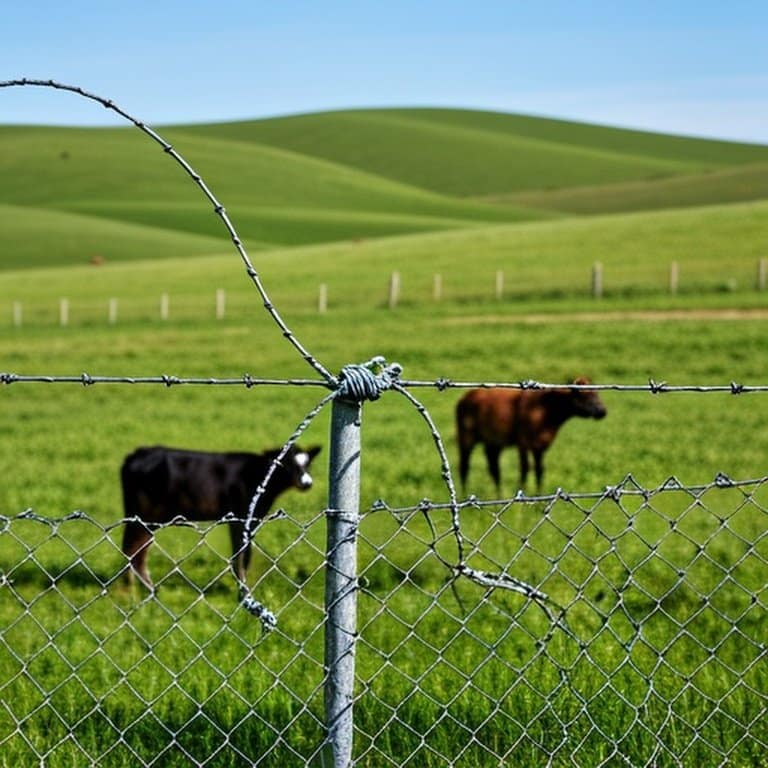
Choosing between woven and welded wire affects durability, repair frequency, livestock safety, and long-term cost. Many farms mistakenly select welded wire because it appears stronger and more rigid at first glance. However, rigidity does not equal durability in pasture conditions. Livestock push, lean, rub, and test fences constantly. A fence that cannot flex under pressure often breaks at its weakest point. Understanding the structural difference between woven knots and welded joints helps prevent expensive early replacements.
Key Factors to Consider
- Flexibility vs rigidity under livestock pressure
- Weld strength compared to woven knot construction
- Expected livestock size and behavior patterns
- Fence length and terrain variation
- Long-term maintenance and repair ease
Detailed Explanation
Woven wire fence is constructed using horizontal and vertical wires tied together with flexible knots. These knots allow the fence to absorb movement and pressure without breaking. When cattle lean against woven wire, the mesh flexes slightly and then returns to shape. This flexibility distributes force along the fence line rather than concentrating stress at one fixed point.
Welded wire, by contrast, uses rigid welds at each wire intersection. While this creates a clean, square appearance, each weld becomes a potential failure point. When livestock apply sustained pressure—especially cattle or goats—the weld joints can snap. Once multiple welds break, the panel weakens rapidly and may require section replacement.
For long pasture runs and perimeter fencing, woven wire typically outperforms welded wire because it tolerates uneven terrain and pressure zones. Farms rarely have perfectly flat ground, and fences must accommodate dips, rises, and seasonal soil shifts. Woven wire adapts more effectively to these conditions.
Welded wire remains useful in specific contexts, such as small animal enclosures, garden areas, poultry runs, or temporary partitions. In short spans with limited animal pressure, its rigidity can be advantageous. However, for large-scale livestock containment, especially cattle or mixed herds, woven wire generally provides superior longevity and structural resilience.
How Cattle Behavior Affects This Choice
Cattle lean, scratch, and push fences repeatedly. Over time, this repeated force stresses weld points in rigid fencing. Woven wire performs better because its knot structure allows controlled movement.
If cattle are trained and electric offset wires are installed, pressure on either fence type decreases significantly. Without electric reinforcement, woven wire remains the more reliable choice for cattle-heavy operations.
Calves vs Mature Cattle Considerations
Calves exert less force but may press against the lower sections of fencing. Welded wire can work in small calf pens where spans are short and well supported.
For mature cattle in open pasture, welded wire becomes risky. Larger animals create dynamic loads when running or crowding, and rigid welds are more prone to failure under those conditions.
Terrain, Visibility, and Pressure Zones
Woven wire adapts better to uneven terrain because it can be tensioned across dips and slopes without stressing joints. Welded wire panels are less forgiving when stretched across variable ground.
Pressure zones—such as near gates, water troughs, or feeding areas—amplify fence stress. In these locations, woven wire with proper bracing typically lasts longer than welded panels.
When This Works Well (Woven Wire)
- Long pasture perimeter fencing
- Cattle or mixed livestock systems
- Uneven or rolling terrain
- High-pressure livestock density areas
- Operations seeking 20+ year durability
When This Is Not Recommended (Welded Wire Limitations)
- Large-scale cattle perimeter fencing
- High-pressure rubbing or leaning zones
- Rough terrain requiring flexibility
- Long continuous fence runs
- Situations lacking strong corner bracing
Alternatives or Better Options
High-Tensile Wire Fence
A multi-strand system offering excellent longevity and lower material cost over long distances. Works well for cattle when combined with electric deterrence.
Welded Wire Panels (Cattle Panels)
Heavy-gauge rigid panels suitable for small corrals or feeding pens. Better than light welded rolls for high-pressure areas.
Electric Offset with Woven Wire
Adding a single electric strand reduces pressure on woven wire and extends lifespan significantly.
Cost, Safety, and Practical Notes
Welded wire rolls may appear less expensive initially, but frequent weld failures can increase long-term repair costs. Woven wire typically has higher upfront material cost but offers better lifespan per year when properly installed.
Safety considerations also favor woven wire in pasture systems. Broken weld points can leave sharp wire ends exposed. Woven knots are less likely to snap suddenly under tension, reducing sudden structural failure.
Installation quality plays a decisive role. Both fence types require proper corner bracing, tensioning, and post spacing. However, woven wire’s structural design inherently tolerates livestock behavior better in large farm environments.
For most farms, woven wire provides stronger long-term performance, especially when durability and maintenance reduction are priorities.
Quick Takeaway
Woven wire is generally better for farms due to flexibility, durability, and pressure resistance. Welded wire works for small, low-pressure enclosures but is not ideal for large pasture livestock containment.