
Short Answer
High-tensile fence is technically stronger in pure wire strength and long-term tension durability, while woven wire is stronger in impact resistance and containment reliability. For perimeter livestock fencing, high-tensile lasts longer under proper tension. For smaller livestock and predator control, woven wire provides more physical barrier strength.
Why This Question Matters
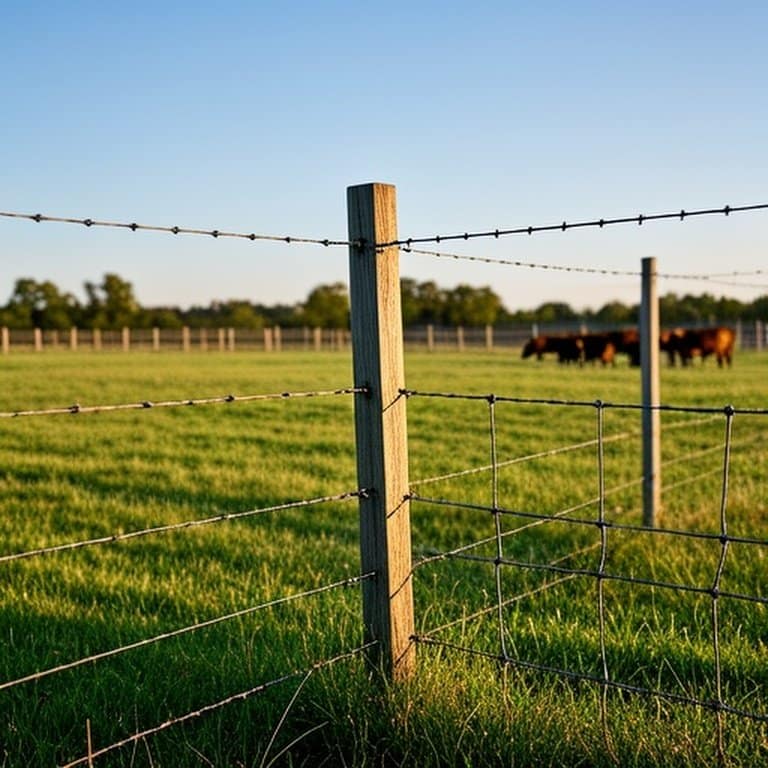
“Stronger” and “more durable” are often confused in fencing decisions. Wire strength (measured in tensile rating) is not the same as structural containment strength. A fence that resists breaking under tension may not stop animals from pushing through. Likewise, a rigid barrier may sag or rust sooner under environmental stress. Choosing between woven wire and high-tensile fencing affects installation cost, lifespan, maintenance demands, and livestock safety. Understanding how each performs under pressure, weather exposure, and animal behavior helps you avoid installing the wrong system for your specific operation.
Key Factors to Consider
- Tensile strength rating of the wire material
- Resistance to animal impact and leaning pressure
- Longevity of galvanization coating outdoors
- Soil stability and brace assembly quality
- Type and size of livestock being contained
Detailed Explanation
High-tensile wire is manufactured from high-carbon steel designed to stretch under extreme tension without breaking. It is installed under significant mechanical tension and relies on brace assemblies to hold that force across long spans. Because of this, it can withstand extreme weather shifts, snow load, and temperature expansion cycles better than most woven wire systems. When properly installed, high-tensile fencing can last 30–40 years or more with minimal structural fatigue.
Woven wire, by contrast, consists of vertical and horizontal wires woven together into a mesh pattern. It distributes pressure across the entire panel rather than relying on a few tensioned strands. This makes it highly resistant to animal impact. When cattle, goats, or sheep push against it, force spreads across the grid rather than concentrating on one strand. That containment reliability is often interpreted as “stronger” in practical farm use.
In terms of durability, high-tensile typically outperforms woven wire in long-term corrosion resistance because it uses thicker individual strands and often heavier galvanization. However, woven wire’s multiple contact points mean localized rust can eventually weaken small sections if vegetation or moisture accumulates.
Ultimately, high-tensile is stronger as a tension system. Woven wire is stronger as a physical barrier. Durability depends heavily on installation quality and environmental exposure.
How Cattle Behavior Affects This Choice
Cattle tend to lean and test fences repeatedly.
High-tensile performs well when electrified to discourage leaning, while woven wire physically resists pressure even without electricity.
If cattle are not trained to respect electric fencing, woven wire often provides more reliable containment.
Calves vs Mature Cattle Considerations
Calves are more likely to slip through multi-strand high-tensile systems without additional wires.
Woven wire prevents escape due to its tight mesh spacing.
For mixed-age herds, woven wire often reduces management complications.
Terrain, Visibility, and Pressure Zones
High-tensile adapts better to long, uneven terrain because it spans greater distances between posts.
Woven wire requires closer post spacing and stronger bracing on slopes.
In high-pressure areas like feeding zones, woven wire generally withstands repeated contact better.
When This Works Well
- High-tensile for large perimeter fencing on expansive ranches
- Woven wire for sheep, goats, and mixed livestock
- High-tensile in low-pressure cattle environments
- Woven wire where predator exclusion is required
- Either system when properly braced and maintained
When This Is Not Recommended
- High-tensile without proper bracing or tension tools
- Woven wire in poorly drained areas without vegetation control
- High-pressure livestock zones without electric deterrent
- Temporary fencing applications requiring frequent relocation
- Installations without long-term maintenance planning
Alternatives or Better Options
Electrified High-Tensile Fence
Combines strength and psychological deterrence. Extremely durable when voltage is maintained properly.
Woven Wire with Offset Electric Wire
Adds deterrence to physical barrier strength, reducing long-term leaning damage.
Heavy-Gauge Welded Wire Fence
Offers rigid containment but may fail at weld points under heavy livestock pressure.
Cost, Safety, and Practical Notes
High-tensile fencing generally has lower material cost per foot and fewer posts, reducing installation expense over large areas. However, specialized tools and skilled installation are essential. Poor tensioning can cause catastrophic brace failure.
Woven wire typically costs more in material and labor due to closer post spacing and heavier rolls. However, it provides predictable containment without relying on animal training.
From a safety perspective, high-tensile wires under extreme tension can snap back dangerously if cut improperly. Woven wire panels are safer during repairs but heavier to handle.
Durability is less about which system is “stronger” and more about whether it matches your livestock type, terrain, and management style.
Quick Takeaway
High-tensile fence is stronger in raw wire strength and long-term durability. Woven wire is stronger as a physical containment barrier. The best choice depends on livestock type, pressure levels, and installation quality.