
Short Answer
To inspect fence posts for rot or weakness, check for soft wood at ground level, cracking or splitting, leaning movement, hollow sounds when tapped, insect damage, and looseness in soil. Use a screwdriver or probe to test firmness near the base. Any post that shifts easily or shows deep decay should be reinforced or replaced immediately.
Why This Question Matters
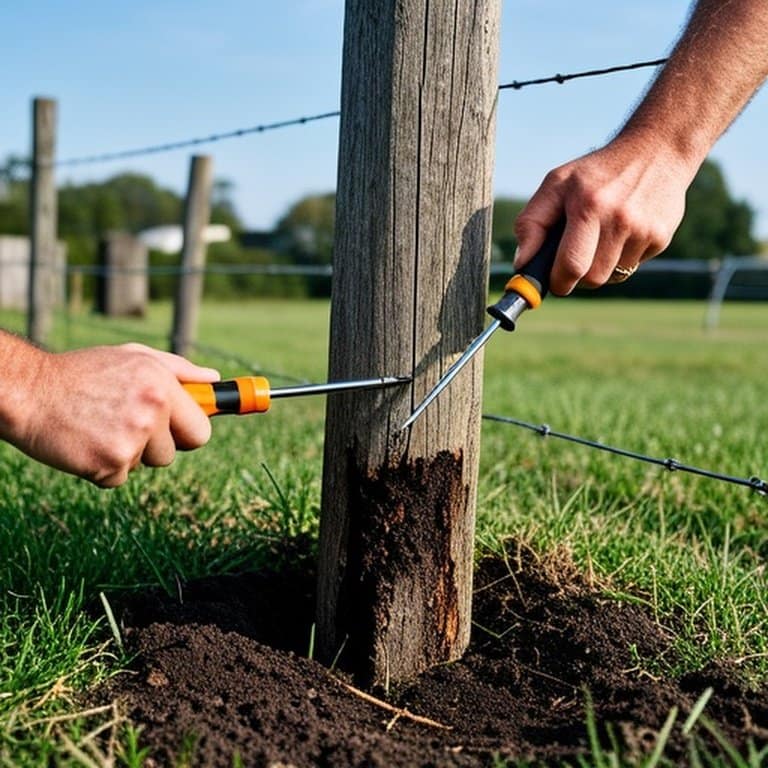
Fence posts are the structural backbone of any farm fence. Wire, rails, and braces rely entirely on post stability. When a post begins to rot—especially at ground level—the entire fence line becomes vulnerable. Most fence failures start below the surface where moisture and soil organisms accelerate decay.
Ignoring early signs of rot can lead to collapsed sections, livestock escape, or costly full-line rebuilds. Weak posts also increase tension strain on adjacent posts, spreading the problem. Regular inspection prevents small issues from escalating into structural failure. Knowing exactly how to identify rot or internal weakness allows you to act before containment and safety are compromised.
Key Factors to Consider
- Ground-line rot is the most common and dangerous failure point
- Moisture exposure accelerates internal wood decay
- Soil type affects post stability and longevity
- Insect activity weakens internal structure
- Movement under pressure signals foundation compromise
Detailed Explanation
The most critical inspection point is the ground line—the area where the post meets soil. This is where moisture accumulates and decay organisms thrive. Even treated wood eventually weakens here. Look for dark discoloration, crumbling fibers, or cracking around the base. Ground-line rot often spreads internally before becoming visible on the surface.
A simple probe test helps confirm structural integrity. Press a screwdriver or awl into the wood near soil level. Sound wood resists penetration and feels firm. If the tool sinks easily or pulls out soft material, internal rot has already developed. Tapping the post with a hammer can also reveal hollow sounds, indicating internal decay.
Movement testing is equally important. Push the post firmly from multiple directions. A healthy post should resist movement and feel anchored. If it shifts noticeably, soil compaction may have loosened or internal weakening may have occurred. Posts supporting corners and gates deserve extra scrutiny because they carry higher tension loads.
Finally, inspect for splitting, deep vertical cracks, or visible insect channels. While surface cracks are common in aging wood, deep splits combined with softness suggest structural compromise. Insect damage—such as carpenter ants or termites—can hollow posts internally without obvious external collapse. Thorough inspection ensures that hidden weaknesses are identified before failure occurs.
How Livestock Behavior Affects Post Stress
Livestock frequently apply pressure to fence posts. Cattle rub, horses lean, and goats climb or push against weak sections. Posts in feeding areas or along common travel routes experience significantly higher stress.
Even minor rot can become critical when animals repeatedly test a post. A slightly weakened post may appear stable during inspection but fail under livestock pressure. High-contact zones require more frequent and detailed evaluation.
Calves vs Mature Livestock Considerations
Younger animals are lighter but more exploratory. They often test lower fence sections and may exploit movement in weakened posts. While they cause less force, they expose structural weakness early.
Mature livestock exert greater pressure. A corner post supporting tensioned wire must withstand constant pull. If that post shows rot, structural failure may occur rapidly. Larger animals accelerate collapse when post integrity is compromised.
Inspection priority should increase where mature livestock pressure is highest.
Terrain, Visibility, and Pressure Zones
Wet soils, clay-heavy ground, and poor drainage dramatically increase rot risk. Posts in low-lying areas or near water troughs degrade faster due to prolonged moisture exposure.
Hillsides introduce movement stress as soil shifts seasonally. In shaded areas, slower drying increases decay rates. Hidden fence lines behind brush may go longer between inspections, allowing rot to progress unnoticed.
Posts in wet, shaded, or high-tension areas require closer monitoring than dry, low-pressure sections.
When Immediate Action Is Needed
- Post moves easily when pushed
- Probe sinks deeply into wood at ground level
- Visible crumbling or soft wood fibers
- Corner or gate post shows cracking with tension strain
- Multiple posts along a section show similar decay
When Monitoring May Be Acceptable (Short Term)
- Minor surface cracking without softness
- Slight discoloration but firm internal structure
- Stable post with no movement under pressure
- Cosmetic aging without structural compromise
Monitoring should include re-checking within a few weeks.
Alternatives or Better Options
Steel T-Posts or Pipe Posts
Metal posts eliminate rot risk and offer long-term durability, particularly in wet or high-stress areas.
Concrete Footing Reinforcement
Setting posts in properly drained concrete can reduce soil movement and extend lifespan in unstable terrain.
Gravel Backfill Installation
Using compacted gravel instead of soil improves drainage around wooden posts and slows rot progression.
Cost, Safety, and Practical Notes
Replacing a single rotted post is inexpensive compared to repairing a collapsed fence line. Delaying replacement increases tension stress on adjacent posts, leading to chain failures.
From a safety perspective, weakened posts can cause sagging wire, sharp edges, or sudden collapse under animal pressure. This increases injury risk for livestock and handlers.
Practically, keep basic tools—probe, shovel, level, spare posts—available during inspection rounds. Early detection allows same-day correction rather than emergency repair.
Regular inspection extends fence lifespan and protects containment reliability. Posts are the foundation. When they weaken, everything above them is at risk.
Quick Takeaway
Inspect fence posts at ground level for softness, movement, cracks, and insect damage. Probe the base, test stability, and prioritize high-stress areas like corners and gates. Early detection prevents structural collapse, livestock escape, and expensive rebuilds.