
Short Answer
Concrete fence posts should cure at least 24–48 hours before attaching light fence wire, and ideally 72 hours or more before applying full tension. For high-tension or woven wire fencing, waiting 5–7 days provides stronger structural stability and reduces the risk of post movement or cracking.
Why This Question Matters
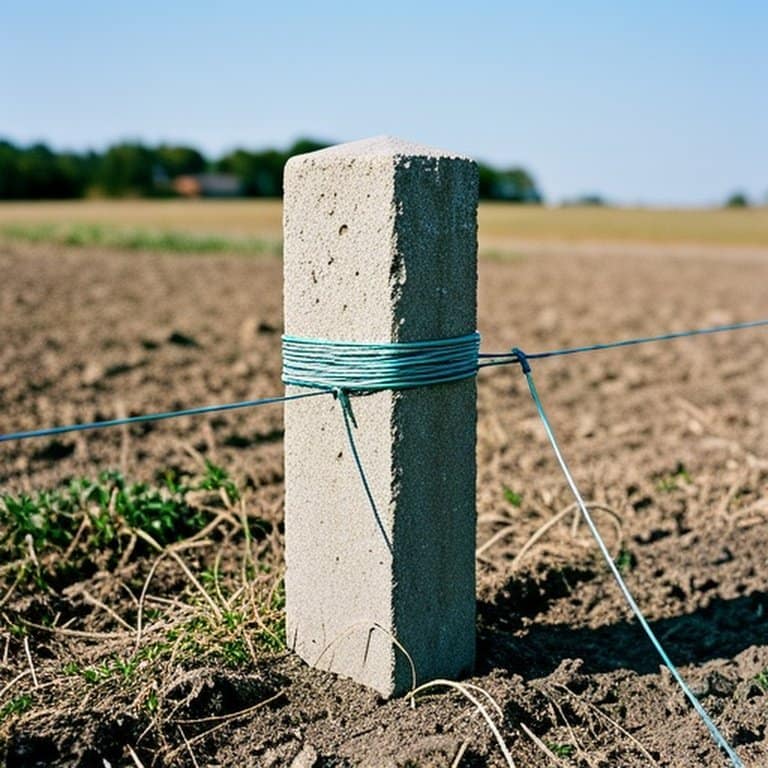
Attaching fence wire too soon after setting posts in concrete is one of the most common causes of leaning fences and loose corners. While concrete may feel hard within a day, it has not reached sufficient structural strength to resist wire tension or livestock pressure.
Fence systems rely on stable end and corner posts. If tension is applied before the concrete has gained enough strength, the post can shift microscopically in the footing. That small movement may not be obvious immediately, but over time it leads to sagging wire, misalignment, and repeated repairs.
Understanding cure time prevents premature loading, protects your labor investment, and ensures the fence performs correctly for years.
Key Factors to Consider
- Type of fence wire (woven, barbed, high-tensile)
- Weather conditions during curing
- Soil moisture and drainage quality
- Size and depth of the concrete footing
- Whether posts are corner/end or line posts
Detailed Explanation
Concrete does not “dry” — it cures through a chemical reaction called hydration. Initial set typically occurs within 6–12 hours, and the concrete may feel firm within 24 hours. However, structural strength develops gradually. At 24 hours, concrete may reach roughly 30–40% of its final strength. At 72 hours, it gains significantly more stability.
For light-duty fence applications such as low-tension welded wire or simple perimeter lines, attaching wire after 24–48 hours may be acceptable if the weather is warm and dry. However, for woven wire or high-tensile fencing, the tension force is much higher. These systems rely heavily on strong corner and end posts. In those cases, waiting at least 72 hours — and preferably 5–7 days — is recommended.
Cold temperatures slow curing dramatically. If installation occurs in cool weather (below 50°F / 10°C), extend curing time accordingly. Wet conditions can also affect surface curing, though properly mixed concrete continues curing internally.
The most critical posts are corners, brace assemblies, and gate posts. Line posts carry less tension and may tolerate earlier loading, but end posts must be fully stable before stretching wire.
If in doubt, wait longer. Concrete strength improves substantially within the first week, and patience during curing prevents long-term structural issues.
How Cattle Behavior Affects This Choice
Cattle apply unpredictable lateral force through leaning, rubbing, or pushing. Even if wire tension seems moderate, livestock behavior can double the stress on newly set posts.
Allowing full curing time ensures posts resist both mechanical tension and animal pressure.
Calves vs Mature Cattle Considerations
Calves exert minimal load on fence posts, but mature cattle create significant strain. If the fence will hold full-grown livestock, prioritize longer curing times before tensioning.
Design and cure time should match the heaviest expected load.
Terrain, Visibility, and Pressure Zones
Sloped terrain increases stress on end posts because wire tension transfers unevenly. High-traffic areas such as gates and feeding zones experience repeated pressure.
In these zones, full 5–7 day curing is strongly recommended before attaching or tensioning wire.
When This Works Well
- Warm weather above 60°F (15°C)
- Deep concrete footings with good drainage
- Standard woven wire with moderate tension
- Properly braced corner assemblies
- Installations where tensioning occurs gradually
When This Is Not Recommended
- Cold-weather installations below 50°F
- Shallow concrete footings
- High-tensile fencing stretched immediately
- Poorly compacted soil around footings
- Immediate livestock pressure after installation
Alternatives or Better Options
Gravel Backfill Instead of Concrete
In well-draining soil, compacted crushed stone allows immediate tensioning in many cases and reduces frost-heave risk.
Fast-Setting Concrete Mixes
Rapid-set products allow earlier loading, often within 4–24 hours, but must be mixed and installed carefully.
Hybrid System (Concrete Corners, Driven Line Posts)
Set concrete only at corners and braces while driving steel line posts, reducing cure-time delays.
Cost, Safety, and Practical Notes
Waiting for concrete to cure may delay installation by several days, but it prevents costly rework later. If posts shift after wire tensioning, repairs require removing tension and resetting footings — doubling labor.
Avoid applying full tension abruptly. Even after curing, stretch woven or high-tensile wire gradually to reduce shock load on posts.
In hot weather, lightly misting concrete during the first 24 hours can prevent rapid surface drying and cracking. In cold conditions, insulating blankets may help maintain curing temperature.
Patience during curing protects structural integrity more effectively than rushing to finish the fence line.
Quick Takeaway
Concrete may feel hard after 24 hours, but for fence stability, wait at least 72 hours — and ideally up to 7 days for high-tension fencing. Proper curing prevents post movement, sagging wire, and long-term structural failure.