
Short Answer
To fix a fence that fell over in heavy rain, first assess whether the posts shifted, pulled out, or snapped due to saturated soil. Reset or replace unstable posts, improve drainage or base support (often with gravel), and only then reattach or re-tension the fence material. Structural stability must be restored before surface repairs.
Why This Question Matters
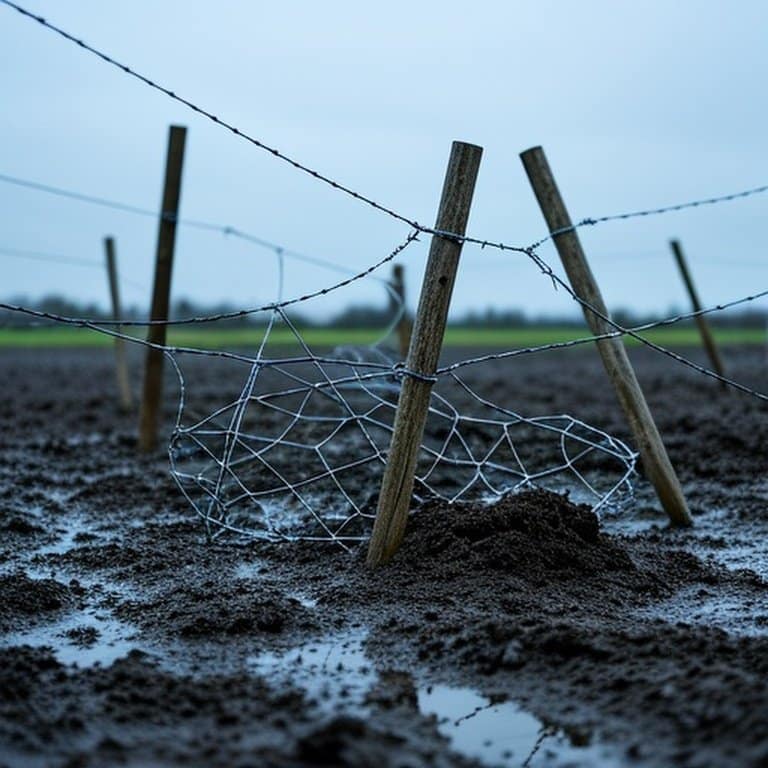
Heavy rain rarely destroys fencing by itself. The real cause is soil saturation. When ground becomes waterlogged, it loses compaction and holding strength. Fence posts that were stable in dry conditions can suddenly lean, sink, or pull free under normal fence tension.
If you simply stand the fence back up and tighten the wire without correcting soil failure, it will likely collapse again after the next storm. For livestock fencing, repeated collapse increases escape risk and animal pressure damage. Wet soil also hides erosion cavities around posts, making the fence look repairable when deeper instability remains.
Understanding why the fence fell—soil washout, shallow post depth, inadequate tamping, or brace failure—determines whether you reset posts, reinforce them, or replace sections entirely. The goal is not to lift the fence upright. The goal is to restore long-term structural stability.
Key Factors to Consider
- Soil type and degree of saturation
- Whether posts shifted, snapped, or pulled free
- Depth and anchoring of original installation
- Drainage patterns and runoff direction
- Condition of corner and brace assemblies
Detailed Explanation
When a fence falls over after heavy rain, the most common cause is loss of soil grip around posts. Water fills air gaps in the soil, reducing friction and weakening resistance against lateral pressure from wire tension or animal movement. Clay soils become soft and slick. Sandy soils may wash away entirely, creating voids around post bases.
Begin by inspecting each fallen post. If posts are intact but leaning, they likely pulled loose from softened ground. In this case, remove surrounding loose soil and reset the post deeper if possible. Adding crushed gravel around the base improves drainage and compaction compared to pure backfill soil. Tamp in layers to restore firmness.
If posts snapped at ground level, water exposure may have accelerated rot or weakened untreated wood. These posts must be replaced. Reinstall deeper than the original set if erosion was severe. Consider adding diagonal bracing if multiple posts failed along one run.
Next, inspect corners and brace assemblies. Heavy rain increases fence tension shifts, especially if part of the line collapsed. A compromised corner will prevent long-term repair success. Reinforce or reset braces before reattaching fencing material.
Only after posts are stable should you reattach or tighten wire or panels. Over-tightening during soft soil conditions can pull posts loose again. Allow soil to firm up slightly before applying full tension.
Finally, address drainage. Redirect runoff, add gravel bases, or create shallow swales if water consistently pools along the fence line. Without drainage correction, repeated collapse is likely.
The repair sequence is simple but critical: stabilize soil, secure posts, reinforce anchors, then restore fence material tension.
How Soil Type Affects Repair Strategy
Different soils fail differently under heavy rain. Clay expands and becomes slick, reducing lateral grip. Sandy soils drain quickly but erode easily under flowing water. Loamy soils may soften but regain firmness faster once dried.
Understanding soil behavior determines whether gravel backfill, deeper post setting, or drainage redirection is the best long-term solution.
When Corner Braces Need Reinforcement
If multiple posts along one section collapsed, tension likely shifted toward the nearest corner. This increases strain on brace posts. Check for loosened diagonal wires or leaning corner assemblies.
Reinforcing corners prevents future collapse during the next heavy rainfall event.
Temporary Stabilization vs Permanent Repair
In livestock operations, temporary stabilization may be necessary to contain animals. This can include temporary posts, portable electric lines, or quick gravel tamping.
However, temporary fixes should not replace full structural correction. Permanent stability requires proper depth, compaction, and drainage.
When This Works Well
- Posts remain structurally intact but shifted
- Soil erosion is moderate and repairable
- Corners and braces are stable
- Collapse is localized to one section
- Drainage improvements are feasible
When This Is Not Recommended
- Extensive soil washout across long fence runs
- Multiple snapped or severely rotted posts
- Foundation erosion beneath entire fence line
- Persistent flooding in low-lying areas
- Repeated seasonal collapse history
Alternatives or Better Options
Switch to Gravel-Set Posts Instead of Pure Soil Backfill
Gravel improves drainage and reduces future saturation-related loosening compared to soil-only backfill.
Install Deeper or Larger Diameter Posts
Heavier posts with increased depth resist shifting in unstable soils.
Upgrade to High-Tensile Wire Systems
High-tensile fencing applies less constant lateral load on posts, reducing collapse risk during saturation.
Cost, Safety, and Practical Notes
Resetting posts is less expensive than replacing full fence runs, but labor increases significantly in muddy conditions. Working in saturated soil can be physically demanding and unstable.
Safety is important. Muddy ground increases slip risk. Fallen wire may still be under uneven tension and can snap unexpectedly when handled. Use gloves, eye protection, and controlled tension release methods.
From a practical standpoint, repairing too early—while soil remains waterlogged—can compromise stability. Whenever possible, allow partial drying before applying full tension to restored sections.
Long-term durability depends on drainage correction as much as structural repair.
Quick Takeaway
A fence that fell over in heavy rain usually failed because saturated soil lost holding strength. Reset or replace unstable posts, improve drainage, reinforce braces, and only then restore wire tension. Fix the soil and structure first—surface repairs alone will not last.