
Short Answer
Fence damage after a storm requires full replacement when structural components—corner posts, brace assemblies, or multiple spans of wire—are compromised beyond localized repair. If more than 30–40% of posts are unstable, wire is severely stretched or tangled, or braces have failed, replacing the section is usually safer, stronger, and more cost-effective than repeated repairs.
Why This Question Matters
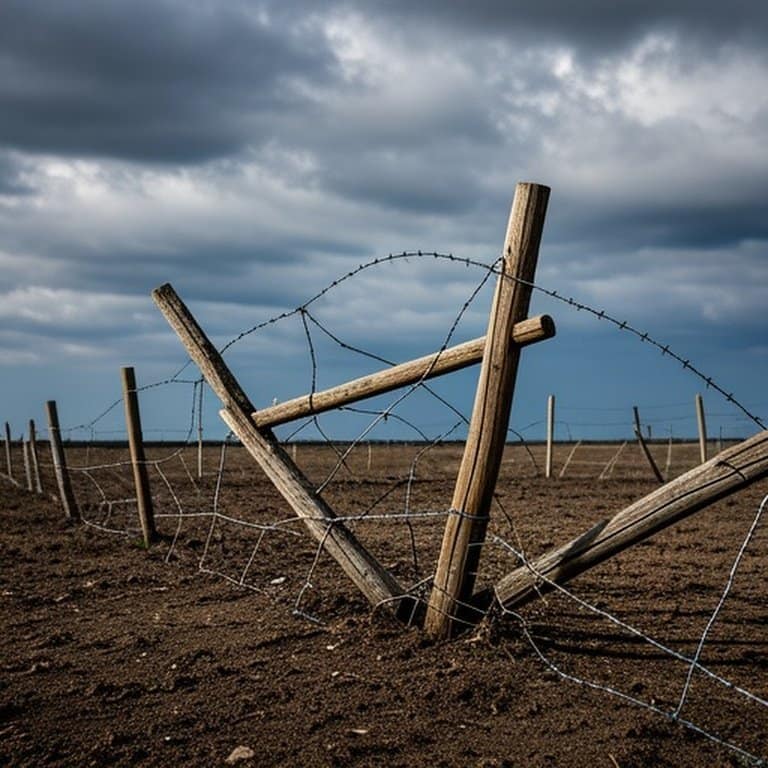
After major storms, it is tempting to repair only visible damage. However, storms create combined stress: wind pressure, flying debris impact, saturated soil, and sudden tension shifts. What appears to be minor leaning or sagging may actually indicate deep structural weakening.
Repeated patchwork repairs often cost more over time than replacing a compromised section properly. Weak corner posts can fail later under livestock pressure. Stretched wire loses strength permanently. Soil erosion may continue shifting posts long after the storm has passed.
Understanding when damage crosses the line from “repairable” to “structurally compromised” protects livestock containment, reduces liability, and prevents cascading failures during the next severe weather event.
Key Factors to Consider
- Percentage of damaged or shifted posts
- Integrity of corner and brace assemblies
- Degree of permanent wire stretch or deformation
- Soil stability around post bases
- Length of continuous damaged section
Detailed Explanation
Storm damage becomes replacement-level severe when structural load paths are broken. Fences rely on tension systems anchored by stable corner posts and braced ends. If those anchor points fail, the entire fence section loses structural integrity. Simply tightening wire against compromised braces transfers stress to already weakened components.
A useful rule of thumb is evaluating how many structural elements are affected. If only one or two line posts shifted but braces remain intact, repair is reasonable. However, if multiple posts lean, corner assemblies loosened, or braces pulled apart, the fence’s foundational stability is compromised. Rebuilding often restores strength more efficiently than piecemeal reinforcement.
Wire condition also matters. High winds and debris can stretch woven or barbed wire beyond its elastic limit. Once permanently elongated, wire cannot regain full tension strength. Attempting to reuse stretched wire often leads to chronic sagging and livestock pressure points.
Finally, examine soil conditions. Heavy rain or flooding can undermine post bases. If erosion continues or soil remains unstable, resetting individual posts may not solve the underlying issue. In these cases, replacing the section with improved footing depth or upgraded bracing creates a more resilient system moving forward.
When the core structure is weakened—not just cosmetic alignment—replacement becomes the safer long-term solution.
How Cattle Behavior Affects This Decision
Cattle test weak fencing quickly. Leaning pressure exposes hidden structural weakness.
If storm damage affects brace strength, cattle weight may accelerate collapse.
Replacement is often safer in high-pressure livestock areas.
Calves vs Mature Cattle Considerations
Calves exploit gaps and sagging bottom strands.
Mature cattle apply significant lateral pressure against weakened posts.
Storm-damaged fences holding mature cattle often justify full rebuild.
Terrain, Visibility, and Pressure Zones
Wind funnels across ridges and open corridors, concentrating damage.
Low-lying areas may experience soil washout around posts.
Sections near feeding or watering zones endure more livestock pressure.
When This Works Well (Full Replacement)
- Corner or brace posts have failed structurally
- Over one-third of posts are unstable
- Wire is severely stretched or tangled
- Soil erosion has undermined foundations
- Fence has prior repair history and age-related weakening
When This Is Not Recommended
- Damage limited to a few line posts
- Wire remains structurally sound
- Bracing system intact
- Soil stability unaffected
- Section is relatively new and structurally solid
Alternatives or Better Options
Partial Section Replacement
Replace only the damaged span between two stable braces while preserving intact sections.
Upgrade Bracing During Repair
Install H-braces or diagonal brace systems to improve storm resistance.
Convert to High-Tensile System
High-tensile wire tolerates wind stress better and allows easier seasonal re-tensioning.
Cost, Safety, and Practical Notes
Full replacement requires higher upfront labor and material costs but often reduces recurring maintenance expenses. Repeated small repairs add labor time and may mask structural weakness.
Safety is critical during post-storm repairs. Tensioned wire under strain can snap unexpectedly. Downed trees or debris may hide stressed wire sections. Always release tension before cutting damaged wire and inspect braces carefully before applying new load.
If insurance coverage applies, documenting full structural failure may support replacement claims more effectively than incremental repair records.
A properly rebuilt section restores uniform tension, straight alignment, and structural integrity—often improving storm resilience compared to the original installation.
Quick Takeaway
Replace a storm-damaged fence when structural components—especially braces and corner posts—are compromised, multiple posts have shifted, or wire is permanently stretched. Repair works for localized issues. But when the load-bearing system fails, full replacement restores safety, strength, and long-term reliability.