
Why This Question Matters
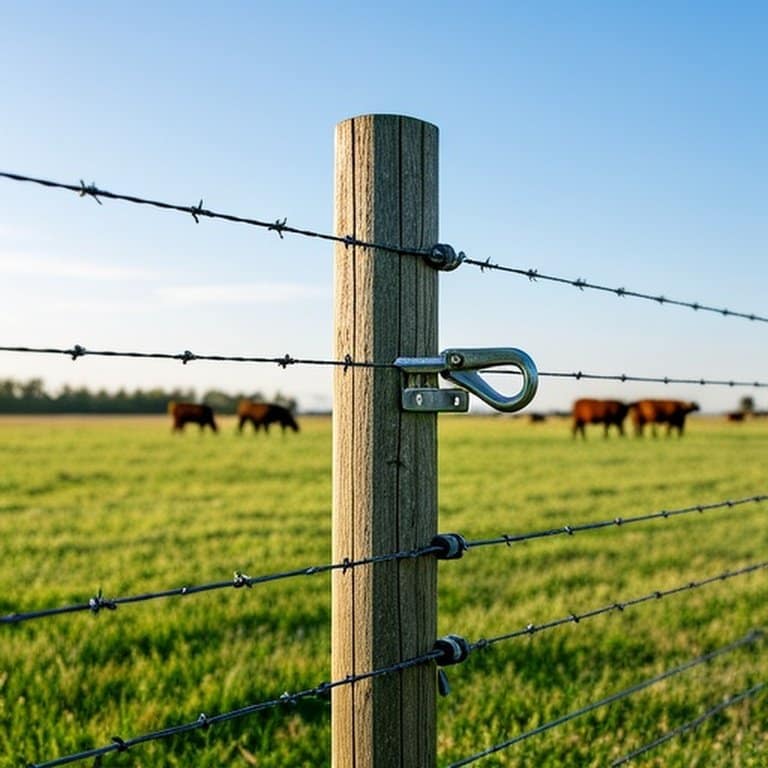
Correct wire tension determines whether a fence performs for years or fails within a season. If the wire is too loose, livestock pressure, wind, or snow load can cause sagging and structural weakness. If it’s too tight, posts may lean, staples can pull out, and temperature changes may cause breakage.
Proper tension also affects safety. Over-tightened electric wire may snap under contraction in winter, while loose wire can entangle animals. For high-tensile systems especially, incorrect tension undermines the entire fence design. Getting this right protects your investment, reduces maintenance, and ensures long-term reliability.
Quick Takeaway
Fence wire should be tight enough to remain straight under pressure but flexible enough to absorb seasonal movement. High-tensile systems require measurable tension, while woven wire should be firmly stretched without deforming the mesh. Correct tension protects posts, prevents sagging, and ensures long-term durability.
Short Answer
Fence wire should be tight enough to remain straight and resist pressure without sagging, but not so tight that it overstresses posts or stretches beyond its elastic limit. High-tensile wire typically requires measured tension (often 150–250 lbs depending on gauge), while woven wire should be firmly stretched with slight flexibility. Proper tension balances strength, durability, and seasonal movement.
Key Factors to Consider
- Type and gauge of wire being installed
- Fence purpose: perimeter containment vs interior division
- Post spacing and brace strength
- Climate and seasonal temperature swings
- Livestock size and expected pressure
Detailed Explanation
The proper tension depends primarily on wire type. High-tensile smooth wire is engineered to operate under measurable load. Manufacturers often recommend tension ranges between 150 and 250 pounds, depending on gauge and coating. This tension allows the wire to remain straight under livestock pressure while retaining enough elasticity to handle seasonal expansion and contraction.
Woven wire fence behaves differently. Instead of relying on high tensile force alone, it distributes stress across vertical and horizontal strands. It should be stretched firmly so the vertical stays remain upright and the mesh pattern is uniform. However, it should not be stretched to the point where horizontal wires visibly bow or the knots deform.
Temperature plays a critical role. Steel contracts in cold weather and expands in heat. Over-tightening during summer installation can lead to snapped wires in winter. Conversely, tensioning in very cold conditions may produce slack during warmer months. Professional installers often tension wire at moderate temperatures or use in-line tensioners to allow seasonal adjustment.
Finally, tension must match brace strength. Even perfectly tensioned wire will fail if corner posts and end braces are weak. A well-built brace assembly absorbs and distributes load. Without proper bracing, tightening wire simply transfers stress into post movement instead of structural stability.
When wire appears straight, evenly tensioned, and stable under moderate hand pressure—but not rigid like a guitar string—you are likely within the proper working range.
How Livestock Pressure Affects Proper Tension
Cattle lean, horses test boundaries, and goats push low spots. Higher livestock pressure requires firmer tension, particularly on perimeter fencing. High-tensile systems are ideal for cattle because they rebound after impact. However, overtightening increases strain on braces.
For lower-pressure interior cross fencing, moderate tension often performs better long term because it allows controlled flexibility rather than rigid resistance.
Temperature and Seasonal Adjustment
Seasonal temperature changes can alter tension significantly. In climates with freeze-thaw cycles or extreme summers, tension may fluctuate noticeably. Installing tensioners or springs allows adjustment without rebuilding.
If wire becomes drum-tight in winter, it may exceed safe working load. If it sags significantly in summer, livestock pressure increases. Proper installation anticipates these shifts rather than reacting after failure.
When This Works Well
- High-tensile perimeter fences with solid brace assemblies
- Moderate post spacing (8–12 feet typical for wire fencing)
- Areas with predictable seasonal temperature variation
- Installations using proper stretching tools and tension gauges
When This Is Not Recommended
- Weak corner posts without proper H-brace construction
- Extremely rocky soil that prevents stable post anchoring
- Temporary fencing systems designed for flexibility
- Situations where wire tension cannot be measured or adjusted
Alternatives or Better Options
Spring-Loaded Tensioners
These devices absorb expansion and contraction automatically. They reduce seasonal stress and help maintain consistent tension without manual adjustment.
In-Line Ratchet Tensioners
Allow precise adjustment after installation. Useful for long runs or climates with major temperature swings.
Electric Polywire for Interior Divisions
Designed for lighter tension and flexibility. Best for temporary or rotational grazing systems rather than permanent perimeter fencing.
Cost, Safety, and Practical Notes
Using a tension gauge adds small upfront cost but prevents expensive structural failures. Over-tightening can crack corner posts or pull staples loose, especially in treated wood that has dried and hardened.
Always stand clear when tightening wire. High-tensile wire stores significant energy and can recoil if it breaks. Wear gloves and eye protection.
Proper bracing is often more important than extreme tension. A well-built brace with moderate wire tension will outlast an overtightened system anchored to weak posts. The goal is structural balance, not maximum tightness.