
Short Answer
Heavy rain and flooding damage fences by saturating soil, weakening post stability, eroding ground around anchors, increasing corrosion, and applying debris pressure against fence lines. Water movement shifts soil structure and reduces holding strength, causing leaning posts, sagging wires, broken panels, and electrical failures in powered systems.
Why This Question Matters
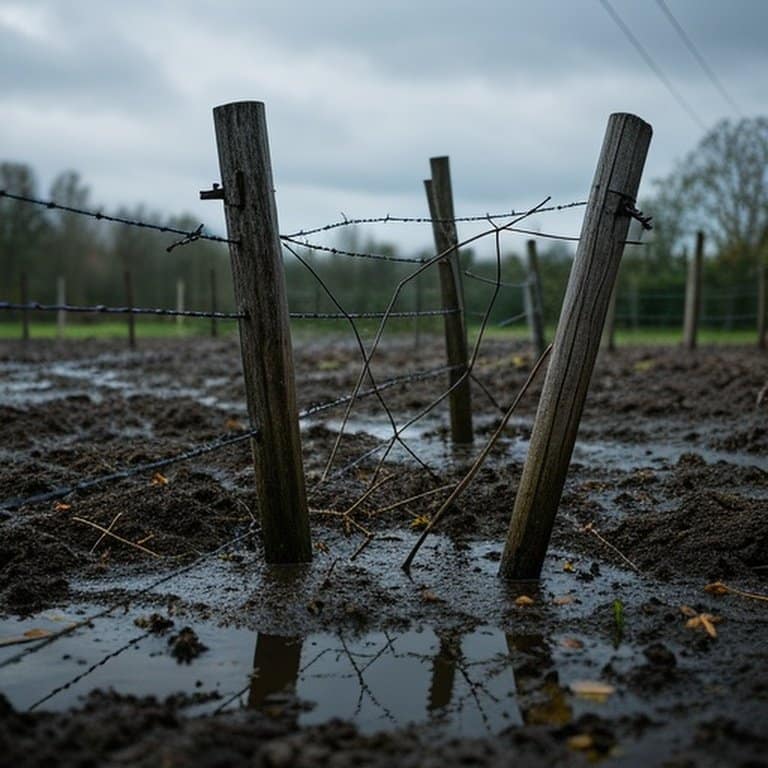
Flood damage is often underestimated because fences may appear intact immediately after rainfall. However, the real damage occurs below ground level. When soil becomes saturated, it loses compaction strength and grip around fence posts. Fast-moving water can erode supporting soil, expose foundations, and carry debris that impacts fence structures. Over time, repeated heavy rain cycles accelerate corrosion, rot, and tension loss. In livestock operations, weakened fencing increases escape risk and predator vulnerability. Understanding how water affects both materials and soil structure allows property owners to reinforce vulnerable areas before a major storm turns into a costly structural failure.
Key Factors to Consider
- Soil saturation reduces post anchoring strength
- Flowing water erodes soil around post bases
- Debris impact increases lateral structural pressure
- Standing water accelerates corrosion and wood rot
- Electric systems may short-circuit in flooded ground
Detailed Explanation
The primary way heavy rain damages fences is through soil destabilization. Fence posts rely on compacted soil friction to remain upright. When soil becomes saturated, it loses density and structural cohesion. Clay-heavy soils are particularly vulnerable because they swell when wet and shrink when dry, creating movement cycles around the post. This repeated expansion and contraction gradually loosens anchoring strength.
Flooding introduces an additional force: erosion. Moving water can wash away soil at the base of posts, leaving voids that reduce stability. Even small amounts of soil displacement weaken structural integrity. Once erosion begins, posts may tilt under wire tension or livestock pressure. In extreme cases, entire fence sections collapse as foundational soil is stripped away.
Debris carried by floodwater adds further stress. Branches, vegetation, and sediment accumulate against fence lines, increasing lateral pressure. Solid panel fencing is especially vulnerable because it traps debris, magnifying force against posts. Wire systems may perform better, but heavy debris can still bend or overstretch strands.
Water exposure also accelerates material degradation. Steel components corrode faster in persistently wet conditions, especially if protective coatings are compromised. Wooden posts absorb moisture, increasing the risk of rot at ground level where oxygen and moisture interact most aggressively. Electric fencing systems may experience grounding inefficiencies or short circuits if insulators become submerged.
Flood damage is rarely a single-event failure. It is cumulative. Repeated saturation cycles gradually reduce structural resilience until a moderate storm triggers noticeable collapse.
How Cattle Behavior Affects This Choice
After heavy rain, cattle often gather on higher ground or along fence lines that appear more stable. This concentrated pressure can worsen soil displacement around already weakened posts. If drainage is poor near feeding zones, repeated livestock traffic further compacts wet soil unevenly.
Animals may also test fencing if tension has loosened due to shifting posts. A slightly leaning post can create visible sagging, encouraging livestock to push or lean against weakened sections. Designing drainage and reinforcement with animal behavior in mind prevents small post shifts from escalating into full structural failure.
Calves vs Mature Cattle Considerations
Calves are more likely to slip through gaps created by soil erosion at ground level. When water washes away soil beneath bottom wires, clearance increases. Young animals may exploit these small openings before structural issues are obvious.
Mature cattle generate higher lateral force. If posts have been loosened by saturation, impact from adult livestock can accelerate tilting. Reinforced bracing and stable anchoring are essential where heavy animals are present in flood-prone areas.
Terrain, Visibility, and Pressure Zones
Low-lying areas, drainage channels, and natural runoff paths are highest risk for flood damage. Fences installed across slopes or near culverts face concentrated water flow during heavy rainfall. Identifying these pressure zones before installation allows for deeper post setting or reinforced bracing.
Visibility after flooding is also reduced. Mud accumulation and debris buildup can obscure early warning signs of structural shift. Post-storm inspections should focus on corners, gate posts, and drainage crossings where water force is strongest.
When This Works Well
- Posts set deeper in well-draining soil conditions
- Gravel backfill used to improve drainage around posts
- Elevated fence lines above known flood zones
- Reinforced corner braces in runoff pathways
When It Is Not Recommended
- Installing fences directly across active drainage channels
- Shallow post depth in flood-prone lowlands
- Solid panel fencing that traps debris
- Untreated wooden posts in persistently wet soil
- Ignoring minor leaning after heavy rainfall
Alternatives or Better Options
Raised Fence Design with Bottom Clearance
In flood-prone regions, designing fence lines with slightly elevated bottom clearance reduces debris trapping while maintaining containment effectiveness.
Steel Posts with Gravel Backfill System
Steel posts resist rot in saturated soil and, when combined with compacted gravel backfill, improve drainage and reduce erosion grip.
Flexible High-Tensile Systems for Flood Zones
Flexible wire systems tolerate minor soil shift better than rigid panels and can be re-tensioned after heavy rainfall events.
Cost, Safety, and Practical Notes
Preventing flood damage often requires strategic installation rather than expensive materials. Deeper post setting and gravel backfill modestly increase upfront labor but significantly reduce long-term repair costs. Installing proper drainage channels near fence lines prevents repeated soil saturation.
From a safety standpoint, leaning posts and sagging wires increase entanglement risk for livestock and handlers. Flood debris trapped in fencing creates sharp edges and unstable pressure points. Post-storm cleanup should be prioritized before livestock are returned to affected areas.
Practically, early reinforcement costs far less than reconstructing entire fence sections after erosion. Understanding water flow patterns on the property is one of the most effective long-term protective measures.
Quick Takeaway
Heavy rain and flooding damage fences by weakening soil structure, causing erosion, increasing debris pressure, and accelerating material degradation. The most reliable protection strategy is improved drainage, deeper post installation, and flexible fencing systems that tolerate ground movement. Water control protects structure.