
Short Answer
In snow drift zones, fence height should be increased by 12–24 inches above standard recommendations, with adjusted wire spacing and reinforced posts to maintain effective containment when snow accumulates. Designing for reduced visible height during winter prevents livestock from stepping over buried or drift-covered fencing.
Why This Question Matters
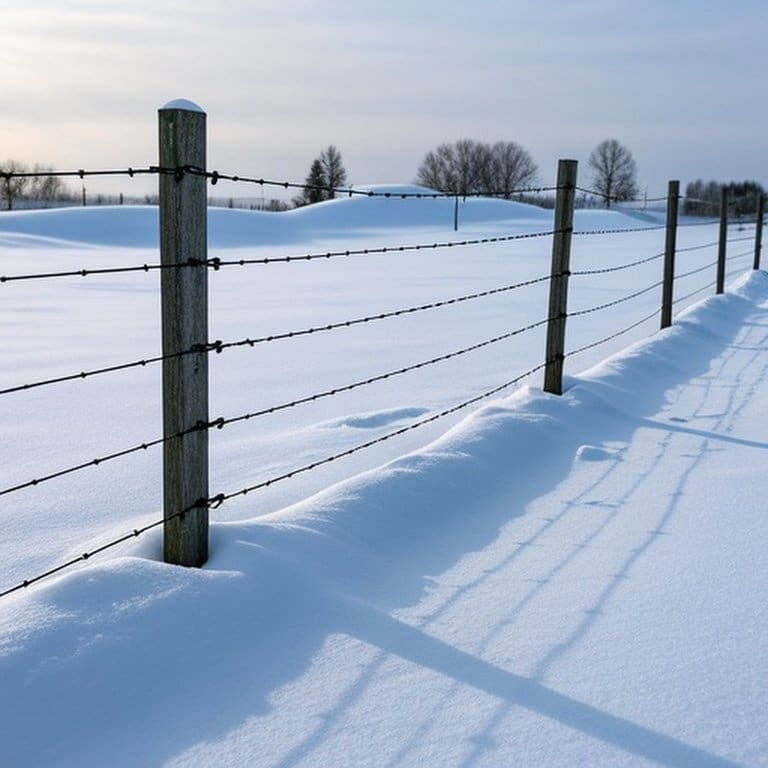
Snow does not accumulate evenly. In drift zones, wind pushes snow into concentrated banks that can reduce effective fence height by one to several feet. A fence that is adequate in summer may become functionally shorter in winter. When lower wires are buried and top rails are level with snowbanks, livestock can step over or lean across boundaries. This creates escape risks, structural stress, and safety hazards. Many winter fence failures are not due to material weakness but to height miscalculation. Planning height adjustments during installation ensures year-round containment and prevents costly emergency reinforcements once heavy snow arrives.
Key Factors to Consider
- Average seasonal snow depth in drift-prone areas
- Wind direction and natural accumulation patterns
- Livestock size and jumping or leaning behavior
- Bottom wire clearance after snow buildup
- Structural reinforcement for increased post height
Detailed Explanation
In snow drift zones, the key issue is “effective height,” not installed height. While a standard cattle fence may stand 48 inches tall in summer, snow accumulation can reduce visible height significantly. Wind-driven snow often piles against fence lines, especially along ridges, tree rows, or open plains. As drifts form, lower wires become buried and snowpack gradually reduces containment height.
Increasing fence height by 12–24 inches provides a buffer against seasonal accumulation. This does not mean simply adding a taller post; spacing and tension must also be adjusted. If top wires are raised without reinforcing bracing systems, wind load and tension imbalance may increase structural stress.
Wire spacing should also account for drift conditions. When snow buries bottom wires, mid-level wires become the effective containment barrier. Ensuring proper vertical spacing prevents livestock from pushing through when snow alters ground contours.
Post strength and depth are critical when increasing height. Taller fencing increases leverage force at ground level. Installing posts deeper and reinforcing corners prevents leaning under snow pressure or livestock contact.
The goal in drift-prone zones is to maintain functional containment height even when snow changes the landscape. Height adjustments must consider both environmental load and livestock behavior to remain effective throughout winter.
How Cattle Behavior Affects This Choice
During winter, cattle often use snowbanks as elevated platforms. If drifts accumulate against fencing, animals may unintentionally gain extra height relative to the fence. What was once a secure barrier may become step-over height.
Clustering behavior near windbreaks also increases pressure in drift zones. If snow reduces effective fence height, leaning and pushing behavior increases. Height adjustments reduce the risk of boundary breaches caused by elevated snow surfaces.
Calves vs Mature Cattle Considerations
Calves may slip over drift-compacted snowbanks where effective fence height has decreased. Even a small reduction can create escape opportunities for lighter animals.
Mature cattle exert greater force when leaning across drifted sections. Increased fence height combined with strong bracing prevents sagging when snowpack shifts under livestock weight. Planning height for the largest animal in the herd ensures consistent containment.
Terrain, Visibility, and Pressure Zones
Snow drifts form predictably along certain terrain features. Fences on leeward slopes or near natural wind barriers accumulate deeper snow. Identifying these zones allows for localized height increases rather than uniform adjustment across the entire property.
Visibility is also reduced in heavy snowfall. Taller fences maintain visual boundary cues when snow obscures lower wires. Maintaining consistent top-line visibility improves livestock awareness during storms.
When This Works Well
- Regions with consistent seasonal snow accumulation
- Wind-exposed plains with predictable drift patterns
- Tall post installations below frost depth
- Reinforced corner bracing systems
- Regular winter inspection of drift-prone sections
When It Is Not Recommended
- Mild winter climates with minimal snow buildup
- Areas without consistent drift formation
- Shallow post installations unable to support added height
- Decorative fencing lacking structural reinforcement
- Ignoring livestock size differences in winter planning
Alternatives or Better Options
Electric Offset Above Standard Fence Height
Adding a top electric wire above the main fence line discourages livestock from stepping over drift-compacted snowbanks.
Snow Fence Windbreak Placement
Installing temporary snow fencing upwind can redirect drift accumulation away from primary livestock fencing.
Variable Height Installation in Drift Zones
Increasing height only in identified drift corridors reduces material cost while maintaining containment effectiveness.
Cost, Safety, and Practical Notes
Increasing fence height modestly raises material and labor costs, particularly if deeper posts and longer wire runs are required. However, the expense is minimal compared to emergency winter repairs or livestock retrieval.
From a safety perspective, snow-altered fence height increases escape and entanglement risk. Sagging or partially buried wires create unpredictable hazards. Reinforced, properly tensioned taller fencing reduces these risks.
Practically, snow drift patterns are often consistent year to year. Observing accumulation during one winter provides valuable data for permanent height adjustments the following season.
Quick Takeaway
In snow drift zones, standard fence height is often not enough. Increasing height by 12–24 inches, adjusting wire spacing, and reinforcing posts ensures effective containment when snow reduces visible barrier height. Plan for winter elevation changes, not just summer measurements.