
Short Answer
There is no fixed number of acres that one fence line can “cover.” The acreage enclosed depends on the total length of fencing and the shape of the land. For example, one mile (5,280 feet) of fence can enclose about 40 acres in a square layout, but irregular shapes significantly change that number.
Why This Question Matters
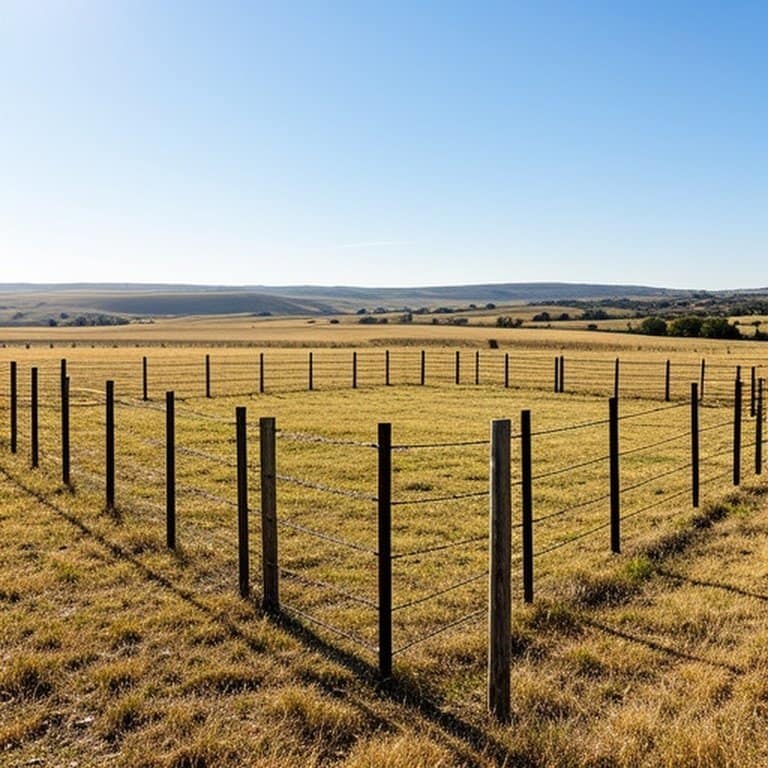
Many landowners try to estimate fencing cost by asking how many acres a certain length of fence can enclose. However, acreage is determined by geometry, not just fence length. A perfectly square field requires less fencing per acre than a long, narrow rectangle.
Misunderstanding this relationship can lead to underestimating material needs and budget. A property with irregular boundaries, natural obstacles, or multiple paddocks requires substantially more fence per acre. Planning based on shape and layout efficiency is far more accurate than relying on a simple acres-to-feet assumption.
Key Factors to Consider
- Total available fence length in feet or miles
- Shape of the enclosed area (square vs rectangular)
- Terrain irregularities and natural boundaries
- Need for interior cross fencing
- Gate placement and access requirements
Detailed Explanation
Fence coverage is determined by perimeter length. The more compact the shape, the more efficiently fencing encloses land. A square is the most efficient shape for maximizing acreage per foot of fencing. For example, one mile of fence arranged in a square encloses approximately 40 acres because each side measures about 1,320 feet.
If the same length of fence is stretched into a long rectangle, acreage decreases. Narrow shapes increase perimeter relative to enclosed area. In practical farm settings, properties rarely form perfect squares. Natural boundaries, roads, creeks, and property lines create irregular shapes that require additional fencing.
Interior cross fencing also reduces effective acreage per fence line. If you subdivide a 40-acre square into four 10-acre paddocks, you must add internal fence runs. While the total acreage remains 40 acres, the total fencing length increases significantly.
Terrain further complicates calculations. Fencing across slopes or around wooded sections adds linear footage without proportionally increasing usable grazing acreage. As a result, real-world fence coverage is always influenced by both land shape and management strategy.
Understanding these geometric principles allows more accurate material estimation and cost planning before installation begins.
Extended Practical Considerations
How Livestock Management Affects Fence Layout
If livestock require rotational grazing, interior divisions reduce acreage efficiency per fence line. However, these divisions improve pasture utilization and animal health.
Cattle operations often benefit from rectangular paddocks that facilitate movement, even if they require slightly more fencing per acre compared to square designs.
Calves vs Mature Livestock Considerations
Young animals may require additional subdivision for safety or feeding management. Smaller paddocks increase fence length relative to acreage but improve control.
Mature breeding animals may also require segregation, adding interior fencing that changes acreage-to-fence ratios.
Terrain, Visibility, and Pressure Zones
Irregular terrain, tree lines, and waterways require fence adjustments that increase linear footage. Straight runs maximize acreage efficiency, while frequent corners increase material use.
Pressure zones near gates or water access may require reinforced sections, affecting overall layout efficiency.
When This Works Well
- Square or compact property layouts
- Minimal interior subdivisions
- Flat terrain with few natural obstacles
- Clear, straight boundary lines
- Centralized water systems reducing extra divisions
When This Is Not Recommended
- Long, narrow property shapes
- Highly irregular boundary lines
- Extensive rotational grazing subdivisions
- Rocky or wooded terrain increasing fence detours
- Frequent corner or gate installations
Alternatives or Better Options
Compact Paddock Design
Designing paddocks closer to square maximizes acreage per foot of fencing and reduces overall material cost.
Hub-and-Spoke Grazing Layout
Centralized water access with radiating paddocks can reduce interior fence length while maintaining rotation flexibility.
Temporary Cross Fencing
Using portable electric fencing allows flexible paddock sizing without permanently increasing fence footage.
Cost / Safety / Practical Notes
Fencing cost is typically calculated per linear foot. Increasing corners, irregular shapes, and interior divisions increases material and labor expense. A compact design reduces total cost per acre enclosed.
Safety and efficiency also depend on layout. Straight runs reduce tension stress and simplify maintenance. Excessive corners create weak points requiring additional bracing.
When estimating acreage coverage, always calculate fence length based on actual property dimensions rather than relying on generic acre-to-mile assumptions.
Quick Takeaway
One mile of fence can enclose about 40 acres in a square layout, but real-world acreage depends on land shape and subdivisions. Compact designs maximize coverage, while irregular shapes and interior fencing increase total fence length requirements.