
Short Answer
The best fence layout for rotational grazing uses a secure perimeter fence with interior paddocks arranged in a compact, efficient pattern—often rectangular or hub-and-spoke designs—with centralized or shared water access. Layout should minimize livestock travel distance, reduce fencing length per acre, and allow flexible movement between paddocks.
Why This Question Matters
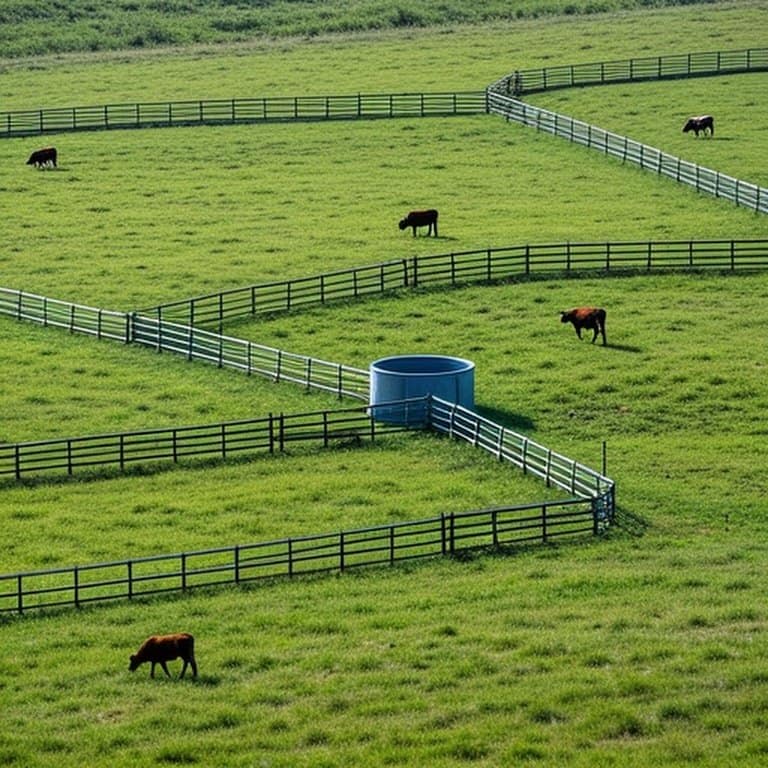
Rotational grazing is not just about dividing land; it is about managing forage recovery, animal movement, labor efficiency, and long-term soil health. A poorly designed layout increases walking distance, concentrates grazing pressure near water, and creates bottlenecks at gates.
Fence layout determines daily labor demands for years. A well-planned system reduces time spent moving animals, prevents overgrazing, and supports pasture regrowth cycles. Since fence infrastructure is costly and difficult to redesign, choosing the right layout at the beginning significantly affects long-term profitability and sustainability.
Key Factors to Consider
- Total acreage and overall property shape
- Water source location and livestock access
- Herd size and stocking density
- Terrain slope and soil stability
- Long-term expansion or subdivision plans
Detailed Explanation
A rotational grazing layout begins with a strong perimeter fence that secures the entire property. Interior paddocks are then divided in a way that maximizes efficiency and pasture recovery. Compact paddocks—preferably close to square or rectangular—make animal movement predictable and reduce fence material per acre.
One of the most efficient layouts is the hub-and-spoke system. In this design, paddocks radiate outward from a central water point. Livestock can access water without requiring individual water systems in every paddock. This reduces plumbing costs and prevents heavy traffic damage in a single area.
Rectangular strip grazing layouts are also common. Long, narrow paddocks allow controlled forage allocation and are especially useful with temporary electric fencing. However, excessively narrow shapes increase fencing length relative to acreage.
Water access is critical. Ideally, livestock should travel short distances to water to prevent overgrazing near water sources. Gates should be aligned to allow smooth herd movement without sharp turns or congestion.
Terrain influences layout decisions as well. Fencing along contour lines reduces erosion and tension stress. Avoid placing fence lines across steep slopes whenever possible.
Ultimately, the best layout balances pasture recovery, livestock behavior, labor efficiency, and infrastructure cost.
Extended Practical Considerations
How Cattle Behavior Affects This Choice
Cattle follow established paths and prefer gradual transitions between paddocks. Wide gate openings and straight movement corridors reduce stress and prevent crowding.
When cattle are accustomed to rotation, electric cross fencing can effectively control movement without heavy permanent infrastructure.
Calves vs Mature Cattle Considerations
Young animals require tighter lower spacing in permanent cross fencing. If calves are present, ensure paddocks are secure before rotation begins.
Mature breeding animals may require temporary segregation during certain seasons, which should be considered when planning paddock flexibility.
Terrain, Visibility, and Pressure Zones
Slopes increase erosion risk if animals repeatedly travel the same route. Designing multiple access paths reduces concentrated wear.
High-pressure areas near water or mineral feeders may require reinforced fencing and stabilized footing to prevent soil degradation.
When This Works Well
- Secure perimeter fence already installed
- Moderate terrain with manageable slopes
- Centralized or accessible water systems
- Herd trained to respect electric fencing
- Clear grazing rotation schedule
When This Is Not Recommended
- Extremely irregular property shapes
- No reliable water access in paddocks
- High predator pressure without strong perimeter
- Poor soil conditions prone to erosion
- Very small properties with limited division benefit
Alternatives or Better Options
Temporary Strip Grazing Systems
Portable electric fencing allows daily or weekly paddock adjustments without permanent installation.
Cell Grazing Layout
High-density, short-duration grazing cells maximize forage utilization but require precise management and flexible fencing.
Hybrid Perimeter + Electric Cross Fencing
Permanent boundary fencing combined with flexible interior electric fencing balances cost and adaptability.
Cost / Safety / Practical Notes
Permanent subdivision fencing increases material and labor costs. However, improved pasture utilization often offsets this investment through better forage recovery and livestock weight gain.
Electric cross fencing reduces installation cost but requires reliable energizers and regular maintenance. Poor grounding or vegetation contact reduces effectiveness.
Safety considerations include smooth livestock flow, adequate gate width for equipment, and minimizing sharp turns that increase crowd pressure.
Designing for efficiency at the start reduces daily labor and long-term maintenance.
Quick Takeaway
The best rotational grazing fence layout starts with a secure perimeter, then divides land into compact paddocks with efficient livestock movement and centralized water access. Focus on simplicity, flexibility, and long-term pasture recovery rather than maximizing subdivision complexity.