
Short Answer
Yes, perimeter fencing should generally be stronger and more durable than interior fencing. The perimeter serves as the primary containment and security barrier, protecting livestock from escape, predators, and liability risks. Interior fencing focuses on grazing management and herd control, and can often be lighter or more flexible.
Why This Question Matters
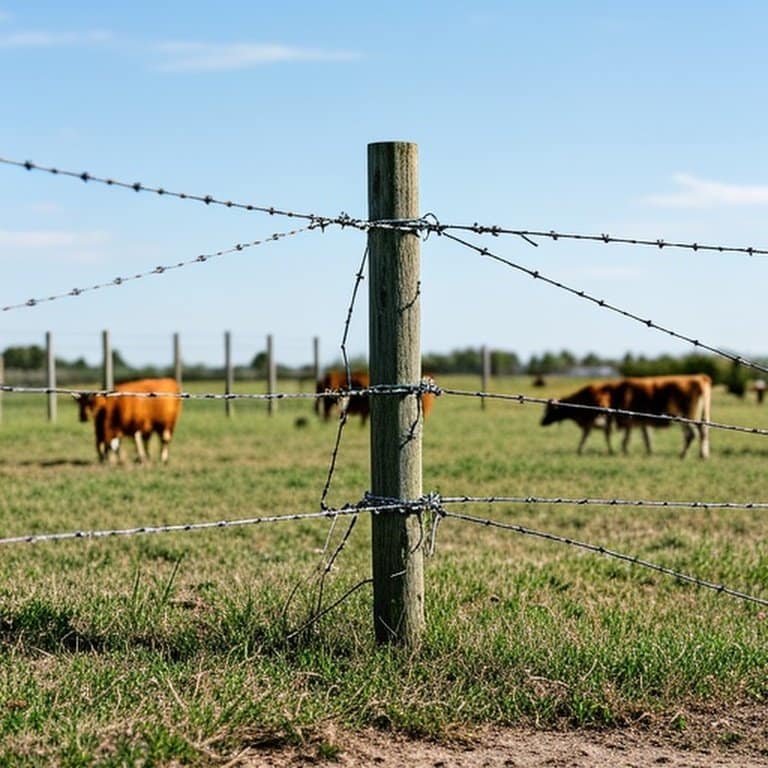
Not all fences serve the same purpose. Perimeter fencing defines property boundaries and carries the highest containment responsibility. If it fails, livestock may escape onto roads or neighboring land, creating safety hazards and legal liability.
Interior fencing, also known as cross fencing, operates within that secure boundary. Its primary role is to divide pasture for rotational grazing, herd separation, or livestock flow management. Overbuilding interior fencing increases cost unnecessarily, while underbuilding the perimeter exposes the entire operation to risk. Understanding which fence must carry the structural burden allows smarter budget allocation and long-term durability.
Key Factors to Consider
- Predator pressure and road exposure
- Livestock species and behavioral pressure
- Legal liability at property boundaries
- Rotational grazing management needs
- Budget distribution between permanent and flexible systems
Detailed Explanation
Perimeter fencing is the farm’s outer defense. It must withstand internal livestock pressure and potential external forces such as wildlife or neighboring animals. Because it defines legal property lines, failure can result in escape incidents, property damage, or regulatory issues. For this reason, perimeter fencing is typically constructed with stronger posts, reinforced corners, and heavier wire or woven materials.
Interior fencing operates within a controlled environment. Since livestock are already contained by the perimeter, cross fencing can rely more on psychological barriers such as electric wire. In many rotational grazing systems, temporary or high-tensile electric fencing is sufficient to manage animal movement.
Structural reinforcement requirements also differ. Perimeter fences require robust brace assemblies at corners and gates to handle tension across long runs. Interior fences often span shorter distances and can use lighter posts or step-in systems.
However, “stronger” does not always mean “taller.” Strength refers to structural durability and bracing capacity. Height may vary depending on livestock type, but perimeter fencing must be built to handle maximum stress scenarios.
In most operations, investing in a durable perimeter first provides the foundation for more flexible interior systems.
Extended Practical Considerations
How Cattle Behavior Affects This Choice
Cattle apply steady pressure along perimeter lines, especially near roads or neighboring livestock. A reinforced perimeter prevents leaning damage and escape.
Interior fencing in rotational systems can be lighter if cattle are trained to respect electric deterrence.
Calves vs Mature Livestock Considerations
Young animals may test interior fences more frequently, but perimeter fencing must be strong enough to prevent accidental escape under crowd pressure.
Breeding males may require reinforced perimeter sections if fence lines border other livestock.
Terrain, Visibility, and Pressure Zones
Perimeter fencing often crosses varied terrain, increasing structural strain and requiring deeper post anchoring.
Interior fencing can be aligned with pasture contours to reduce erosion and tension stress.
When This Works Well
- Durable woven or high-tensile perimeter fence installed
- Electric cross fencing for interior management
- Reinforced gate and corner bracing
- Moderate livestock density
- Clear distinction between containment and management roles
When This Is Not Recommended
- Lightweight perimeter fencing in high-risk areas
- Overbuilding interior fencing unnecessarily
- Ignoring predator pressure at property boundaries
- Using temporary fencing as primary containment
- Skipping brace reinforcement at perimeter corners
Alternatives or Better Options
Hybrid System Approach
Use heavy-duty woven or high-tensile perimeter fencing combined with multi-strand electric interior fencing.
Phased Investment Strategy
Prioritize perimeter durability first, then add interior flexibility as grazing management evolves.
Electric Top Wire Reinforcement
Adding an electrified strand to the perimeter increases deterrence without dramatically increasing material cost.
Cost / Safety / Practical Notes
Perimeter fencing represents the highest structural and legal responsibility. While it costs more upfront due to heavier materials and bracing, it reduces escape risk and long-term liability.
Interior fencing can be more cost-effective and adaptable. However, relying solely on lightweight systems for perimeter containment increases long-term risk.
The most balanced strategy is simple: build the perimeter strong and permanent, then design interior fencing for flexibility and efficient management.
Quick Takeaway
Perimeter fencing should be stronger and more durable than interior fencing because it carries the primary containment and security responsibility. Invest heavily in the boundary; use flexible systems inside for grazing management.