
Short Answer
Perimeter fencing should typically be equal to or slightly taller than cross (interior) fencing. Because it serves as the primary containment and security barrier, perimeter fencing must handle higher pressure and risk exposure. Cross fencing can often be slightly lower when livestock are already secured within a strong outer boundary.
Why This Question Matters
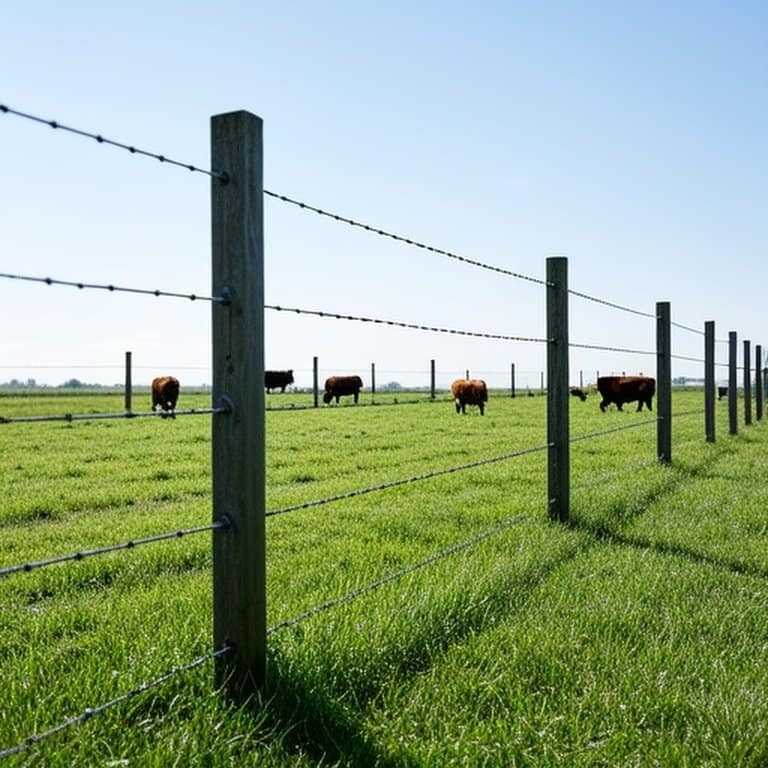
Fence height affects containment reliability, animal safety, and overall cost. The perimeter fence defines your property boundary and acts as the final line of defense against escape, road exposure, and predator intrusion. If its height is inadequate, livestock may challenge it under stress, leading to costly and dangerous outcomes.
Cross fencing, on the other hand, is primarily a management tool used for rotational grazing, herd separation, or pasture control. Because animals are already contained by the perimeter, interior fences do not carry the same escape liability.
Overbuilding cross fencing increases costs unnecessarily. Underbuilding perimeter fencing increases risk. Understanding the functional difference between the two helps you allocate height, materials, and budget more effectively.
Key Factors to Consider
- Livestock species and jumping or leaning behavior
- Proximity to roads or neighboring properties
- Predator presence and external pressure
- Rotational grazing system design
- Budget distribution between permanent and flexible fencing
Detailed Explanation
Perimeter fencing must account for worst-case scenarios. Animals may push, crowd, or attempt escape under stress conditions such as storms, nearby predators, or breeding season behavior. A slightly taller perimeter fence adds a margin of security, especially for horses or mixed-species operations.
For example, cattle perimeter fences commonly range between 48–54 inches. Interior cross fencing for rotational grazing may function effectively at similar or slightly lower heights, particularly if electric strands are used. Horses often require taller perimeter fences (54–60 inches), while cross fencing inside a secure boundary may be somewhat lower if it is not adjacent to high-pressure areas.
Height alone is not the only factor—visibility, wire spacing, and structural strength also matter. A properly tensioned electric cross fence can be lower yet still effective because it serves as a behavioral guide rather than a primary barrier.
Ultimately, the perimeter fence should never be shorter or weaker than cross fencing. It carries more responsibility, and its height should reflect that role.
Extended Practical Considerations
How Cattle Behavior Affects This Choice
Cattle apply consistent leaning pressure along boundaries, especially near feed sources or neighboring herds. A perimeter fence that is slightly taller and well-braced reduces climbing or pushing attempts.
Interior cross fences can rely more heavily on electric deterrence and may not require maximum height.
Calves vs Mature Livestock Considerations
Young calves may slip under poorly spaced wires, making bottom strand placement critical.
Mature animals, particularly bulls or dominant cows, may challenge perimeter fencing more aggressively than interior divisions.
Terrain, Visibility, and Pressure Zones
Perimeter fencing often crosses uneven terrain, which can reduce effective height if not installed properly.
Cross fencing in flatter pasture areas can maintain consistent effective height with less structural demand.
When This Works Well
- Perimeter fence built at maximum recommended height for species
- Cross fencing slightly lower but properly tensioned
- Electric strands reinforcing interior lines
- Clear functional distinction between containment and management
- Adequate bracing at perimeter corners
When This Is Not Recommended
- Perimeter fence shorter than cross fencing
- Equal height without added perimeter strength
- High predator areas with minimal fence height
- Road-adjacent properties using minimal perimeter height
- Mixed livestock without adjusting height accordingly
Alternatives or Better Options
Equal Height, Greater Strength Strategy
Keep perimeter and cross fencing similar in height but reinforce perimeter with heavier posts and stronger bracing.
Perimeter Plus Electric Top Wire
Add a hot wire along the top of the perimeter fence to increase effective height and deterrence without major structural changes.
Flexible Cross Fencing System
Use adjustable electric cross fencing that can be modified as grazing needs change while keeping the perimeter permanent and taller.
Cost / Safety / Practical Notes
Increasing perimeter fence height slightly adds material cost but significantly increases containment reliability. Because perimeter failure carries legal and safety consequences, height should err on the side of caution.
Cross fencing is typically a cost-management tool within grazing systems. Lowering interior fence height modestly can reduce material and labor costs without compromising overall security—provided the perimeter remains strong and appropriately tall.
The trade-off is simple: perimeter fencing protects against escape and liability; cross fencing optimizes pasture use. Height should reflect those priorities.
Quick Takeaway
Perimeter fencing should be equal to or slightly taller than cross fencing because it carries the primary containment responsibility. Build your boundary to maximum reliability, and design cross fencing for efficient livestock management.