
Short Answer
Yes, this is a common and effective strategy. Many farms use permanent, heavy-duty perimeter fencing for primary containment and temporary interior fencing—often electric—for grazing management. This approach balances security with flexibility, allowing pasture layouts to adapt without compromising the integrity of the outer boundary.
Why This Question Matters
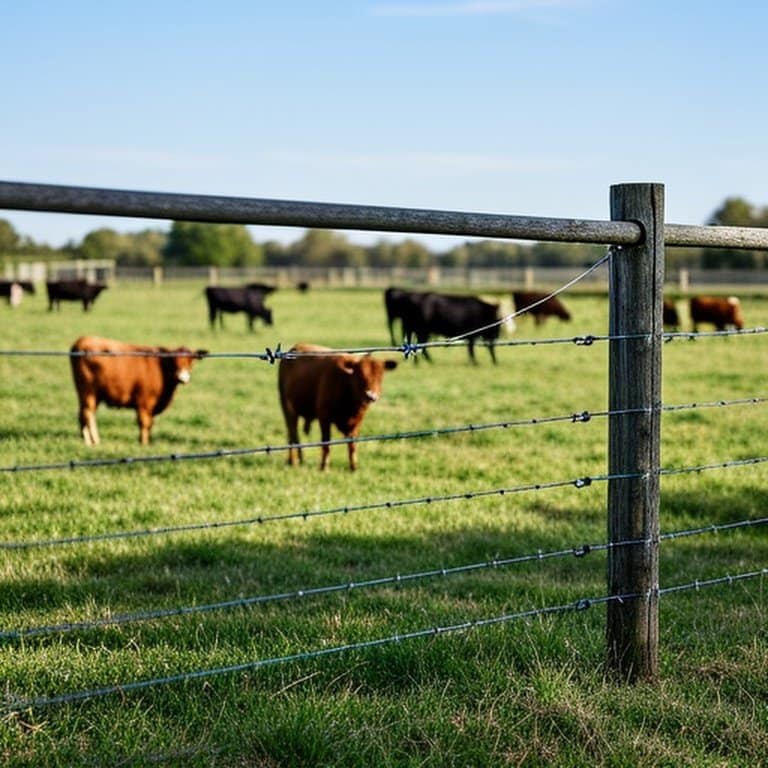
Perimeter fencing carries the highest responsibility. It defines property boundaries, prevents livestock escape, and protects against external risks. Because failure at the boundary can result in legal and safety consequences, perimeter fencing is typically built to last for decades.
Interior fencing serves a different purpose. It divides pastures for rotational grazing, herd separation, or seasonal management. These needs often change over time. Installing permanent interior fencing everywhere can limit flexibility and increase costs unnecessarily.
Understanding that perimeter and interior fencing serve different roles allows producers to combine durability with adaptability. This is especially important for operations experimenting with grazing systems or planning future herd expansion.
Key Factors to Consider
- Long-term containment needs at property boundaries
- Grazing system flexibility requirements
- Livestock training with electric fencing
- Budget allocation between permanent and movable systems
- Labor availability for regular fence adjustments
Detailed Explanation
Permanent perimeter fencing provides structural security. Materials such as woven wire, high-tensile wire with strong bracing, or board fencing are designed to withstand animal pressure, environmental exposure, and long-term wear. Because this fence protects against escape and liability, it should be durable and low-maintenance.
Temporary interior fencing, often electric polywire or step-in post systems, serves a management function. It allows producers to divide paddocks, rotate livestock, and adjust grazing patterns based on forage growth. This flexibility improves pasture health and feed efficiency.
Temporary interior fencing works particularly well when livestock are trained to respect electric barriers. Once animals understand the deterrent, lightweight systems are sufficient for management divisions.
The key principle is hierarchy: build the perimeter for strength and permanence, and design interior systems for movement and adaptability. This combination reduces material cost while maintaining overall security.
Extended Practical Considerations
How Cattle Behavior Affects This Choice
Cattle trained on electric fencing quickly learn to respect temporary cross fencing.
However, untrained animals or newly introduced livestock may test temporary lines, requiring supervision.
Calves vs Mature Livestock Considerations
Young animals may slip under poorly placed temporary wires, requiring proper strand height.
Mature animals generally respect electric divisions once conditioned.
Terrain, Visibility, and Pressure Zones
Temporary fencing performs best on relatively even terrain.
High-traffic areas near water or shade may require stronger or semi-permanent interior reinforcement.
When This Works Well
- Strong permanent perimeter installed first
- Livestock accustomed to electric fencing
- Active rotational grazing management
- Willingness to move fences regularly
- Moderate stocking density
When This Is Not Recommended
- Weak or incomplete perimeter fencing
- High predator pressure requiring strong interior divisions
- Infrequent farm supervision
- Unreliable power supply for electric systems
- Extremely high stocking density causing crowd pressure
Alternatives or Better Options
Semi-Permanent High-Tensile Interior Fence
Use high-tensile electric wire on durable posts for longer-lasting interior divisions while maintaining flexibility.
Hybrid Interior System
Install permanent division lines in key areas and supplement with temporary fencing for seasonal adjustments.
Phased Interior Development
Start with temporary fencing to refine grazing plans before committing to permanent interior structures.
Cost / Safety / Practical Notes
Permanent perimeter fencing represents the largest structural investment. It is designed for durability and long-term reliability.
Temporary interior fencing significantly reduces upfront cost and allows layout experimentation. The trade-off is management responsibility—electric systems require voltage monitoring and periodic repositioning.
From a practical standpoint, this combination offers one of the most efficient fencing strategies: strong outer security with flexible internal control.
Quick Takeaway
Yes, interior fencing can be temporary while the perimeter remains permanent. This approach combines durable boundary protection with flexible grazing management, offering both security and adaptability.