
Short Answer
Perimeter fencing almost always costs more per foot than interior cross fencing. It requires stronger materials, reinforced corners, heavier posts, and greater structural durability. Interior cross fencing—especially when electric and temporary—typically uses lighter materials and fewer braces, making it significantly less expensive to install and modify.
Why This Question Matters
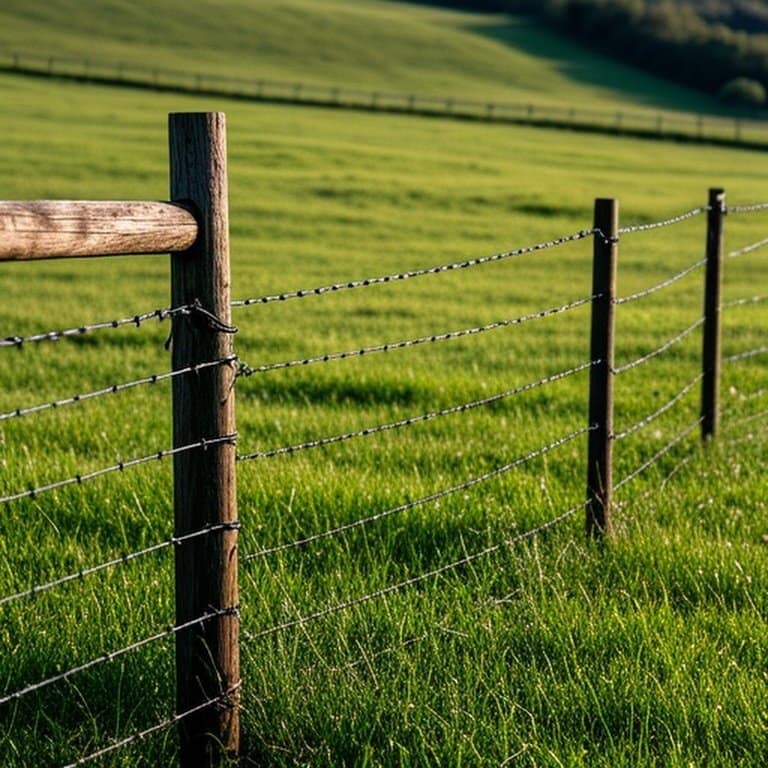
Fencing is one of the largest infrastructure investments on a farm. Understanding where your money goes helps you prioritize properly. Many producers assume that total fencing cost depends only on length, but function plays a major role.
Perimeter fencing defines property boundaries and carries the full responsibility for containment and liability protection. Because failure at the boundary can lead to livestock escape or legal consequences, perimeter systems are engineered for durability.
Interior cross fencing, in contrast, focuses on pasture management and animal flow. It operates inside a secure boundary and therefore can often rely on lighter materials, especially electric systems. Knowing which system typically costs more allows you to allocate budget strategically and avoid overbuilding where it is not necessary.
Key Factors to Consider
- Material strength and gauge requirements
- Post spacing and brace assembly needs
- Length of fence runs
- Electric vs physical barrier systems
- Long-term maintenance expectations
Detailed Explanation
Perimeter fencing is usually built with long-term durability in mind. Woven wire, heavy-gauge high-tensile wire, treated wood posts, and reinforced H-brace corner assemblies all increase cost. Gates along boundary lines often require larger openings and stronger hinge posts, adding further expense.
Interior cross fencing often uses electric high-tensile wire, polywire, or step-in posts. These systems rely on behavioral deterrence rather than physical resistance. As a result, material and labor costs are typically lower per foot.
Another cost difference lies in bracing. Perimeter fences require strong end and corner assemblies to maintain tension across long stretches. Interior fences usually span shorter distances and may not require the same level of reinforcement.
While perimeter fencing costs more per foot, interior fencing can add up if multiple paddocks are created. However, even then, the structural complexity and material strength of perimeter systems usually make them the higher-cost component.
In most farm budgets, the perimeter represents the primary capital investment, while cross fencing represents a management investment.
Extended Practical Considerations
How Cattle Behavior Affects This Choice
Perimeter fencing must withstand leaning and crowd pressure, requiring stronger posts and tighter tension.
Interior fencing, especially electric, experiences less sustained structural force.
Calves vs Mature Livestock Considerations
Tighter wire spacing for young animals increases perimeter material cost.
Interior fencing for calves may require additional strands but remains less expensive than full woven perimeter systems.
Terrain, Visibility, and Pressure Zones
Perimeter fencing often crosses uneven terrain, increasing labor and bracing needs.
Interior fencing can be adjusted to follow more manageable pasture divisions.
When This Works Well
- Durable perimeter fencing installed first
- Electric cross fencing for rotational grazing
- Properly tensioned boundary lines
- Strategic placement of interior divisions
- Clear distinction between containment and management
When This Is Not Recommended
- Weak perimeter with heavy investment in interior fencing
- Overbuilding interior fences unnecessarily
- Ignoring corner bracing on boundary lines
- Using lightweight materials near road boundaries
- Failing to consider long-term maintenance
Alternatives or Better Options
Hybrid Investment Strategy
Allocate the majority of budget to perimeter strength, then build cost-efficient electric cross fencing.
Phased Interior Development
Install perimeter first and gradually expand interior divisions as grazing plans mature.
Semi-Permanent Interior High-Tensile
Use durable but lighter high-tensile systems for interior fencing to balance cost and longevity.
Cost / Safety / Practical Notes
Perimeter fencing costs more per foot because it requires heavier materials, stronger posts, and reinforced brace assemblies. It is designed to last decades and prevent escape-related liability.
Interior cross fencing typically costs less, especially when electric systems are used. The trade-off is management—electric fencing requires voltage monitoring and vegetation control.
From a budgeting standpoint, prioritize a strong perimeter first. Interior fencing can then be scaled according to grazing strategy and available funds.
Quick Takeaway
Perimeter fencing generally costs more per foot than interior cross fencing due to stronger materials and structural requirements. Build the boundary for durability, and design interior systems for cost-efficient pasture management.