
Short Answer
For effective rotational grazing, most livestock operations need at least 6–8 paddocks, while 10–20 paddocks provide significantly better pasture recovery and grazing control. The ideal number depends on herd size, forage growth rate, desired rest period, and how frequently you plan to rotate animals.
Why This Question Matters
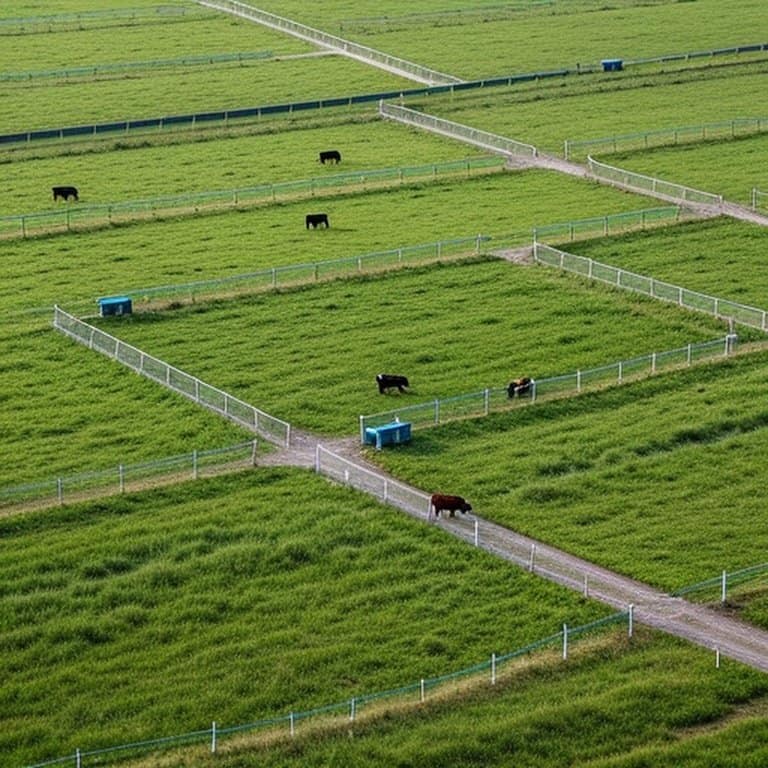
The number of paddocks directly determines how long pasture can rest before being grazed again. Too few paddocks lead to short recovery periods, overgrazing, weak root systems, and declining forage production. Too many paddocks without proper planning can increase costs and management complexity without delivering added benefit.
Effective rotational grazing is built around one principle: graze quickly, rest long enough to recover. The paddock count must support that recovery window. If animals return to a pasture before full regrowth, long-term productivity declines. Getting this number right allows better soil health, improved forage density, reduced parasite cycles, and more predictable livestock performance.
Key Factors to Consider
- Desired rest period for your forage species
- Herd size and daily forage demand
- Length of grazing season in your region
- Labor availability for frequent animal moves
- Water access and paddock layout efficiency
Detailed Explanation
The number of paddocks determines the rest period between grazings. A simple formula helps illustrate this: Rest Period = (Number of Paddocks – 1) × Grazing Days per Paddock. For example, if animals graze each paddock for 3 days and you have 8 paddocks, the rest period becomes 21 days before animals return. If forage in your region requires 30 days to recover, 8 paddocks may not be enough. Increasing to 11 paddocks extends the rest window closer to optimal recovery.
Six to eight paddocks are often considered the minimum for basic rotational grazing. This setup improves pasture use compared to continuous grazing but may not maximize regrowth during fast-growing seasons. Ten to fifteen paddocks allow shorter grazing periods and longer rest intervals, which promotes deeper root development and stronger forage stands.
Higher-density or adaptive grazing systems may use 20 or more paddocks. These systems aim for very short grazing durations—sometimes one day or less—followed by extended rest periods. While more divisions increase control, they also increase management intensity.
Ultimately, the right number balances biological recovery needs with practical labor and fencing costs. Effective rotational grazing is not about maximizing paddock count—it is about maximizing recovery time without overwhelming the operation.
How Cattle Behavior Affects This Choice
Cattle graze selectively when given too much space. Fewer paddocks with longer grazing durations encourage uneven forage use. Increasing paddock numbers tightens grazing pressure, reducing selective feeding and improving pasture uniformity.
Frequent movement also aligns with herd behavior. Cattle quickly learn rotation routines and move calmly when accustomed to short grazing intervals. More paddocks make frequent, low-stress moves easier and protect regrowth from repeated grazing.
Calves vs Mature Cattle Considerations
Calves require secure fencing and may be slower to adapt to rapid rotations. Larger paddocks with moderate rotation speed can reduce stress in mixed-age herds.
Mature cattle tolerate tighter rotations better. If managing cow-calf pairs, ensure paddock size supports safe movement and accessible water. Higher paddock counts may require additional fencing strands for calf containment.
Terrain, Visibility, and Pressure Zones
Hilly terrain may limit how many paddocks are practical. Uneven ground, wooded areas, or natural barriers can reduce efficiency if divisions are forced into impractical shapes.
High-traffic zones near gates and water sources experience heavier pressure. Increasing paddock numbers without improving access routes can cause compaction and erosion. Layout must support movement flow alongside paddock count.
When This Works Well
- Operations aiming for improved forage recovery
- Medium to large properties with flexible fencing options
- Producers willing to move livestock frequently
- Farms investing in soil regeneration and pasture health
- Systems with centralized or well-distributed water access
When This Is Not Recommended
- Extremely small properties with limited fencing budget
- Owners unable to move animals regularly
- Properties lacking reliable water infrastructure
- Highly irregular terrain difficult to subdivide
- Operations prioritizing minimal labor input
Alternatives or Better Options
Adaptive Multi-Paddock Grazing
Instead of fixed paddock numbers, this system adjusts divisions seasonally using temporary fencing. It increases flexibility and improves recovery but requires close monitoring of forage growth and frequent management decisions.
Hybrid System (Permanent + Temporary Divisions)
Install 6–8 permanent paddocks and use temporary electric fencing to subdivide further during peak growth seasons. This balances cost control with grazing flexibility.
Cost / Safety / Practical Notes
More paddocks increase fencing material and labor costs. However, improved forage productivity often offsets this over time through reduced feed purchases and better livestock performance.
Temporary electric cross fencing significantly lowers expansion costs. Permanent interior fencing is more durable but less adaptable. Safety depends on proper installation, clear visibility, and adequate grounding for electric systems.
Plan paddock numbers with future expansion in mind. It is easier to design anchor points and lanes early than to retrofit divisions later. Efficient layout reduces long-term management friction.
Quick Takeaway
Most effective rotational grazing systems require at least 6–8 paddocks, while 10–20 provide stronger pasture recovery and grazing control. The ideal number depends on rest period goals, herd demand, and management capacity. Focus on recovery time first—paddock count follows naturally.