Short Answer
Soil type directly affects how well fence posts resist movement, leaning, and frost heave. Dense, well-drained soils like clay or compacted loam generally provide strong lateral support, while sandy, loose, or water-saturated soils require deeper setting, wider post diameters, or concrete reinforcement to maintain long-term fence stability.
Why This Question Matters
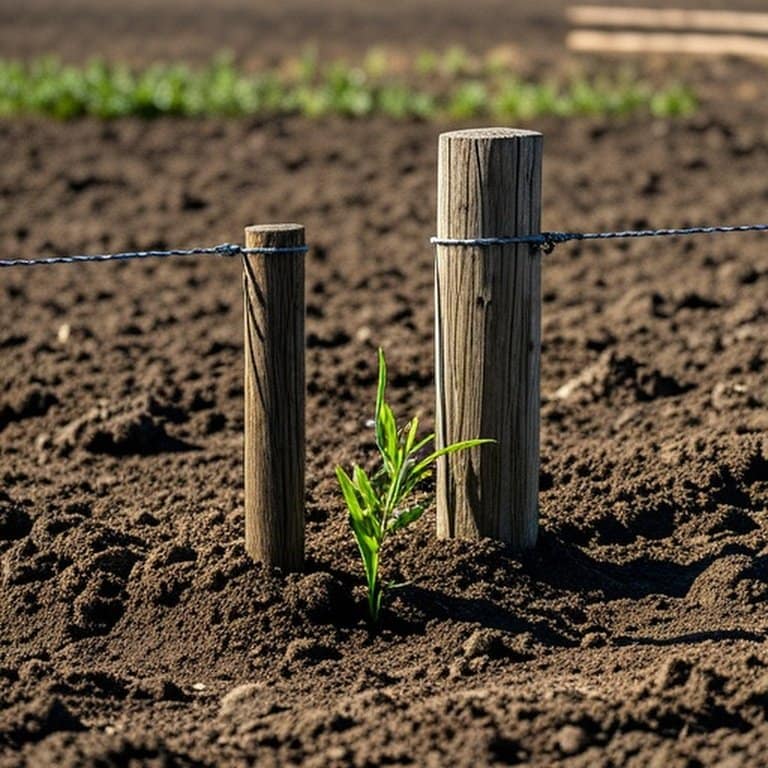
Fence posts are the structural foundation of any fencing system. Even the strongest wire or panel fails if the posts shift, lean, or pull out of the ground. Soil conditions determine how much holding strength surrounds the post, how water drains, and how seasonal freeze-thaw cycles affect stability. Poor soil assessment leads to leaning fences, broken tension lines, gate misalignment, and repeated repairs.
Understanding soil behavior before installation allows you to adjust post depth, spacing, backfill method, and anchoring technique. This reduces maintenance costs, increases fence lifespan, and prevents structural failure—especially in high-tension or perimeter fencing where posts carry significant load.
Key Factors to Consider
- Soil density and compaction level determine lateral holding strength
- Drainage affects rot risk and frost heave pressure
- Clay expands and contracts with moisture changes
- Sandy soils require deeper embedment for stability
- Rocky ground may need drilling or specialized anchoring
Detailed Explanation
Fence post stability depends on how firmly the surrounding soil resists horizontal and vertical forces. In dense clay or compacted loam, the soil grips the post tightly, offering strong lateral resistance. These soils compress around the post and reduce movement under tension. However, clay holds moisture, and seasonal expansion and contraction can create pressure shifts that slowly loosen posts over time if not properly compacted.
Sandy soils behave differently. Because sand particles do not bind together tightly, they provide less resistance to movement. Posts installed in sandy conditions may wobble unless set deeper or supported with gravel or concrete. The looser the soil structure, the more important embedment depth becomes. Increasing post diameter or using tamped crushed stone can significantly improve holding power.
Wet or saturated soils introduce another issue: reduced friction and increased frost heave risk. When water freezes, it expands and pushes posts upward. In areas with freeze-thaw cycles, setting posts below the frost line is critical. Proper drainage around the base of the post—using gravel backfill—helps reduce upward pressure.
Rocky soil presents a different challenge. While it can offer excellent anchoring if solid bedrock is present, irregular rock layers may prevent proper embedment depth. In these cases, drilling and setting posts with concrete or mechanical anchors ensures structural reliability. Matching installation method to soil type is the key to long-term fence performance.
How Soil Conditions Influence Installation Strategy
Soil Density and Compaction
Dense soils provide natural holding strength, but only if properly compacted after installation. Loose backfill dramatically reduces stability. Tamping soil in layers around the post increases friction and prevents future movement. In softer soils, mechanical tampers or gravel backfill may be necessary to achieve adequate compression.
Drainage and Water Movement
Poor drainage weakens soil structure over time. Saturated ground reduces friction around posts and accelerates rot in wooden materials. Installing gravel at the base of the hole improves drainage and reduces standing water. In high-rainfall areas, slight mounding around the post helps divert runoff away from the base.
Freeze-Thaw and Seasonal Movement
In colder climates, frost heave can slowly lift posts each winter. Setting posts below the frost line and using well-draining backfill materials minimizes upward pressure. Wider diameter holes at the bottom (bell-shaped footing) can also reduce vertical movement in frost-prone soils.
When This Works Well
- Soil testing is done before large-scale installation begins
- Post depth is adjusted based on soil softness or drainage issues
- Gravel or crushed stone is used to improve drainage stability
- Frost depth is considered in cold climate installations
When This Is Not Recommended
- Installing uniform post depths without evaluating soil variation
- Ignoring drainage in wet or flood-prone areas
- Setting high-tension posts in loose soil without reinforcement
- Skipping compaction during backfilling
Alternatives or Better Options
Concrete Footings
In soft or unstable soils, setting posts in concrete provides maximum holding strength. This works well for gate posts and high-tension perimeter lines but increases labor and material cost.
Gravel Backfill Systems
Crushed stone improves drainage and compaction while allowing slight flexibility. This is often preferred over concrete in frost-prone climates.
Steel T-Posts with Bracing
For temporary or interior fencing, lighter posts combined with brace assemblies can perform well even in moderately soft soils.
Cost / Safety / Practical Notes
Soil adjustments often increase upfront installation cost but reduce long-term repairs. Deeper holes, gravel backfill, or concrete footings require more labor and materials. However, replacing leaning posts later is far more expensive and disruptive.
Safety also plays a role. Unstable posts under tension can snap or pull free, especially in high-tensile wire systems. Proper anchoring prevents sudden structural failure. Gate posts deserve special reinforcement because they carry dynamic loads from swinging and livestock pressure.
Ignoring soil conditions may not show problems immediately, but within one to three seasons, movement becomes visible. Planning for soil behavior from the beginning ensures durability and predictable maintenance.
Quick Takeaway
Soil type determines how securely a fence post can resist movement, moisture, and seasonal change. Adjust depth, compaction, and reinforcement methods to match soil conditions. Strong fencing starts below ground level—where stability truly begins.