
Short Answer
To install fencing on sloped or hilly terrain, follow the natural contour when possible, use stepped or racked installation methods depending on fence type, reinforce corner and brace posts, and adjust post spacing for stability. Flexible wire systems often perform better than rigid panels on uneven ground.
Why This Question Matters
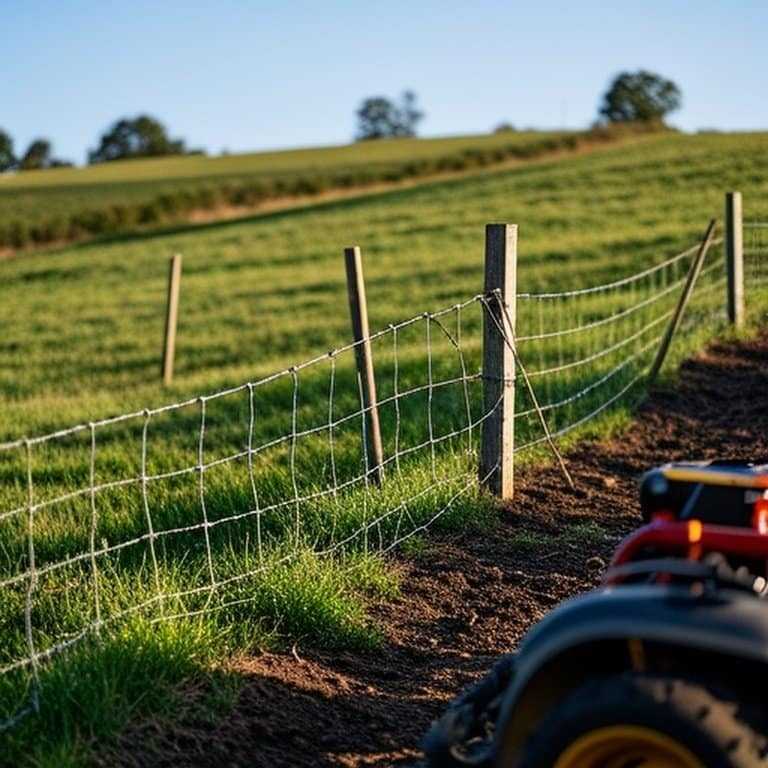
Sloped or hilly terrain adds structural stress that flat-ground fencing does not experience. Gravity increases tension on downhill posts, erosion can weaken footings, and improper alignment can create gaps that allow livestock to escape. Many fencing failures on hills happen because installers treat slopes the same way as level ground.
Proper slope installation improves fence longevity, reduces maintenance, and maintains animal containment. The correct method—whether stepping or racking—depends on fence type and steepness. Planning for grade changes, soil stability, and pressure points prevents leaning posts and sagging wire. Getting it right at installation avoids costly rebuilds later.
Key Factors to Consider
- Steepness of slope and soil erosion risk
- Fence type: flexible wire vs rigid panels
- Post depth and brace reinforcement needs
- Drainage and water runoff patterns
- Livestock pressure along downhill sections
Detailed Explanation
There are two primary methods for fencing on slopes: stepping and racking. Stepped fencing keeps each fence section level while posts adjust to elevation changes. This works best for rigid panels, wood fencing, or welded wire mesh. However, stepping can create triangular gaps at the bottom of each section, which may require additional fill or mesh reinforcement.
Racked fencing follows the natural contour of the slope. High-tensile wire, woven wire, and some mesh systems can be tensioned along the grade without staying level. This method maintains consistent ground contact and reduces escape gaps. Flexible systems are generally better suited for hilly terrain because they adapt without creating structural stress points.
Post installation is critical on slopes. Downhill posts experience greater tension and lateral pressure. Increasing embedment depth slightly or reducing spacing between posts improves stability. Corner assemblies at the top and bottom of slopes should be heavily braced, as wire tension transfers significant load through these points.
Drainage must also be considered. Water runoff can erode soil around posts, weakening support. Installing posts slightly deeper in erosion-prone areas and ensuring water can flow under the fence without pooling prevents long-term leaning.
Overall, successful slope installation requires adapting the fence system to terrain, reinforcing structural points, and choosing materials that tolerate elevation changes.
Livestock Movement and Slope Pressure
How Cattle Behavior Affects This Choice
Cattle naturally move along contour lines rather than straight up steep slopes. Fence placement that follows natural travel paths reduces pressure points. Downhill corners often experience more pushing because animals gather at lower ground.
If fencing blocks common travel routes abruptly, animals may push against weak points. Planning gates and lanes along easier paths improves flow and reduces structural stress.
Calves vs Mature Cattle Considerations
Calves are more likely to slip under stepped sections if ground gaps are present. Racked wire systems that maintain close ground clearance are safer for young animals.
Mature cattle exert greater downhill pressure due to weight and momentum. Reinforced brace posts are especially important where slopes steepen.
Terrain, Visibility, and Pressure Zones
On hills, visibility changes quickly. Animals may not see fence lines clearly when cresting ridges. Adding visibility markers or using more visible wire can reduce accidental impact.
Pressure zones often develop at slope transitions—where flat meets incline. Extra bracing in these transition areas improves long-term performance.
When This Works Well
- Slopes are moderate and soil is stable
- Flexible wire systems are used on contour lines
- Posts are set deeper on downhill sections
- Drainage paths are identified and protected
When This Is Not Recommended
- Installing rigid panels without stepped adjustments
- Ignoring erosion risk in heavy rainfall areas
- Using shallow post depth on steep grades
- Skipping brace reinforcement at slope transitions
Alternatives or Better Options
Terracing Fence Lines
In very steep areas, slight grading or terracing can create more stable installation zones. This reduces extreme angles and improves structural longevity.
Hybrid Systems
Use rigid fencing on flatter areas and flexible high-tensile wire on slopes. This balances durability with terrain adaptability.
Offset Alignment
Adjusting the fence line slightly to avoid the steepest portions can reduce installation difficulty and future maintenance.
Cost / Safety / Practical Notes
Fencing on hills typically costs more due to slower installation, additional bracing, and deeper post requirements. Equipment stability is also a concern; working on slopes increases accident risk.
Safety considerations include proper footing, secure machinery positioning, and awareness of rolling debris or tools. Tensioning wire downhill requires careful control to avoid sudden recoil.
From a long-term perspective, investing in stronger brace assemblies and flexible systems usually reduces maintenance costs. Most hillside fence failures stem from underestimating structural stress rather than material weakness.
Quick Takeaway
Installing fencing on slopes requires contour-following design, reinforced braces, proper post depth, and flexible materials that adapt to elevation changes. Treat hills as structural stress zones, not just uneven ground.