
Short Answer
Yes, sandy soil can support permanent fence posts—but only if posts are set deeper, properly compacted, and often reinforced with concrete, gravel, or larger-diameter posts. Because sand shifts easily and drains quickly, standard installation depth is usually not enough for long-term stability.
Why This Question Matters
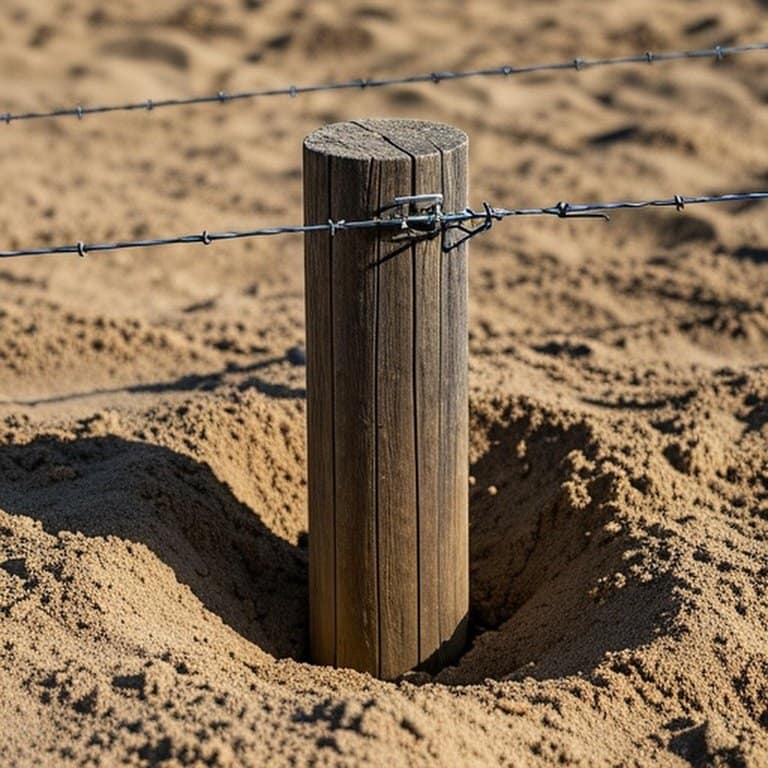
Sandy soil behaves very differently from clay or loam. It drains quickly, doesn’t compact naturally, and shifts under pressure. That means fence posts installed using normal depth rules may lean, loosen, or fail over time—especially under livestock pressure or high-tension wire systems.
Permanent fencing represents a long-term investment. If posts move even slightly, wire tension drops, gates sag, and entire fence lines can weaken. In sandy ground, installation technique matters more than material choice. Understanding how sand affects lateral resistance and post anchoring helps prevent early failure and repeated repairs.
Key Factors to Consider
- Post depth must exceed standard recommendations
- Soil compaction technique during backfill
- Livestock pressure and fence tension levels
- Use of gravel or concrete collars
- Drainage and erosion risk over time
Detailed Explanation
Sandy soil lacks cohesion. Unlike clay, which grips posts tightly, sand flows around objects and shifts under movement. When a fence post is set in sand, the surrounding soil provides less lateral resistance. Over time, animal pressure, wind, or wire tension can cause gradual leaning.
To compensate, posts must be installed deeper than in denser soils. Increasing embedment depth by 6–12 inches often improves stability significantly. Larger-diameter posts also distribute force over a wider area, reducing movement. In high-stress applications—such as corners or high-tensile fencing—brace assemblies are essential.
Backfilling technique plays a major role. Simply dropping loose sand back into the hole will not provide sufficient support. The soil must be compacted in layers. In some cases, adding crushed gravel improves drainage while increasing friction around the post. For maximum permanence, concrete collars or full concrete set posts can dramatically improve holding strength.
However, full concrete use should be strategic. In areas with shifting sand dunes or erosion-prone sites, concrete can create rigid anchor points while surrounding soil continues to move. That’s why proper drainage and erosion control are just as important as depth.
Sandy soil can absolutely support permanent fencing—but it requires intentional design, deeper installation, and reinforced structural points.
Soil Pressure and Livestock Movement
How Cattle Behavior Affects This Choice
Cattle apply horizontal pressure when rubbing, leaning, or crowding fence lines. In sandy soil, that lateral force transfers directly to the post base. Without deep embedment and solid compaction, posts gradually tilt.
High-traffic areas—near water, feed, or gates—experience repeated impact. Reinforcing those sections reduces long-term maintenance.
Calves vs Mature Cattle Considerations
Calves apply less direct force, but they are more likely to test lower wires. Loose posts in sandy soil can create sagging bottom wires, increasing escape risk.
Mature cattle generate significantly more push pressure. Strong corner bracing and deeper posts are particularly important in breeding or finishing operations.
Terrain, Visibility, and Pressure Zones
On flat sandy ground, erosion may not be obvious at first. However, wind and water runoff can gradually expose post bases.
If fencing is installed on sandy slopes, gravity increases soil movement. Deeper posts and strategic bracing at slope transitions improve durability.
When This Works Well
- Posts are installed deeper than standard guidelines
- Soil is compacted in layers during backfilling
- Gravel or concrete reinforcement is used for corners
- Livestock pressure is moderate and well-managed
When This Is Not Recommended
- Shallow post installation in loose sand
- High-tension wire without reinforced brace assemblies
- Ignoring erosion or water runoff patterns
- Using narrow-diameter posts in high-pressure areas
Alternatives或Better Options
Larger Diameter Posts
Using wider wood or steel posts increases surface contact with sand and improves lateral resistance without drastically increasing depth.
Concrete Footings or Collars
Strategically setting corner and gate posts in concrete significantly strengthens anchor points while allowing line posts to remain compacted soil-set.
Helical或Anchored Systems
In very loose sand, screw-in or anchored post systems can improve holding power where traditional driven posts fail.
Cost / Safety / Practical Notes
Installing fence posts in sandy soil typically increases labor and material costs due to deeper holes, gravel use, or concrete reinforcement. However, failing to reinforce posts often results in repeated repairs, which can exceed initial savings.
Safety considerations include hole collapse during digging. Sandy soil can cave in quickly, especially when moist. Using proper hole diameter and working carefully reduces injury risk.
From a long-term perspective, investing in deeper installation and reinforced corners is more cost-effective than frequent post resetting. Sandy soil is not a barrier to permanent fencing—it simply requires stronger anchoring strategy.
Quick Takeaway
Sandy soil can support permanent fence posts—but only with deeper embedment, proper compaction, and reinforced brace points. Treat sand as a low-resistance soil and build accordingly for long-term stability.