
Short Answer
Fence lines on slopes should usually follow the natural contour of the land rather than run straight up and down. Contour-aligned fencing improves stability, reduces erosion, maintains consistent wire height, and minimizes gaps at ground level. However, straight runs may be appropriate for specific layouts, access lanes, or high-tension fence systems when properly engineered.
Why This Question Matters
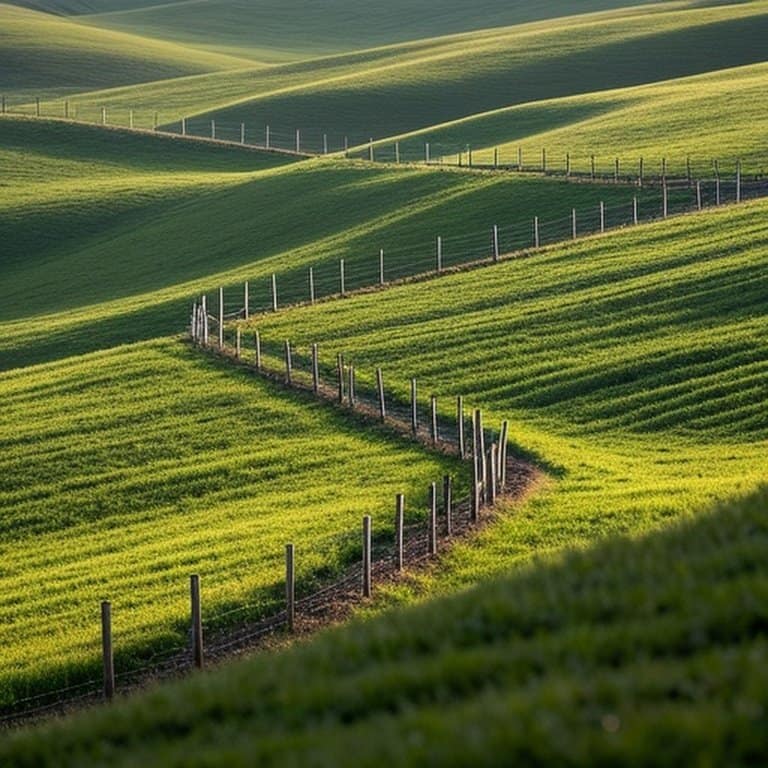
Sloped terrain creates both structural and management challenges for fencing. Installing fences incorrectly on hills can lead to sagging wires, uneven tension, livestock escape gaps, accelerated erosion, and long-term maintenance headaches. What works well on flat ground often fails on slopes.
Choosing whether to follow contours or cut straight across affects installation cost, post spacing, drainage behavior, and animal movement patterns. In grazing systems especially, fence alignment influences paddock efficiency and livestock flow. A poor layout decision can multiply repair work for years, while a well-planned slope strategy improves durability and reduces stress on posts and wire systems.
Key Factors to Consider
- Degree and length of the slope
- Soil stability and erosion risk
- Type of fencing material used
- Livestock size and behavior
- Equipment access and maintenance needs
Detailed Explanation
Following the contour means aligning the fence horizontally along the hillside rather than running it directly uphill or downhill. This approach generally reduces stress on posts because tension is distributed evenly rather than pulling downward. It also maintains more consistent ground clearance under the fence, minimizing gaps where livestock might crawl through.
Running fences straight up and down steep slopes can create excessive vertical tension differences. Gravity pulls on wires, especially in woven or high-tensile systems, increasing strain on corner and brace posts. Over time, this may cause leaning or wire loosening unless bracing is significantly reinforced.
Contour fencing also helps manage water flow. Straight downhill fences can channel runoff along the fence line, increasing erosion around posts. By contrast, contour alignment reduces concentrated water movement and improves soil stability around post bases.
However, straight runs may be practical in moderate slopes where maintaining geometric paddock layouts is important. In these cases, stepped installation techniques or closer post spacing may be required to maintain proper tension and height consistency.
Ultimately, contour alignment is usually safer for long-term durability, especially on steeper terrain.
Livestock Behavior and Sloped Terrain
How Cattle Behavior Affects This Choice
Cattle prefer walking along slopes rather than climbing steep gradients. Contour-aligned fences often guide natural movement patterns and reduce pressure points.
Straight downhill fences can concentrate livestock traffic at lower corners, increasing wear and erosion.
Calves vs Mature Cattle Considerations
Calves are more likely to test gaps under uneven fencing. On steep slopes, inconsistent bottom clearance increases escape risk.
Maintaining consistent fence height along contours improves containment reliability.
Terrain, Visibility, and Pressure Zones
Steeper slopes amplify soil movement and runoff. Contour fencing reduces downhill force and improves structural longevity.
In gentle slopes, layout efficiency may outweigh contour alignment benefits.
When This Works Well
- Steep slopes with erosion-prone soils
- Woven wire or mesh fencing systems
- Areas with heavy rainfall or runoff concerns
- Livestock operations prioritizing long-term durability
When This Is Not Recommended
- Very mild slopes with minimal drainage issues
- Geometric paddock systems requiring straight divisions
- High-tensile systems engineered for long straight runs
- Situations where equipment access favors direct alignment
Alternatives or Better Options
Stepped Fence Installation
Instead of fully following contour or running straight, stepped fencing adjusts panel height incrementally. This maintains ground contact while preserving a mostly straight alignment.
Closer Post Spacing on Slopes
Reducing post spacing on straight slope runs increases stability and maintains wire height consistency.
Hybrid Layout Design
Following contour for perimeter fencing while using straight internal divisions can balance durability and paddock efficiency.
Cost / Safety / Practical Notes
Contour fencing may increase installation time due to more precise layout work and additional bracing at angle changes. However, it typically reduces long-term maintenance costs by minimizing erosion and tension problems.
Straight runs on steep slopes often require deeper posts, additional braces, or closer spacing—raising material and labor expenses.
Safety is also a factor. Installing on steep slopes increases equipment risk and post alignment challenges. Proper footing and secure equipment positioning are essential.
Choosing contour alignment on steep terrain generally lowers structural stress and long-term repair frequency.
Quick Takeaway
On most slopes—especially steep or erosion-prone ones—fence lines should follow the contour to improve stability and reduce maintenance. Straight runs may work on gentle slopes but require careful engineering and closer post spacing to avoid long-term issues.