
Short Answer
Frost heave can push fence posts upward, tilt them out of alignment, loosen surrounding soil, and reduce overall fence stability. It occurs when water in the soil freezes and expands, lifting posts during winter and leaving them unstable after thawing. Proper post depth, drainage, and base preparation are critical to preventing long-term damage.
Why This Question Matters
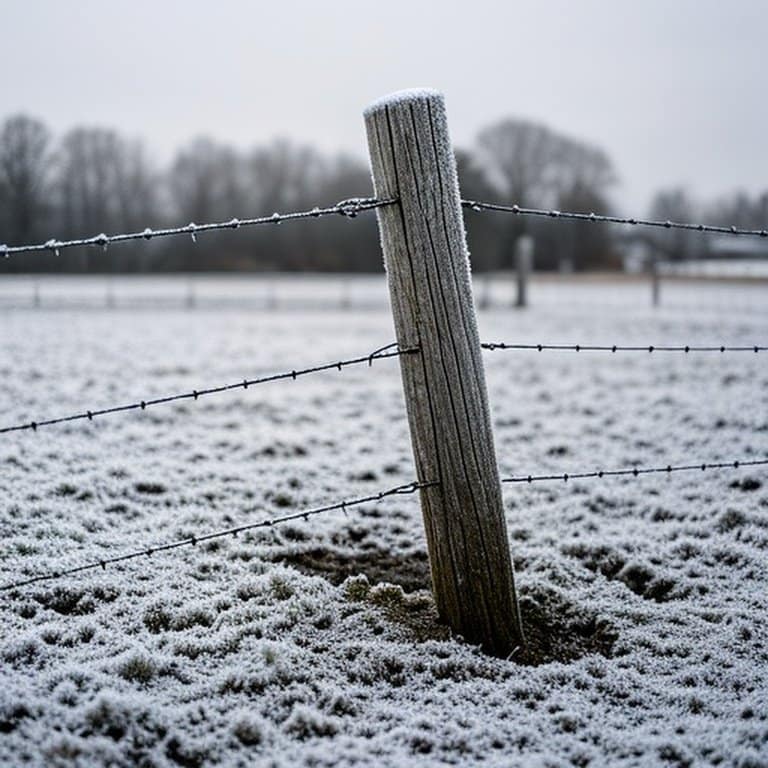
In cold climates, frost heave is one of the most common causes of fence failure. Posts that look perfectly stable in summer can shift several inches over a single winter. Once the ground thaws, the soil often settles unevenly, leaving posts loose, leaning, or misaligned.
Ignoring frost heave can result in repeated repairs, weakened wire tension, livestock escape risks, and higher maintenance costs over time. For perimeter fencing especially, structural movement affects entire fence runs. Understanding how frost heave works allows you to install posts correctly the first time rather than constantly resetting them.
Key Factors to Consider
- Local frost depth in your region
- Soil type and moisture content
- Post depth relative to frost line
- Drainage and water accumulation
- Use of concrete versus gravel backfill
Detailed Explanation
Frost heave occurs when moisture in the soil freezes and expands. Water expands by roughly nine percent when it turns to ice. In soils that retain water—such as clay and silty soils—this expansion creates upward pressure beneath fence posts. If posts are not installed below the frost line, that pressure can lift them.
Once winter ends and the ground thaws, the soil contracts. However, it rarely settles back exactly as it was. This leaves gaps around the post, reducing soil compaction and long-term stability. Repeated freeze-thaw cycles gradually worsen the problem.
Post depth is the primary defense against frost heave. Installing posts below the local frost depth helps anchor them in soil that remains stable year-round. In many northern regions, this means 36 to 48 inches or more.
Drainage is equally important. Well-draining gravel backfill reduces water retention around the post base. In contrast, poorly drained clay soils trap moisture, increasing frost expansion pressure.
Concrete can help in some cases, but if not installed correctly, it may actually increase frost lift by creating a solid mass that the freezing soil can push upward. Proper drainage and depth matter more than material alone.
Livestock and Structural Stress
How Cattle Behavior Affects This Choice
When frost heave loosens posts, livestock pressure amplifies instability. Leaning posts are more likely to shift further under wire tension or animal contact.
Strong perimeter fencing in cold regions must account for both soil movement and animal load.
Calves vs Mature Cattle Considerations
Calves are more likely to test lower gaps caused by frost lifting. Uneven post height can create escape openings near ground level.
Maintaining consistent fence height after winter prevents containment issues.
Terrain, Visibility, and Pressure Zones
Low-lying wet areas are more vulnerable to frost heave due to higher moisture content.
Slope position also matters—water collects in flatter areas, increasing freeze expansion risk.
When This Works Well
- Posts installed below regional frost depth
- Well-draining soils or gravel backfill used
- Elevated fence lines with good runoff
- Areas with proper site drainage management
When This Is Not Recommended
- Shallow post installation in cold climates
- High-moisture clay soils without drainage
- Concrete collars that trap water around posts
- Low-lying areas prone to standing water
Alternatives or Better Options
Deeper Post Installation
Installing posts 6–12 inches below the frost line significantly reduces lift risk and improves long-term stability.
Gravel Backfill Instead of Solid Concrete
Crushed gravel improves drainage and reduces frost pressure buildup around the post.
Larger Diameter Posts or Anchors
Wider posts increase surface resistance and reduce movement caused by soil expansion.
Cost / Safety / Practical Notes
Installing posts deeper increases labor and equipment time but reduces long-term repair costs. Resetting frost-heaved posts annually quickly becomes more expensive than proper installation.
Gravel backfill may cost slightly more upfront than simple soil packing but significantly improves durability.
In extremely cold regions, professional consultation for frost depth data is advisable. Installing below frost line is often non-negotiable for permanent fencing.
Failing to account for frost heave can compromise perimeter security and livestock safety.
Quick Takeaway
Frost heave lifts fence posts by freezing and expanding soil moisture. The most reliable prevention methods are installing posts below the frost line, improving drainage, and avoiding water-trapping backfill. Proper depth and soil management prevent long-term leaning, loosening, and repeated repairs.