
Wildlife & Predator Fencing Guide
Overview
Wildlife and predator fencing is designed to protect livestock, crops, and property from animals such as coyotes, wolves, foxes, bears, and raccoons. Unlike standard livestock fencing, predator fencing must prevent climbing, digging, squeezing, and in some cases jumping.
This guide explains how predator fencing works, which fence types are most effective, how height and wire spacing impact security, and when electric fencing becomes necessary. It is intended for livestock owners, hobby farmers, ranchers, and rural property managers who need perimeter protection.
This page does not focus on internal cross fencing or livestock containment systems—it specifically addresses predator exclusion and wildlife control strategy. For livestock-specific fencing, refer to the Cattle Fencing Guide, Goat Fencing Guide, Sheep Fencing Guide, and Poultry Fencing Guide.
YouTube search queries: “How to build predator proof fence for livestock” or “Predator proof farm fence installation tutorial”
What This Guide Covers
Best Fencing to Keep Predators Out
The best fencing to keep predators out combines physical barriers with behavioral deterrents to address multiple threat types simultaneously. Woven wire provides strong physical containment, while electric offset strands create psychological barriers that discourage testing and climbing.
Effective predator fencing systems typically feature tight wire spacing at ground level to prevent squeezing, sufficient height to deter jumping, and either buried mesh or ground aprons to stop digging. For comprehensive system comparisons and material recommendations, visit the Best Fencing to Keep Predators Out guide.
Best Fencing to Keep Predators Out
Which Predators Require Electric Fencing
Different predators respond to different deterrence strategies, making it important to understand which predators require electric fencing. Coyotes and foxes can often be deterred by multi-strand electric systems, while bears typically require high-tensile electric perimeters with proper voltage maintenance.
Wolves and large predatory cats may need reinforced woven wire combined with electric offsets for reliable containment. Smaller predators like raccoons and opossums often require physical barriers rather than electric deterrence alone. For species-specific recommendations, see the Predators That Require Electric Fencing guide.
Predators That Require Electric Fencing
Proper Predator Fence Height
Predator fence height must account for the jumping and climbing abilities of target species. Coyotes can clear 5-foot fences when motivated, while deer and some large predators may require 6–8 feet of height for reliable exclusion.
Terrain also affects required height—predators can use slopes, snowdrifts, or nearby objects as launching points to clear fences that would otherwise be adequate. Electric offset wires at the top can effectively increase functional height without additional posts. For height charts by species and terrain type, refer to the Predator Fence Height guide.
Predator Fence Height Requirements
Preventing Digging Under Fences
Many predators, especially foxes, coyotes, and dogs, will attempt to dig under fences rather than climb or jump over them. The most effective prevention methods include burying wire mesh 12–18 inches deep along the fence line or installing outward-facing wire aprons at ground level.
Ground skirts that extend 12–24 inches horizontally from the fence base discourage digging without requiring deep trenching. In areas with persistent digging problems, combining buried wire with a hot wire positioned 4–6 inches above ground provides dual-layer protection. For installation techniques and material options, see the Preventing Digging Under Fences guide.
Preventing Digging Under Fences
Electric Fence Safety & Effectiveness
Electric fencing for wildlife control requires proper voltage levels, reliable grounding, and consistent maintenance to remain effective. Most wildlife deterrence systems operate at 4,000–7,000 volts, with bear fencing often requiring the higher end of this range.
Grounding is particularly critical in dry or rocky soil where conductivity is poor. Safety considerations include proper energizer selection, warning signage, and placement away from high-traffic areas. For voltage requirements, grounding strategies, and performance factors, explore the Electric Fence Safety & Effectiveness guide.
Electric Fence Safety & Effectiveness
Wildlife vs Livestock Fencing Differences
Understanding the differences between wildlife fencing and livestock fencing is essential for proper system selection. Livestock fencing primarily contains animals through physical barriers and trains them to respect boundaries, while wildlife fencing must exclude intelligent, motivated predators that actively test and exploit weak points.
Wildlife fencing typically requires tighter wire spacing, greater height, ground-level security, and often electric reinforcement. Legal and environmental requirements also differ significantly between the two categories. For structural and regulatory comparisons, see the Wildlife vs Livestock Fencing guide.
Wildlife vs Livestock Fencing Differences
Predator Fence Cost Per Acre
Wildlife and predator fencing cost per acre is typically higher than standard livestock fencing due to additional height, tighter wire spacing, buried components, and electric reinforcement requirements. Material costs vary significantly based on system type—basic woven wire perimeters may cost $1.50–$3.00 per linear foot, while reinforced systems with electric offsets can exceed $5.00 per foot.
Installation labor adds substantially to total costs, especially in rocky terrain or areas requiring buried wire. Long-term maintenance costs should also be factored into budgeting decisions. For detailed cost breakdowns and budgeting tools, consult the Predator Fence Cost guide.
Best Fencing for Coyotes, Wolves, Foxes & Bears
Different predator species require tailored fencing approaches. Best fencing for coyotes typically features 5–6 feet of height with tight bottom spacing and optional electric reinforcement. Wolves require taller, stronger systems—often 6–8 feet with electric offsets.
Foxes are excellent diggers and require buried wire or ground aprons more than extreme height. Bears present unique challenges and typically require high-tensile electric fencing with multiple strands and proper voltage maintenance. For species-specific design recommendations and material selections, see the Best Fencing for Predator Species guide.
Best Fencing for Coyotes, Wolves, Foxes & Bears
Predator Fence Maintenance & Inspection
Regular predator fence maintenance and inspection prevents the gradual degradation that creates weak points predators will exploit. Key maintenance tasks include checking wire tension, testing electric fence voltage, inspecting for rust or damage, examining ground-level integrity where digging occurs, and controlling vegetation that grounds electric strands.
Seasonal inspections are particularly important after winter when frost heaving can shift posts and after heavy rains that may expose buried wire. Predators often test fences repeatedly until they find weaknesses, making proactive maintenance critical. For inspection checklists and maintenance schedules, see the Predator Fence Maintenance guide.
Predator Fence Maintenance & Inspection
Legal & Environmental Restrictions
Wildlife fencing may be subject to legal and environmental restrictions that do not apply to standard livestock fencing. Some regions require permits for fences over certain heights, especially if they might impede wildlife migration corridors or protected species movement.
Environmental regulations may restrict fence placement near waterways, wetlands, or protected habitats. Some jurisdictions have specific requirements for fence visibility to prevent wildlife collisions. For permit requirements and compliance guidance, consult the Wildlife Fencing Legal Restrictions guide.
Legal & Environmental Restrictions
Common Decision Scenarios
If Predator Pressure Is High
In areas with persistent predator problems, combining tall woven wire (6–8 feet) with electric offset strands provides both physical and psychological barriers. The woven wire prevents breakthrough, while electric wires discourage climbing and leaning.
This combination approach is particularly effective against coyotes, wolves, and large predatory cats that may test fences repeatedly until they find weaknesses. For system design recommendations, see the Best Fencing to Keep Predators Out guide.
High Predator Pressure Fencing
If Predators Dig Frequently
When digging is the primary breach method, installing buried mesh or apron extensions becomes essential. Buried wire should extend at least 12 inches deep, while ground aprons should project 12–24 inches outward from the fence base.
Ground aprons are often easier to install than fully buried wire and provide excellent protection against digging predators like foxes, coyotes, and badgers. For installation techniques and material options, see the Preventing Digging guide.
If You Need Bear-Resistant Fencing
Bears require specialized fencing approaches due to their strength, intelligence, and climbing ability. High-tensile electric perimeter systems with 5–7 strands and consistent 5,000–7,000 volt output provide the most reliable bear deterrence.
Physical barriers alone rarely stop determined bears—the electric shock creates a strong negative association that conditions bears to avoid the area. For bear-specific design recommendations, see the Best Fencing for Bears section.
Bear-Resistant Electric Fencing
If Budget Is Limited
When working with budget constraints, comparing material types and long-term costs helps identify the most cost-effective solutions. Initial wildlife fencing cost per acre varies significantly between system types, but maintenance costs over time may favor higher upfront investment.
Electric fencing systems typically have lower material costs but higher ongoing maintenance requirements. For comprehensive cost comparisons and budgeting tools, consult the Fence Cost & Budgeting guide.
Wildlife Fencing Cost Comparison
If Terrain Is Uneven or Wooded
On sloped or wooded terrain, proper fence height becomes more complex because predators can use elevation changes or nearby trees as launching points. Post depth must be increased in areas with shallow soil or rocky ground to maintain structural integrity.
Fence contour strategy matters significantly—fencing that closely follows ground elevation prevents gaps while stepped fencing works better on steep slopes. For terrain-specific installation techniques, see the Sloped Terrain Fencing guide.
Key Design & Planning Considerations
Fence Height & Spacing
Fence height must account for jumping ability—coyotes can clear 5 feet, while deer and some predators may require 6–8 feet for reliable exclusion. Wire spacing must prevent squeezing, particularly for foxes and raccoons that can fit through surprisingly small openings.
Lower spacing near ground level is critical because most predators test fences at the bottom first. Spacing should be no more than 4 inches at ground level, gradually increasing toward the top. For comprehensive height and spacing recommendations, see the Fence Height & Spacing guide.
Safety Factors
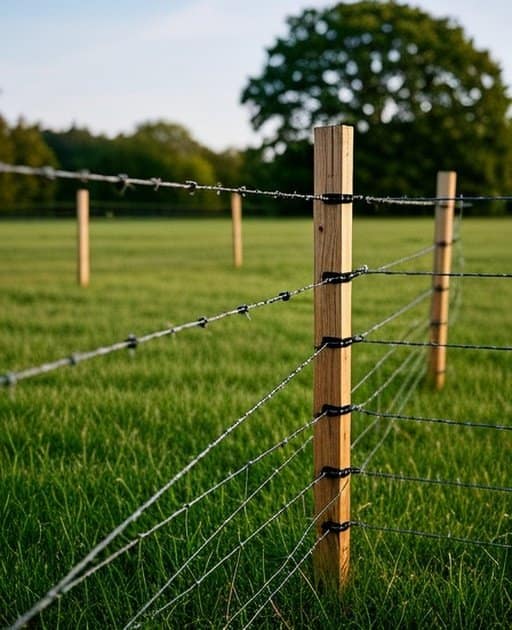
Electric fencing for wildlife control should use proper grounding and maintain safe voltage levels between 4,000–7,000 volts. Proper grounding is especially critical in dry or rocky soil where conductivity is reduced.
Non-electric woven wire must avoid sharp edges and protruding wire ends that can injure wildlife or livestock. Consider fence visibility to reduce accidental wildlife entanglement—high-tensile smooth wire is less visible than woven mesh and may pose greater collision risks for birds and fast-moving wildlife.
Cost & Maintenance
Predator fencing costs vary significantly depending on material type—woven wire, high-tensile wire, or electric systems each have different cost profiles. Initial material costs represent only part of the total investment, with installation labor often equaling or exceeding material expenses.
Ongoing maintenance includes vegetation control to prevent grounding of electric strands, regular voltage testing to ensure deterrence effectiveness, post inspection for stability, and wire tension checks. For lifecycle cost planning, consult the Fence Cost & Budgeting guide.
Installation Complexity
Buried mesh and electric offset installations increase complexity compared to basic livestock fencing. Rocky soil or sloped terrain requires reinforced bracing, deeper post settings, and potentially specialized equipment like rock drills or powered post drivers.
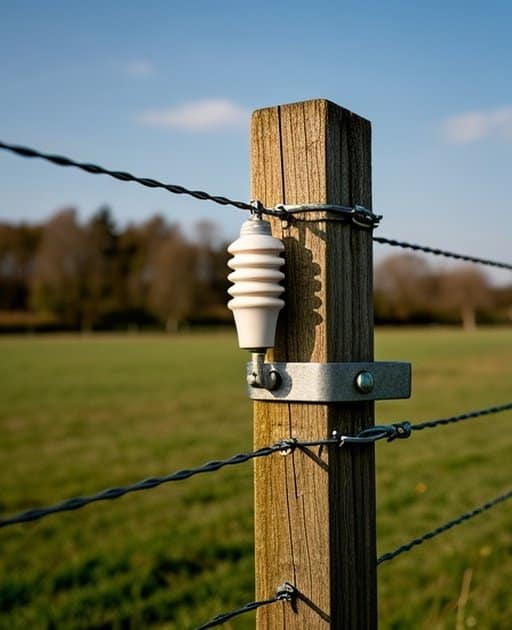
Electric systems require proper energizer sizing, strategic grounding rod placement, and careful routing to maintain consistent voltage throughout the fence line. For step-by-step installation guidance, see the Farm Fence Installation guide and Electric Fence Installation guide.
Legal & Boundary Considerations
Wildlife fencing may require permits in some regions, particularly for fences over 6 feet or those near protected wildlife corridors. Height limits and wildlife passage laws vary significantly by location and may restrict certain fence configurations.
Property line considerations are important—installing predator fencing too close to boundaries may create disputes or violate setback requirements. For legal planning and compliance guidance, see the Property Line Fence Placement guide.
Related Fence Systems
- Woven Wire / Field Fence Guide – Foundation material for predator systems
- Electric Fence Installation Guide – Setup and maintenance for electric deterrence
- Fence Height & Spacing Guide – Dimensions for different predator species
- Fence Cost & Budgeting Guide – Comprehensive cost planning tools
- Perimeter vs Interior Fencing Guide – Strategic fence placement
Frequently Asked Questions
How high should a predator fence be?
Most predator fences should be 6–8 feet tall depending on species and terrain. Jumping predators like coyotes and deer require taller structures or electric deterrence at the top.
Can predators dig under fences?
Yes, many predators including foxes, coyotes, and dogs will dig under fencing unless mesh is buried 12–18 inches deep or an outward-facing apron extension is installed at ground level.
Is electric fencing enough for wildlife control?
For coyotes and smaller predators, electric fencing can be highly effective. Bears often require stronger multi-strand high-tensile systems with consistent voltage maintenance above 5,000 volts.
How much does predator fencing cost per acre?
Wildlife and predator fencing costs vary widely depending on material selection, terrain complexity, and installation method—typically ranging from $1.50–$5.00+ per linear foot, making it more expensive than basic livestock fencing.
Does predator fencing require maintenance?
Yes, regular maintenance and inspection are essential to prevent voltage drops in electric systems, vegetation interference, structural weaknesses from weather or animal impact, and ground-level breaches from digging.
Final Recommendations
Wildlife and predator fencing is essential for farms and ranches facing significant predator pressure. It is most suitable for perimeter protection rather than internal livestock division, where standard containment fencing is typically sufficient.
If your primary concern is livestock containment rather than predator exclusion, see the Cattle Fencing Guide, Goat Fencing Guide, or Sheep Fencing Guide. If predator exclusion is your main objective, start with the Best Fencing to Keep Predators Out guide and Predators That Require Electric Fencing guide.
Proper planning, correct fence height for target species, and effective digging prevention measures will determine long-term success. Use the linked guides above for detailed system comparisons, species-specific recommendations, cost planning tools, and installation instructions tailored to your specific predator challenges and property characteristics.