
PVC & Plastic Fencing Guide
Overview
PVC and plastic fencing systems are popular for farms, horse paddocks, residential rural properties, and perimeter boundaries where appearance, low maintenance, and weather resistance are priorities. Unlike wood fencing, PVC does not rot, splinter, or require staining, making it attractive for long-term installations.
This PVC & Plastic Fencing Guide explains the different types of vinyl fencing, cost comparisons, durability expectations, installation requirements, livestock suitability, and long-term maintenance considerations. It also compares PVC fencing to wood, wire, and electric fencing systems.
This guide focuses specifically on PVC and plastic fencing materials. For traditional wood fencing, woven wire, or high-tensile systems, refer to the Cattle Fencing Guide and related hub pages below.
YouTube search query: “how to install pvc vinyl farm fence step by step tutorial”
What This Guide Covers
What Is PVC / Vinyl Fencing?
PVC and vinyl fencing are manufactured from polyvinyl chloride (PVC) or other plastic polymers engineered to replicate the appearance of traditional painted wood fencing while offering superior weather resistance and durability. The material is typically extruded into hollow or foam-core profiles that reduce weight while maintaining structural strength.
Common configurations include post and rail systems with 2–4 horizontal rails, board-style fencing with closely spaced horizontal planks, and privacy designs with vertical pickets. PVC fencing is available in white, tan, and other colors, with UV inhibitors added to prevent fading and degradation from sunlight exposure. For detailed material composition and system types, visit the What Is PVC/Vinyl Fencing guide.
PVC Fencing vs Wood Fencing
The comparison between PVC and wood fencing reveals important trade-offs in durability, maintenance requirements, initial cost, and long-term value. PVC fencing requires virtually no maintenance beyond occasional washing, never needs painting or staining, and resists rot, insects, and weather damage that plague wood systems.
Wood fencing costs less initially—typically 30–50% lower than comparable PVC systems—but requires ongoing maintenance including staining every 2–4 years and board replacement as deterioration occurs. Total ownership costs over 20–30 years often favor PVC despite higher upfront investment. For detailed cost analysis and performance comparisons, see the PVC vs Wood Fencing guide.
Is PVC Fencing Good for Horses?
PVC fencing for horses offers several advantages including smooth surfaces that prevent splinters and reduce injury risk, excellent visibility that helps horses see and avoid the fence, and sufficient flexibility to absorb impact without shattering. The clean appearance and low maintenance requirements make it popular for horse properties.
However, some horses may chew PVC rails if not discouraged through training or electric wire reinforcement. The material provides good containment strength but may not withstand repeated high-impact collisions as well as heavy wood board fencing. For horse-specific design recommendations and safety considerations, see the PVC Fencing for Horses guide.
Is PVC Fencing Safe for Horses?
PVC Fencing Cost per Foot
PVC fencing cost per foot typically ranges from $12–$35 for materials depending on style, quality, and rail configuration. Professional installation adds $8–$15 per linear foot, bringing total installed costs to $20–$50 per foot—significantly higher than barbed wire or woven wire but competitive with quality wood board fencing.
Three-rail PVC systems cost less than four-rail or board-style configurations. Premium vinyl products with thicker walls, reinforced posts, and lifetime warranties command higher prices but offer superior durability. For comprehensive cost breakdowns and budget planning tools, consult the PVC Fencing Cost Analysis guide.
How Long Does PVC Fencing Last?
PVC fencing lifespan typically ranges from 20–30 years or more depending on product quality, UV protection, climate conditions, and impact exposure. Quality vinyl fencing includes UV inhibitors and impact modifiers that prevent brittleness and color fading over decades of sun exposure.
Unlike wood fencing that deteriorates from rot, insects, and moisture, PVC maintains structural integrity indefinitely in most climates. Extreme cold can make lower-grade PVC brittle and prone to cracking under impact, while high heat may cause warping in poorly manufactured products. For lifespan projections and warranty comparisons, see the PVC Fencing Lifespan guide.
How Long Does PVC Fencing Last?
PVC Fence Post Installation Guide
Installing PVC fence posts requires proper depth, secure anchoring, and accurate alignment to ensure long-term stability and rail fit. Posts should be set at least 30–36 inches deep in most soils, with concrete footings recommended for permanent installations to prevent frost heaving and wind movement.
Post spacing typically ranges from 6–8 feet depending on rail style and wind exposure—closer spacing improves strength in high-wind areas. Many PVC systems use aluminum or steel inserts within hollow posts to increase strength and prevent flexing. For step-by-step installation instructions and footing details, see the PVC Post Installation Guide.
PVC Fencing Maintenance Requirements
PVC fencing maintenance is minimal compared to wood systems, requiring only periodic cleaning to remove dirt, mold, or mildew. Pressure washing or scrubbing with mild soap typically restores original appearance without special treatments or harsh chemicals.
Unlike wood that requires staining every few years, PVC never needs painting or sealing. Maintenance tasks include inspecting connections and fasteners for looseness, checking for impact damage that may have cracked rails or posts, and ensuring drainage around posts remains adequate. For maintenance schedules and cleaning recommendations, see the PVC Fencing Maintenance guide.
PVC Fencing Maintenance Requirements
PVC Fence Strength & Impact Resistance
PVC fence strength and impact resistance varies significantly by product quality, wall thickness, and internal reinforcement. Quality agricultural-grade PVC fencing with reinforced posts and thick-walled rails provides adequate containment for horses, small cattle operations, and perimeter boundaries where extreme impact is unlikely.
However, PVC typically cannot match the impact resistance of heavy wood board fencing or the physical containment strength of woven wire systems. Large cattle that push and lean heavily may deform or break PVC rails over time. For strength testing data and livestock-specific recommendations, see the PVC Strength guide.
PVC Fence Strength for Livestock
PVC vs Woven Wire Fence
Comparing PVC and woven wire fencing involves different priorities—PVC excels in aesthetics, visibility, and maintenance reduction, while woven wire provides superior physical containment, better predator resistance, and lower cost per linear foot for large acreage.
PVC works best for visible boundaries, horse paddocks, and situations where traditional farm appearance is valued. Woven wire performs better for sheep, goats, mixed livestock, and operations requiring maximum containment strength at economical cost. For application-specific recommendations and performance comparisons, see the PVC vs Woven Wire guide.
When Should You Avoid PVC Fencing?
There are several situations where you should avoid PVC fencing in favor of alternative systems. In extreme cold climates with frequent sub-zero temperatures, PVC can become brittle and crack under impact—quality products perform better but may still be vulnerable below -20°F.
For heavy livestock like bulls or large cattle herds that lean and push constantly against fences, heavy wood board fencing or woven wire provides more reliable containment. Large acreage projects where cost per foot is critical should consider barbed wire or high tensile systems. For alternative fencing recommendations, see the When to Avoid PVC guide.
When Should You Avoid PVC Fencing?
Common Decision Scenarios
If You Want Low Maintenance Fencing
PVC fencing eliminates the ongoing maintenance burden of wood systems that require staining, sealing, and frequent board replacement. PVC maintenance consists primarily of occasional cleaning—no painting, no rot repair, no splinter management.
This maintenance reduction saves hundreds of dollars and many hours annually over the fence’s 20–30 year lifespan. For property owners who value time savings and consistent appearance, PVC’s higher upfront cost is often justified. For maintenance cost comparisons, see the PVC Fencing Maintenance guide.
If You Are Fencing Horses
PVC board fencing provides excellent visibility that prevents collisions, smooth surfaces that reduce injury risk, and sufficient flexibility to absorb impact without shattering. The clean appearance and minimal maintenance make it increasingly popular for horse properties and breeding operations.
Three or four-rail PVC configurations with 4–5 foot heights are standard for horse paddocks. Adding an electric wire along the top rail discourages chewing and leaning behavior in some horses. For horse-specific design recommendations, see the PVC Fencing for Horses guide.
If Budget Is Limited
When budget is the primary constraint, comparing PVC costs to wood and wire alternatives reveals significant upfront savings with traditional materials. PVC typically costs 40–60% more initially than comparable wood fencing and several times more than wire systems.
However, when lifecycle costs including maintenance, repairs, and replacement are considered over 20+ years, PVC’s total ownership cost may be competitive with wood. For large acreage where cost per foot is critical, wire systems remain most economical. For comprehensive cost analysis, see the Fence Cost & Budgeting guide.
Wood Fencing Costs | Barbed Wire Costs
If Predator Pressure Is High
PVC fencing alone provides limited predator protection because rail spacing allows predators to pass through and the smooth surfaces offer no deterrent to climbing. Combining PVC perimeter fencing with electric wire offsets significantly improves security through psychological conditioning.
For small livestock vulnerable to predators, woven wire with tight mesh provides superior physical barriers at lower cost than PVC. For predator-specific strategies and system combinations, see the Wildlife & Predator Fencing Guide.
If You Want Long-Term Appearance
PVC fencing maintains consistent appearance for decades without the weathering, graying, and deterioration that affects wood fencing. UV inhibitors prevent significant color fading, and the smooth surfaces resist dirt accumulation and organic growth better than textured wood.
For properties where curb appeal and consistent aesthetics are important—such as horse breeding facilities, agritourism operations, or visible farm entrances—PVC’s appearance retention justifies higher investment. For material durability comparisons, see the Material Cost Comparison guide.
Key Design & Planning Considerations
Fence Height & Spacing
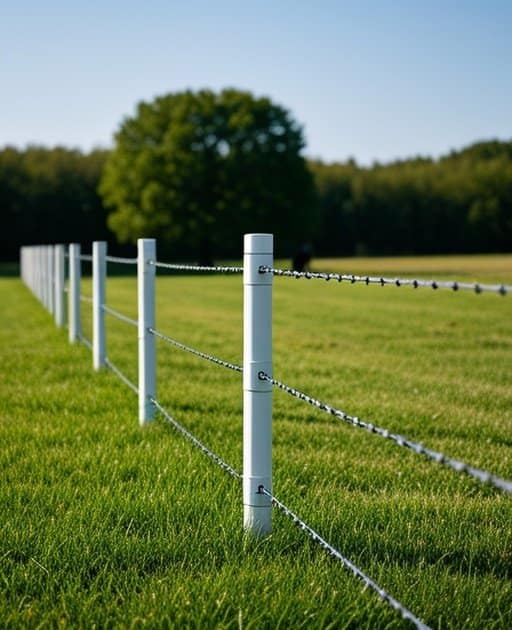
PVC fencing heights typically range from 4–6 feet depending on livestock type and perimeter requirements. Horse fencing commonly uses 4.5–5 foot heights with 3–4 horizontal rails spaced 10–16 inches apart. Taller fences improve containment and visibility but proportionally increase material and installation costs.
Rail spacing must prevent animals from pushing through or slipping underneath—bottom rails should be no more than 12 inches above ground for horses and closer for smaller animals. Post spacing of 6–8 feet provides adequate support for most applications, with closer spacing in high-wind areas or for heavier rail configurations.
Safety Factors
PVC fencing offers smooth surfaces without splinters, sharp edges, or protruding nails that characterize wood fencing, making it inherently safer for horses and small livestock. The material’s slight flexibility absorbs impact better than rigid materials, reducing injury severity if animals contact the fence.
However, extreme impact can causecracking, particularly in colder climates where PVC becomes more brittle. Sharp broken edges from damaged rails should be repaired immediately. Quality agricultural-grade PVC includes impact modifiers to reduce brittleness in cold weather.
Cost & Maintenance
PVC fencing usually costs more upfront than wood or wire systems—typically $20–$50 per linear foot installed compared to $8–$30 for wood and $1–$6 for wire alternatives. However, the virtual elimination of ongoing maintenance costs improves long-term value.
Over 20–30 years, total ownership costs including maintenance, repairs, and replacement often favor PVC despite higher initial investment. There is no staining expense every 2–4 years, no board replacement from rot, and minimal repair costs. For lifecycle cost analysis, see the Fence Cost & Budgeting guide.
Installation Complexity
PVC fence installation requires accurate post alignment, secure concrete footings for permanent stability, proper rail insertion into post channels, and attention to manufacturer specifications for expansion gaps. The work demands precision but standard carpentry and masonry skills.
Many PVC systems feature routed posts that accept rails in pre-cut channels, simplifying installation compared to custom-fitted wood systems. However, the material’s inflexibility means mistakes cannot be easily adjusted—careful measurement and layout are essential. For installation guidance, see the Fence Planning Basics guide.
Legal & Boundary Considerations
Some zoning regulations may restrict fence height, style, or color in residential-adjacent areas or historically designated rural zones. White PVC fencing is typically approved in most locations, while colored options may face restrictions in some jurisdictions.
Homeowners association rules in rural residential developments may mandate specific fence types or prohibit certain styles. Always verify property boundaries, setback requirements, and local ordinances before installing permanent PVC fencing. For legal planning guidance, see the Local Fence Laws & Regulations guide.
Related Fence Systems
- Wood Fencing Guide – Traditional wooden fence systems
- Woven Wire / Field Fence – Mesh containment alternative
- High Tensile Wire – Low-maintenance wire option
- Barbed Wire Fencing – Economical wire alternative
- Electric Fence Installation – Behavioral deterrence systems
- Cattle Fencing Guide – Cattle-specific recommendations
Frequently Asked Questions
Is PVC fencing better than wood?
PVC fencing requires significantly less maintenance and lasts longer than wood, but has higher upfront cost—total ownership costs over 20+ years often favor PVC.
How long does PVC fencing last?
Quality vinyl fencing can last 20–30 years or more depending on product quality, UV protection, and climate conditions—significantly longer than typical wood fencing.
Is PVC fencing safe for horses?
Yes, PVC board fencing provides smooth surfaces that reduce injury risk, excellent visibility, and sufficient flexibility to absorb impact without shattering.
Does PVC fencing crack in cold weather?
In extreme cold (below -20°F), lower-grade PVC may become brittle and crack under impact—quality agricultural PVC includes impact modifiers to reduce cold-weather brittleness.
Is PVC fencing expensive?
PVC typically costs more than wood or wire fencing upfront ($20–$50 per foot installed), but lower maintenance costs improve long-term value over 20–30 year lifespan.
Final Recommendations
PVC and plastic fencing systems are ideal for farms and properties that prioritize low maintenance, clean appearance, and long-term durability over minimal initial cost. They are particularly suitable for horse paddocks, visible perimeter boundaries, and situations where the ongoing burden of wood fence maintenance is undesirable.
However, PVC fencing may not be optimal for heavy livestock operations requiring maximum impact resistance, extreme cold climates without premium products, or large acreage projects where cost per foot is the dominant consideration. Compare PVC systems with wood, woven wire, and high-tensile fencing to determine the best fit for your specific livestock, property characteristics, budget, and maintenance capacity.
Use the linked guides above to evaluate cost, durability, maintenance requirements, and installation complexity before making your final decision. Proper planning, quality product selection, and professional-grade installation will maximize the value and service life of your PVC fence investment.