
Composite & Flexible Fencing Guide
Overview
Composite and flexible fencing systems are modern alternatives to traditional wood and wire fences. They are designed to provide strength, safety, and low maintenance while improving long-term durability in farm and ranch environments.
This Composite & Flexible Fencing Guide explains how these systems work, where they perform best, how they compare to wood or wire fencing, and what costs to expect. It is ideal for horse owners, hobby farms, and livestock managers seeking impact-resistant fencing that reduces injury risk.
This guide focuses on structural composite and flexible rail systems—not electric fencing components or wire-only solutions. For traditional systems, refer to the Cattle Fencing Guide, Barbed Wire Fencing, and High Tensile Wire guides.
YouTube search queries: “composite horse fencing installation” or “flexible rail livestock fencing installation”
What This Guide Covers
What Is Composite Livestock Fencing?
Composite livestock fencing combines recycled plastics, wood fibers, or polymer materials with reinforcing elements to create rail systems that replicate the appearance and functionality of traditional wood board fencing while offering superior weather resistance and reduced maintenance requirements.
These systems typically feature horizontal rails mounted to posts using specialized brackets, creating flexible barriers that absorb impact rather than breaking or splintering. Common materials include polymer-coated cables, rubberized rails, wood-plastic composites, and reinforced vinyl products. The structural performance varies by material composition and manufacturing quality. For detailed material comparisons and system types, visit the Composite Fencing comparison guide.
What Is Composite Livestock Fencing?
Is Composite Fencing Strong Enough for Livestock?
Composite fencing strength for livestock depends on material quality, rail design, and animal type. Quality agricultural-grade composite systems provide adequate containment for horses, light cattle operations, and small livestock when properly installed with appropriate post spacing and rail configurations.
Flexible composite rails excel at absorbing impact from running horses without breaking, reducing injury risk compared to rigid wood boards or barbed wire. However, heavy cattle that push and lean constantly may deform or stress composite materials beyond their design limits. For strength testing data and livestock-specific recommendations, see the Composite Fencing Strength guide.
Is Composite Fencing Strong Enough for Livestock?
Flexible Fencing vs Rigid Systems
The comparison between flexible and rigid fencing systems reveals important safety and performance differences. Flexible systems absorb impact energy by bending and stretching, then returning to original shape without breaking—this dramatically reduces injury severity when animals contact the fence at speed.
Rigid systems like wood boards or metal panels provide stronger physical barriers but transfer impact force directly to animals, potentially causing serious injuries. Flexible rails also conform better to uneven terrain and tolerate post movement without structural failure. For safety testing results and application guidance, see the Flexible vs Rigid Fencing guide.
Flexible Fencing vs Rigid Systems
Best Livestock Types for Flexible Systems
Livestock types best suited for flexible fencing systems include horses, ponies, and other equines where injury prevention is paramount. The impact-absorbing properties of flexible rails significantly reduce laceration and fracture risks compared to traditional barbed wire or rigid fence systems.
Light cattle operations and mixed livestock farms also benefit from flexible systems, though heavy bulls or aggressive cattle may require reinforcement or alternative containment. Small livestock like goats and sheep can be contained but may require tighter rail spacing or combination with woven wire at ground level. For species-specific recommendations, see the Best Livestock Types guide.
Best Livestock Types for Flexible Systems
Lifespan Expectations Outdoors
Composite fencing lifespan outdoors typically ranges from 15–30 years depending on material quality, UV protection, climate conditions, and maintenance practices. Quality composite products include UV inhibitors that prevent degradation from sunlight exposure and additives that resist moisture absorption and temperature extremes.
Unlike wood fencing that rots and deteriorates from weather exposure, composite materials maintain structural integrity through decades of outdoor use. However, lower-grade products without adequate UV protection may fade, become brittle, or crack over time. For lifespan projections by material type and climate, see the Composite Fencing Lifespan guide.
How Long Does Composite Fencing Last?
Maintenance Requirements
Composite fencing maintenance requirements are significantly lower than wood systems that demand regular staining, sealing, and board replacement. Composite materials do not rot, splinter, or require painting, reducing ongoing labor and material costs substantially.
Typical maintenance involves periodic cleaning to remove dirt and organic growth, inspecting bracket connections for tightness, checking for impact damage that may have stressed rails, and ensuring proper rail tension in flexible systems. Annual inspections and minor adjustments maintain optimal performance. For maintenance schedules and comparison data, see the Composite Fencing Maintenance guide.
Composite Fencing Maintenance Requirements
Safety for Horses and Goats
Composite and flexible fencing safety for horses and goats is generally superior to traditional barbed wire or rigid fence systems. For horses, the impact-absorbing properties prevent serious injuries when animals run into fences, while smooth surfaces eliminate splinter and barb risks.
Goats benefit from composite systems that resist chewing better than wood and provide more visible barriers than wire strands. However, goats’ climbing behavior may require taller fences or tighter rail spacing than horse applications. For species-specific safety recommendations and design guidance, see the Safety for Horses and Goats guide.
Use on Uneven or Sloped Terrain
Composite and flexible fencing for uneven or sloped terrain offers significant advantages over rigid systems. The inherent flexibility allows rails to conform to ground contours, maintaining consistent height and appearance without requiring stepped installations or custom-cut components.
Flexible rails tolerate post movement from frost heaving or soil settling without breaking or losing tension. On slopes, the systems adapt to elevation changes while maintaining structural integrity. For challenging terrain, flexible systems often install more easily than rigid wood boards or woven wire. For terrain-specific installation techniques, see the Uneven Terrain Fencing guide.
Composite Fencing for Uneven Terrain
Cost Comparison
Composite livestock fencing costs typically range from $15–$40 per linear foot installed, placing them between quality wood board fencing and premium PVC systems but significantly higher than barbed wire or woven wire alternatives.
Material costs represent 40–60% of total project expense, with labor and specialized brackets adding to installation costs. However, reduced maintenance requirements over 20–30 year lifespans often make composite systems cost-competitive with wood when lifecycle costs are considered. For comprehensive cost breakdowns and budgeting tools, consult the Composite Fencing Cost Analysis guide.
Composite Fencing Cost Comparison
Pros and Cons for Farms & Ranches
Pros and cons of composite and flexible fencing must be carefully evaluated against specific farm needs and priorities. Key advantages include superior animal safety through impact absorption, minimal maintenance compared to wood systems, excellent weather resistance and longevity, and attractive appearance that enhances property value.
Disadvantages include higher upfront costs than wire fencing, potential inadequacy for heavy cattle operations, limited availability of repair materials in some regions, and performance concerns in extreme cold climates. For balanced evaluation and decision frameworks, see the Pros and Cons guide.
Pros and Cons for Farms & Ranches
Common Decision Scenarios
If You Need Low-Maintenance Fencing
Composite systems eliminate rot, splinter management, and frequent painting requirements that burden wood fencing owners. The materials resist weather damage and maintain structural integrity without ongoing treatments or repairs.
This maintenance reduction saves hundreds of dollars and many hours annually over the fence’s 20–30 year service life. For property owners prioritizing time savings and consistent performance, composite fencing’s higher initial investment often provides strong value. For maintenance cost comparisons, see the Wood Fencing Guide.
Wood Fencing Maintenance Comparison
If Animal Safety Is the Priority
Flexible rails reduce injury risk dramatically compared to barbed wire, rigid wood boards, or high tensile wire systems. The impact-absorbing properties prevent serious lacerations and fractures when horses or livestock contact fences at speed.
For breeding operations, training facilities, or any situation where animal welfare and injury prevention are paramount, the safety benefits of flexible composite systems often justify premium pricing. For safety testing data and injury statistics, see the Barbed Wire Fencing Guide.
If Appearance Matters for Horse Properties
Composite and flexible fencing systems offer clean, professional appearance often chosen over woven wire or barbed wire for horse breeding facilities, training centers, and properties where aesthetics influence property value and client perception.
The consistent appearance maintenance over decades without weathering, graying, or deterioration that affects wood fencing makes composite systems attractive for high-visibility applications. For appearance comparisons, see the Woven Wire Field Fence Guide.
Woven Wire Appearance Comparison
If You Want Long-Term Durability
Compare composite fencing lifespan and lifecycle costs using the Fence Cost & Budgeting guide. Quality composite systems lasting 20–30 years with minimal maintenance often provide better total ownership value than wood systems requiring replacement every 15–20 years plus ongoing maintenance.
When evaluating long-term durability, consider material costs, installation expenses, annual maintenance requirements, and expected service life. For comprehensive lifecycle analysis tools, see the Fence Cost & Budgeting guide.
Key Design & Planning Considerations
Fence Height & Spacing
Composite fencing is commonly used at 4–5 feet for horses, with 3–4 horizontal rails providing adequate containment and visibility. Post spacing varies depending on system design and rail flexibility—typically 8–12 feet for standard applications, though some flexible systems may require closer spacing for optimal stability under animal pressure.
Rail spacing must prevent animals from slipping through or getting caught between rails. Bottom rails should be no more than 12 inches above ground for horses and closer for smaller animals. Taller fence heights improve containment but increase material costs proportionally.
Safety Factors
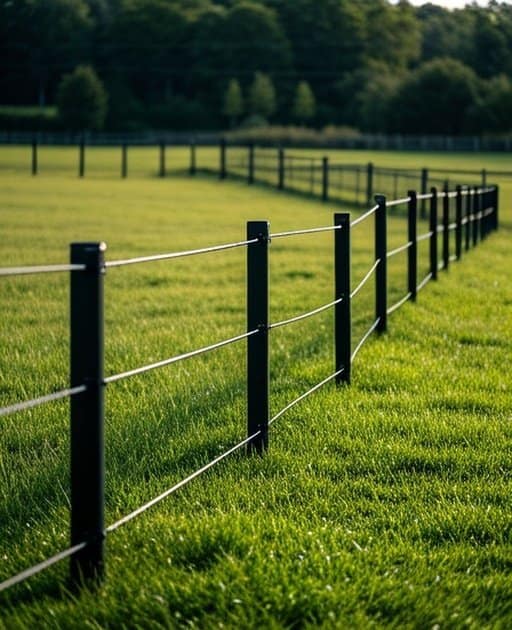
Unlike barbed wire or high tensile wire, composite rails reduce laceration risk through smooth surfaces and impact-absorbing properties. Flexible rails absorb collision energy by bending rather than transferring full impact force to animals, significantly lowering injury rates in equine facilities.
However, damaged or broken components must be repaired immediately to prevent sharp edges or loose rails from becoming hazards. Proper installation and regular inspection maintain safety performance throughout the fence’s service life.
Cost & Maintenance
Upfront costs for composite fencing are higher than wire fencing systems—typically $15–$40 per linear foot installed compared to $1–$6 for wire alternatives. However, reduced maintenance requirements over 20–30 years often make total ownership costs competitive with or lower than wood systems.
There is no staining expense every 2–4 years, minimal board replacement from weather damage, and lower repair costs compared to traditional materials. For lifecycle cost analysis and budgeting tools, see the Fence Cost & Budgeting guide.
Installation Complexity
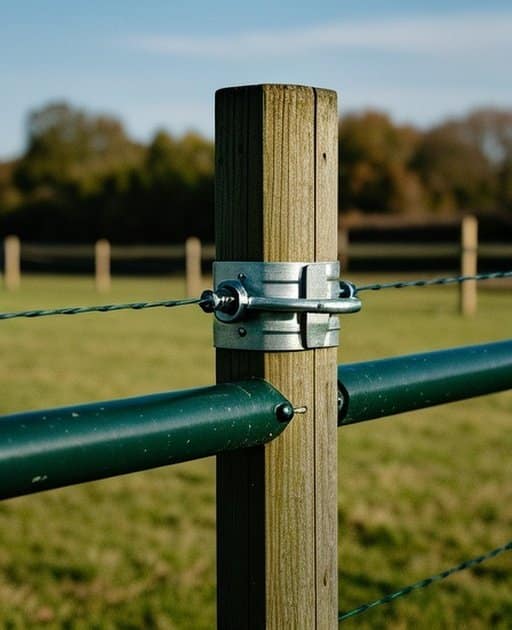
Composite fence installation typically requires precision post alignment, specialized bracket mounting systems, and attention to manufacturer specifications for proper rail attachment and tension. The work demands careful measurement and moderate carpentry skills.
Some systems use bracket-based rail mounting that increases installation time compared to simple wire stapling but providessuperior strength and adjustability. Professional installation ensures proper technique and system performance. For installation guidance, see the Fence Planning Basics guide.
Legal & Boundary Considerations
Always verify local fence height regulations, setback requirements, and boundary locations before installing permanent composite fencing. Some jurisdictions regulate fence height near roads or property lines, while others may restrict certain materials or colors in historically designated areas.
Shared boundary fences may require neighbor agreement on design and cost sharing. Confirm property lines through survey to avoid disputes or required fence relocation. For legal planning guidance, see the Local Fence Laws & Regulations guide.
Related Fence Systems
- Wood Fencing Guide – Traditional wooden fence systems
- Welded Wire Mesh – Rigid mesh containment
- High Tensile Wire – Low-maintenance wire option
- Electric Fence Installation – Behavioral deterrence systems
- Fence Planning Basics – Layout and design fundamentals
- PVC & Plastic Fencing – Alternative low-maintenance material
Frequently Asked Questions
Is composite fencing worth the cost?
Yes for horse properties and high-visibility farms where animal safety and appearance are priorities. Lower maintenance costs offset higher upfront investment over 20–30 year lifespan.
Does composite fencing crack in cold weather?
High-quality systems with proper additives resist cracking, but extreme cold (below -20°F) may affect lower-grade materials—similar to concerns with PVC fencing in cold climates.
Is flexible fencing strong enough for cattle?
Flexible systems are typically better suited for horses and light livestock. Heavy cattle pressure may require reinforced composite products or traditional containment systems.
Does composite fencing fade in sunlight?
UV-resistant composite materials maintain color significantly longer than untreated wood, though some fading may occur over many years depending on product quality and UV protection.
Can composite fencing be electrified?
Some systems allow electrification using proper insulators and mounting hardware, though specific compatibility varies by manufacturer and rail design.
Final Recommendations
Composite and flexible fencing systems are best suited for horse farms, hobby properties, and operations prioritizing animal safety and appearance over minimal initial cost. They offer superior safety performance, excellent durability, and minimal maintenance, but come at higher upfront investment than traditional wire fencing.
If cost is your primary concern, review the cheapest fencing options including barbed wire and woven wire systems. If safety, longevity, and appearance matter most, composite systems provide strong long-term value.
Use the linked guides above to compare costs, safety performance, terrain adaptability, and livestock suitability before making your final decision. Proper planning, quality product selection, and professional installation will maximize the value and service life of your composite fence investment.