Short Answer
Barbed wire is better for adult cattle on large, low-pressure pastures where cost matters most, while woven wire is better for calves, sheep, goats, horses, and mixed livestock where containment and safety are priorities. The better choice depends less on price and more on livestock behavior, age, pressure zones, and long-term maintenance expectations.
Why This Question Matters
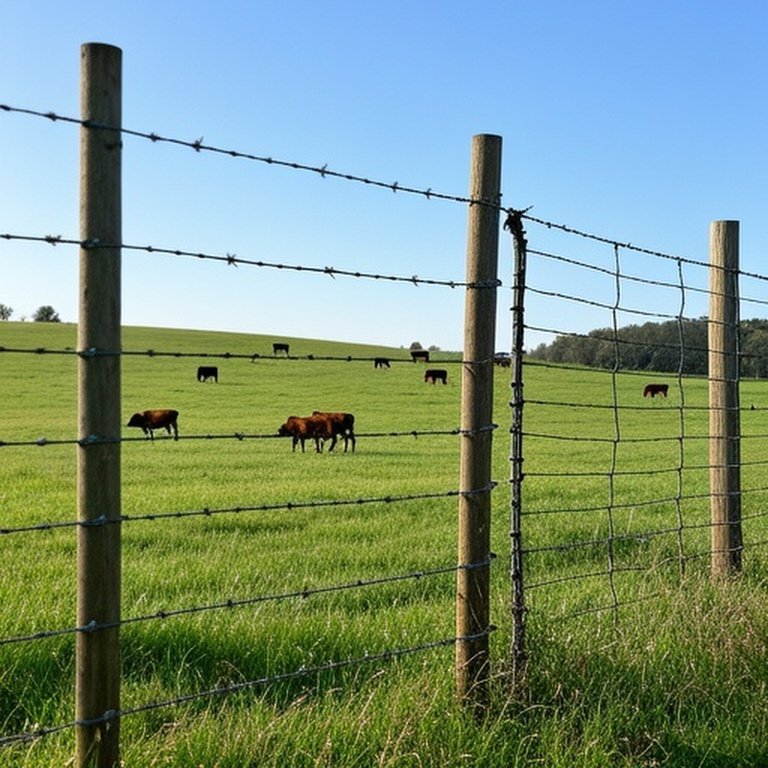
Choosing the wrong fence type can cost far more than the price difference between materials. Barbed wire and woven wire serve very different purposes, yet they’re often compared only by upfront cost. That leads to injuries, escapes, frequent repairs, and expensive retrofits.
Livestock fencing is a long-term investment. A fence that works for mature cattle may fail completely for calves or small ruminants. Understanding when barbed wire is sufficient—and when woven wire is worth the extra cost—helps you build once, avoid ongoing problems, and match fencing performance to real-world livestock behavior.
Key Factors to Consider
- Livestock type, size, and age
- Pressure level and fence respect
- Safety and injury risk tolerance
- Terrain, corners, and high-stress areas
- Long-term maintenance versus upfront cost
Detailed Explanation
Barbed wire and woven wire differ fundamentally in how they control animals. Barbed wire relies on psychological deterrence—animals learn to avoid it after contact. Woven wire relies on physical containment, preventing animals from pushing through regardless of training.
Barbed wire excels in large cattle operations with well-trained, low-pressure animals. It is inexpensive per foot, quick to install, and easy to repair. For perimeter fencing on open pasture, it often delivers the lowest cost per acre. However, it provides minimal containment for smaller animals and carries a higher injury risk, especially in tight spaces or high-pressure zones.
Woven wire creates a continuous barrier that physically blocks livestock. It is far safer for calves, sheep, goats, and horses, and it performs better where animals crowd fences, such as around feed, water, or shelter. The trade-off is cost—woven wire requires closer post spacing, heavier bracing, and more labor.
Terrain magnifies these differences. On uneven ground, woven wire must be tightly installed to avoid gaps, increasing labor costs. Barbed wire is more forgiving but less secure. Over time, maintenance also diverges: barbed wire may need frequent retightening and repair, while woven wire typically lasts longer with fewer failures if properly built.
The “better” fence isn’t universal—it’s contextual. The wrong choice can double costs over time through repairs, livestock losses, or forced upgrades.
Video Demonstration
How Cattle Behavior Affects This Choice
Cattle behavior is the single biggest factor in choosing between barbed and woven wire. Calm, trained cattle respect boundaries and apply minimal pressure, making barbed wire highly effective. These animals learn quickly and rarely test fences.
High-pressure cattle behave differently. Crowding, pushing, or competing for resources causes constant fence contact. In these situations, barbed wire stretches, posts loosen, and injuries become more common. Woven wire performs better because it resists pressure without relying on animal training.
Fence respect can be taught, but it takes time. If cattle are untrained, recently weaned, or frequently moved, woven wire reduces risk and management stress.
Calves vs Mature Cattle Considerations
Barbed wire is rarely ideal for calves. Young animals slip through strands, get caught on barbs, or push under fences unintentionally. This leads to injuries and frequent escapes that raise both veterinary and labor costs.
Woven wire is far more reliable for calves and replacement heifers. Smaller openings prevent entanglement and escape, especially when paired with a top wire or electric offset. While initial costs are higher, woven wire often saves money over time by preventing losses and repairs.
If calves will ever use the pasture, fencing should be designed for them from the start.
Terrain, Visibility, and Pressure Zones
Corners, gates, slopes, and water access points concentrate pressure. In these zones, barbed wire is more likely to fail unless heavily reinforced. Woven wire handles pressure zones better but requires proper bracing and ground contact.
Visibility also matters. Barbed wire is harder for livestock to see, increasing accidental contact. Woven wire provides clearer visual boundaries, reducing panic and collisions.
Many operations successfully mix both fence types to control cost while protecting high-risk areas.
When Barbed Wire Works Well
- Mature cattle with good fence training
- Large, low-pressure pastures
- Perimeter fencing with minimal traffic
- Flat or gently rolling terrain
- Operations prioritizing low upfront cost
When Woven Wire Is Better
- Calves, sheep, goats, or horses
- High-pressure or confined areas
- Mixed-species grazing systems
- Public-facing or safety-sensitive locations
- Properties with frequent fence contact
Alternatives or Better Options
Woven wire with a single electric offset
Improves livestock respect while reducing pressure on the mesh, extending fence life.
Barbed wire perimeter + woven wire paddocks
Balances cost by using stronger fencing only where animals are most concentrated.
High-tensile electric fencing
Often cheaper than woven wire and safer than barbed wire when livestock are properly trained.
Cost, Safety, and Practical Notes
Barbed wire usually costs less upfront, but long-term value depends on livestock suitability. Injuries, escapes, and repairs quickly erase initial savings if the fence doesn’t match animal behavior.
Woven wire costs more to install but often lowers lifetime expense through reduced maintenance, fewer injuries, and better containment. Safety considerations matter—not just for animals, but for people working around fences.
The best systems often combine materials, using each where it performs best rather than forcing one solution everywhere.
Quick Takeaway
Barbed wire is best for trained adult cattle on low-pressure land, while woven wire is better for young, small, or mixed livestock and high-pressure areas. The cheapest fence upfront is not always the most economical fence over time.