Short Answer
The best fence for snowy and heavy winter areas is a properly braced high-tensile wire or woven wire system installed below the frost line, with strong corner assemblies and wind-permeable design. These systems handle snow load, drifting, freeze–thaw movement, and livestock pressure better than rigid panel or solid board fencing.
Why This Question Matters
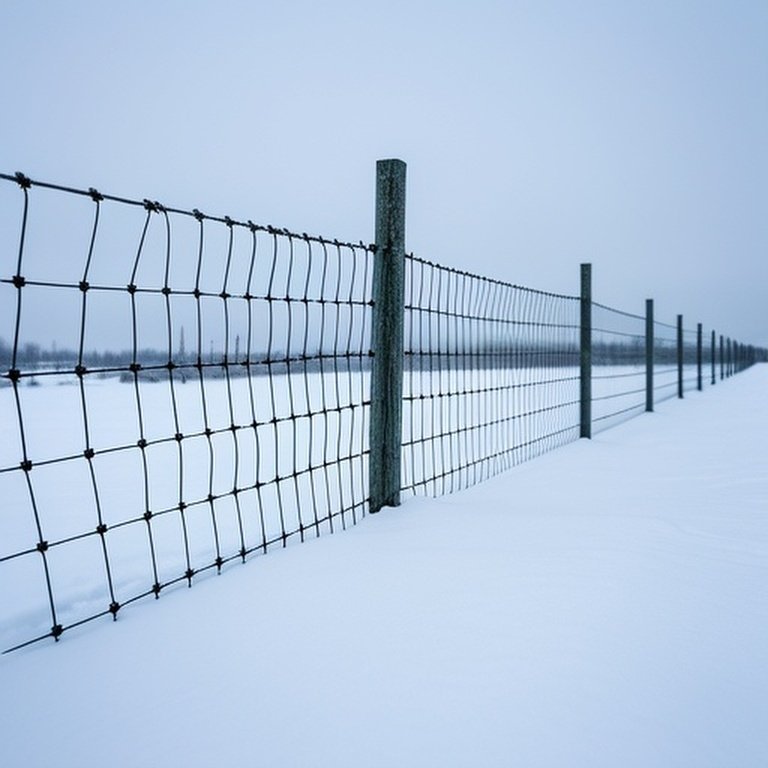
Snowy regions do not just create “cold” conditions — they create structural stress. Heavy snow adds vertical weight, drifting snow adds horizontal pressure, and repeated freeze–thaw cycles shift the ground beneath fence posts. A fence that performs well in mild climates can fail quickly under winter load. Sagging wires, leaning posts, buried bottom strands, and broken rails are common seasonal problems. If livestock rely on perimeter fencing for containment or predator protection, winter failure becomes a safety issue, not just a repair inconvenience. Choosing the right fence type from the start reduces emergency repairs, protects animals during extreme weather, and lowers long-term maintenance costs.
Key Factors to Consider
- Snow load adds downward force and wire tension imbalance
- Wind-driven drifts create uneven lateral pressure zones
- Frost heave shifts posts upward during freeze–thaw cycles
- Buried lower wires reduce effective fence height
- Livestock crowding increases structural pressure in storms
Detailed Explanation
High-tensile and woven wire systems perform best in snowy climates because they combine flexibility with structural strength. Unlike rigid panels or solid board fencing, wire systems allow wind and snow to pass through rather than acting as a solid barrier. This permeability significantly reduces lateral pressure from drifting snow. When snow accumulates against a fence, the open structure distributes load more evenly, preventing sudden structural failure.
Post installation depth is equally important. In snowy regions, frost depth often exceeds standard installation practices used in warmer areas. If posts are not set below the local frost line, expanding frozen soil can push them upward — a process known as frost heave. Once posts shift, wire tension loosens, braces weaken, and the entire fence line becomes unstable. Proper depth and reinforced corner bracing are critical to winter performance.
Rigid materials such as PVC rails or solid wooden boards tend to trap snow and absorb full wind force. Under heavy accumulation, this can lead to cracking, splitting, or total collapse. While these systems may look sturdy, they are less forgiving under dynamic winter loads. Flexible tension systems absorb movement and redistribute force rather than breaking under it.
Another critical factor is effective fence height during snow season. Drifting snow can reduce visible fence height by one to two feet in some regions. If bottom wires become buried and snow packs upward, livestock may step over or lean across the fence more easily. Designing with slightly increased height and proper wire spacing ensures the fence remains functional even when partially buried.
For snowy and heavy winter areas, the winning combination is flexibility, depth, strong bracing, and wind permeability — not rigid mass.
How Cattle Behavior Affects This Choice
In winter, cattle naturally seek shelter from wind. They tend to cluster along fence lines that provide windbreak effects, especially near tree lines or perimeter boundaries. This concentrated pressure increases stress on already snow-loaded fencing. If the structure lacks reinforced braces or sufficient tension control, sagging or post rotation becomes more likely.
Feeding areas also shift during snowy months. When hay is distributed along fence edges, animals push forward repeatedly in tight groups. In cold weather, materials are less forgiving under impact. A flexible wire system absorbs this pressure more effectively than rigid rails, reducing breakage risk during peak stress periods.
Calves vs Mature Cattle Considerations
Calves present a different challenge in snowy regions. As snow accumulates, lower wire visibility decreases, and ground contours become uneven. Calves may slip through widened spacing caused by post shift or snow compression. Ensuring proper bottom wire height and tension stability is critical for younger livestock.
Mature cattle, by contrast, exert higher impact force when startled by wind gusts or slipping on ice. A rigid fence under heavy snow load is more likely to fracture when struck. High-tensile systems provide slight give under impact, reducing the chance of catastrophic breakage during winter movement.
Terrain, Visibility, and Pressure Zones
Snow does not accumulate evenly. Wind direction, slope orientation, and natural windbreaks create pressure zones along fence lines. On downhill slopes, drifting snow may effectively lower fence height. On exposed ridges, side pressure from crosswinds increases structural strain.
Visibility also changes dramatically during snowstorms. Livestock may collide with poorly visible fencing, particularly if lower wires are buried. Designing fences with consistent height, clear line visibility, and reinforced stress points helps mitigate these seasonal risks. Evaluating terrain patterns before installation ensures winter resilience rather than reactive repair.
When This Works Well
- Posts installed below frost depth with reinforced corner bracing
- Wind-permeable woven or high-tensile wire designs
- Increased fence height to compensate for snow accumulation
- Proper tensioning systems that allow seasonal adjustment
- Gravel backfill for improved drainage and frost resistance
When It Is Not Recommended
- Solid panel fencing in high-drift, high-wind environments
- Shallow post installation in freeze-thaw soil conditions
- Decorative rail systems without structural reinforcement
- Low-tension wire systems lacking proper bracing
- Areas with extreme avalanche or snow slide risk
Alternatives or Better Options
Electric Offset with Structural Wire Base
Combining woven wire perimeter fencing with an interior electric offset reduces physical contact pressure during winter clustering. This approach increases longevity without requiring fully electric perimeter systems.
Steel T-Posts with High-Tensile Multi-Strand Layout
In open pasture environments, steel T-posts combined with multi-strand high-tensile wire provide strong wind resistance while maintaining flexibility under snow load.
Heavy-Duty Woven Wire with Tight Spacing
For operations concerned about predator access during winter, tighter woven mesh spacing maintains containment even when snow alters ground clearance.
Cost, Safety, and Practical Notes
The most significant winter fencing failures usually stem from installation shortcuts rather than material weakness. Setting posts below frost depth increases labor cost but drastically reduces long-term repair expenses. Reinforced corner braces add upfront material cost but prevent tension collapse across entire fence runs.
From a safety standpoint, sagging wires and leaning posts create hazards for both livestock and handlers. Snow-buried fencing can become nearly invisible, increasing collision risk. Proper visibility planning and seasonal inspection reduce injury likelihood.
Practically, late-fall inspection and tension adjustment are essential. Winter should not be the first time weaknesses are discovered. Planning for snow load before snowfall begins is far more cost-effective than emergency repair during freezing conditions.
Quick Takeaway
The best fence for snowy and heavy winter areas is not the thickest or most rigid — it is the one designed for movement, depth, and wind permeability. High-tensile or woven wire systems with proper bracing and frost-depth installation consistently outperform rigid panels under snow load. Design for winter stress, and maintenance becomes predictable instead of urgent.