The best fencing for a chicken run is a rigid, predator-resistant barrier that prevents digging, squeezing, and climbing rather than flight. Hardware cloth or welded wire mesh with small openings, secured tightly to posts and reinforced at ground level, provides reliable containment and predator protection for confined chicken runs.
Why This Question Matters
Chicken runs are where most predator attacks and escapes occur. Many keepers assume any wire fence is sufficient, only to lose birds to digging predators, raccoons pulling through gaps, or weak wire tearing under pressure. Others overbuild tall fences while ignoring the bottom edge, which is where most failures start. This question usually comes up after losses, when building a first run, or when upgrading from temporary fencing. Choosing the wrong fencing material leads to repeated repairs, higher long-term costs, and preventable chicken deaths.
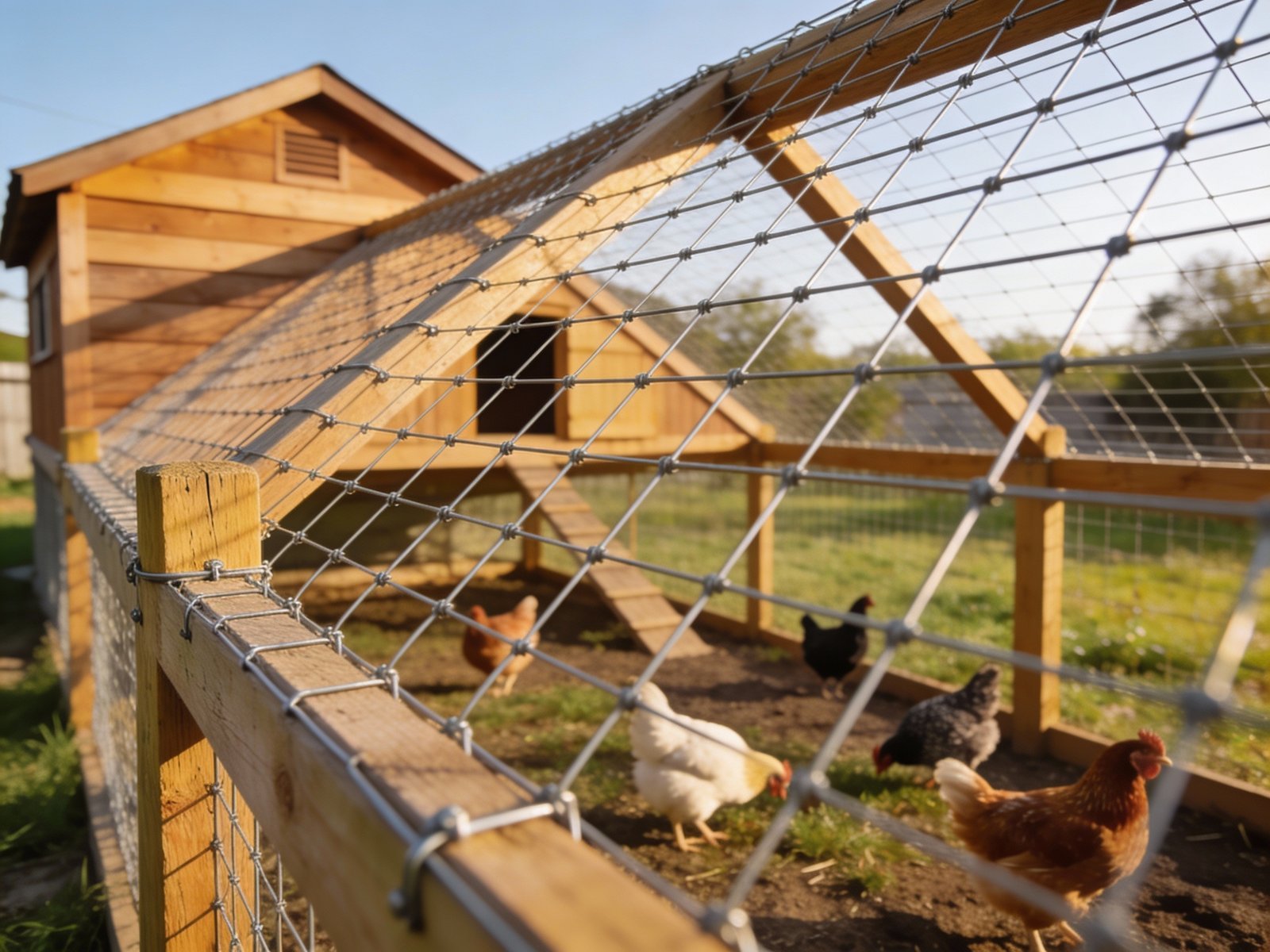
Key Factors to Consider
- Predators attack chicken runs at ground level, not from above
- Fence strength matters more than fence height in enclosed runs
- Wire opening size determines whether predators can reach through
- Bottom reinforcement prevents digging and push-under failures
- Rigid materials resist chewing, pulling, and long-term deformation
Detailed Explanation
Chicken runs create constant pressure on fencing because birds are confined in close proximity to the barrier. Unlike pasture or free-range systems, chickens repeatedly walk, scratch, and rest near the fence, which attracts predators and exposes weaknesses quickly. For this reason, the best fencing for a chicken run must be physically strong, tightly secured, and resistant to deformation.
Hardware cloth and heavy welded wire mesh outperform lighter fencing options because they maintain shape under stress. Small openings prevent predators from reaching through to grab birds or pull heads and legs against the fence. Larger openings, even when the wire itself seems strong, often fail because predators exploit reach rather than breakage.
Ground-level protection is critical. Most chicken run breaches happen when predators dig under the fence or force gaps where the wire meets the soil. Extending fencing outward along the ground or burying a portion of the mesh creates a physical barrier that stops digging attempts. This is far more effective than increasing fence height.
Fence height in runs mainly discourages climbing and jumping, not predator entry. Most runs succeed with moderate heights when the fencing is rigid and well-anchored. Flimsy or flexible fencing fails even at greater heights because it bends, stretches, or separates from posts over time.
The best chicken run fencing behaves like a wall rather than a net. It stays tight, maintains its shape, and resists both animal pressure and environmental wear. When strength, attachment, and ground protection work together, chicken runs become far more reliable and require less ongoing repair.
Hardware Cloth vs Welded Wire Mesh
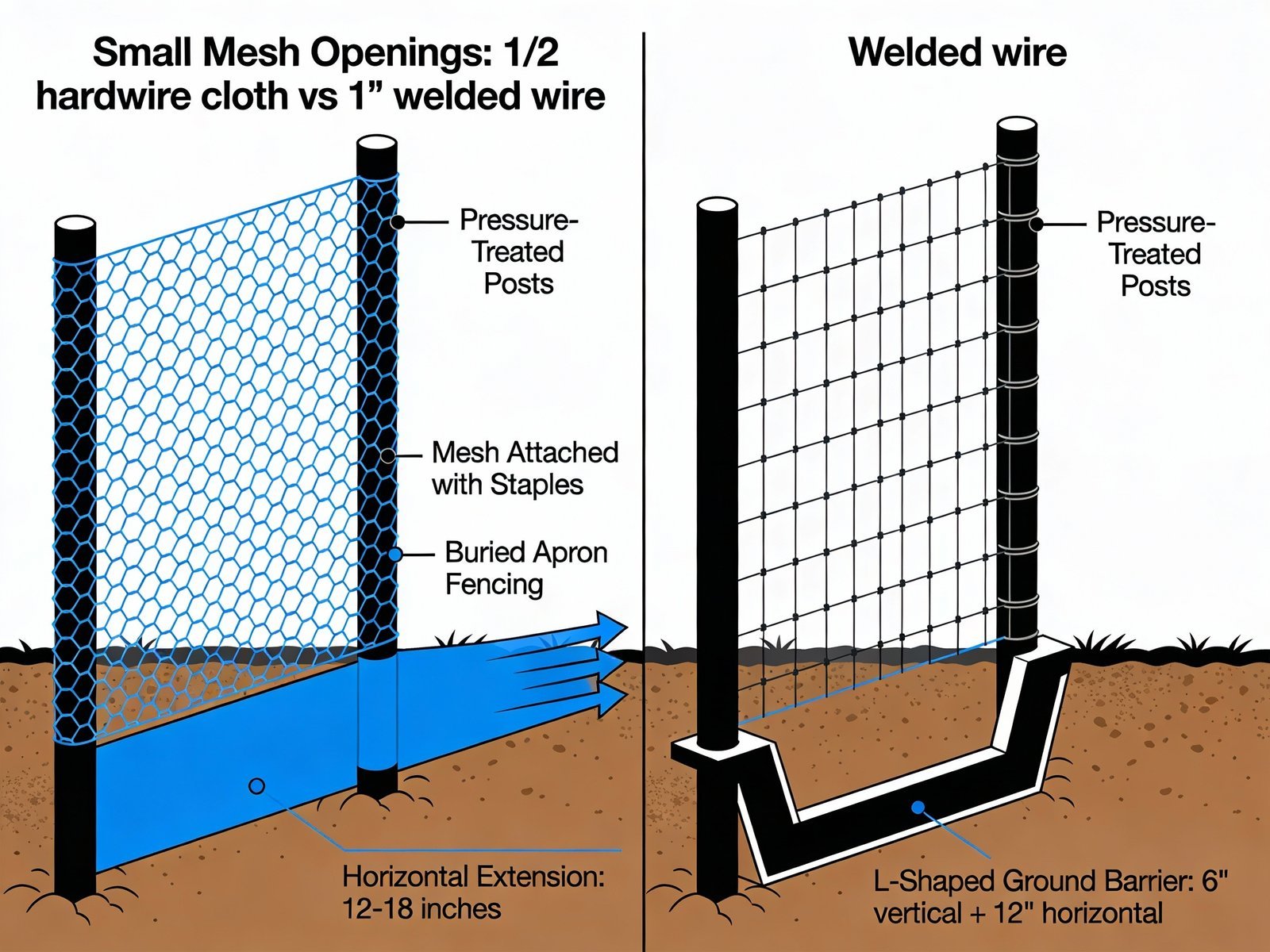
Hardware cloth offers the highest level of protection for chicken runs due to its small openings and rigid structure. It prevents predators from reaching through and resists chewing better than lighter wire. Welded wire mesh with appropriately small openings can also work well, especially for larger runs where cost becomes a factor. The key is rigidity and opening size, not the name of the material. Thin, flexible wire—regardless of height—fails under repeated pressure and should be avoided in permanent runs.
Roofed vs Open-Top Chicken Runs
Open-top runs rely entirely on side fencing and coop security, which may be sufficient in low predator-pressure areas. Roofed runs provide additional protection from climbing predators and aerial threats while reducing stress on fence walls. In roofed systems, side fencing still must be strong because predators often test walls before attempting entry from above.
When This Works Well
- Chicken runs are used daily and birds spend significant time inside
- Predator pressure includes raccoons, foxes, or dogs
- Fencing is rigid, tightly fastened, and reinforced at ground level
- The run connects directly to a secure coop
- Regular visual inspections are possible
When This Is Not Recommended
- Lightweight poultry netting is used as a permanent run wall
- Large mesh openings allow predators to reach inside
- Fence bottoms are left loose or unprotected
- The run is treated as temporary despite constant use
- Repairs are delayed after visible deformation or gaps
Alternatives or Better Options
Fully Enclosed Run Systems
Adding a solid roof and apron fencing increases cost but offers near-total predator protection.
Hybrid Run + Daytime Free Access
Strong runs combined with supervised daytime release reduce confinement stress while maintaining safety.
Portable Chicken Tractors
Movable structures limit predator exposure but require frequent relocation and close management.
Cost, Safety, and Practical Notes
The most expensive chicken run fence is one that fails repeatedly. Hardware cloth and welded wire cost more upfront than lightweight alternatives, but they drastically reduce losses and repair time. From a safety perspective, rigid fencing protects both chickens and handlers by preventing sudden breaches and panicked escapes. Practically, smaller mesh sizes increase material cost but reduce ongoing risk. Over time, strong run fencing pays for itself by lowering mortality, stress, and labor. In chicken runs, durability and ground-level protection consistently outperform height or flexibility.
This video shows real-world chicken run fencing builds, focusing on mesh choice, bottom reinforcement, and predator resistance.
Quick Takeaway
The best fencing for a chicken run is rigid, small-mesh, and reinforced at ground level—because predators defeat weak points, not height.