Short Answer
The best fencing for chickens is hardware cloth or welded wire fencing combined with predator-proof ground control. These materials stop predators from reaching through, digging under, or breaking in. Chicken wire alone is not sufficient for protection. In many setups, electric poultry netting is also highly effective for keeping both chickens in and predators out.
Why This Question Matters
This is one of the first questions new chicken keepers ask—and one of the most commonly misunderstood. Many people assume “chicken wire” is designed to protect chickens, only to learn after a loss that it keeps chickens in but does not keep predators out. Others overbuild heavy fencing without addressing ground-level entry points, leading to escapes or attacks anyway. The consequences are real: lost birds, repeated repairs, wasted money, and frustration. Because chickens attract a wide range of predators and apply very little pressure to fences themselves, choosing the wrong fencing type almost always fails on the predator side, not the chicken side. Getting this decision right early prevents avoidable losses and rebuilds.
Key Factors to Consider
- Predators attack fences more aggressively than chickens test them
- Fence strength at ground level matters more than fence height
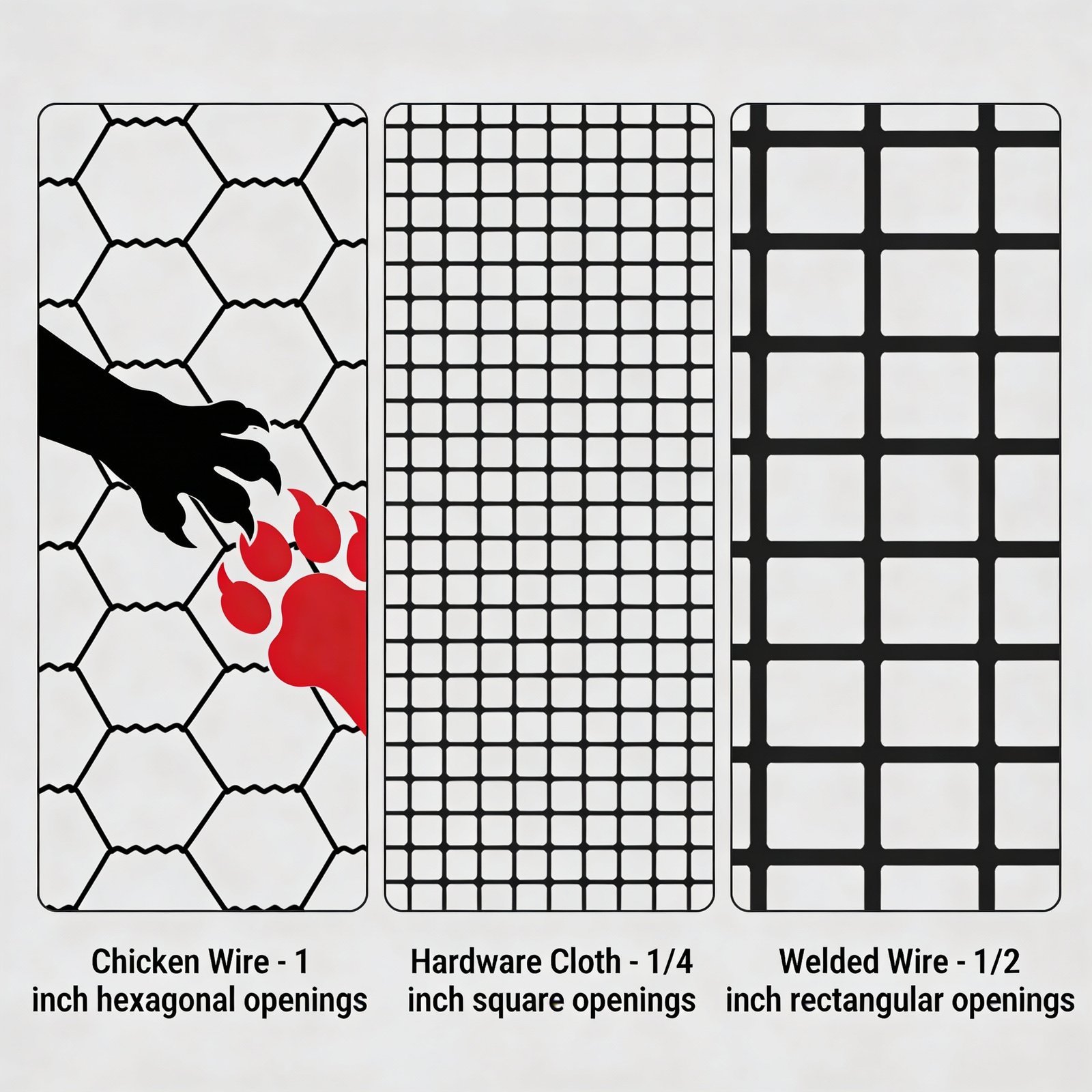
- Mesh opening size determines whether predators can reach through
- Permanent runs and movable pasture systems need different fencing styles
- Maintenance effort varies widely by fencing material and layout
Detailed Explanation
The reason certain fencing types work better for chickens has little to do with the birds themselves and almost everything to do with predator behavior. Chickens rarely push, climb, or challenge fences, but raccoons, foxes, dogs, snakes, and even rats actively test fencing for weak points. They pull at wire, reach through openings, dig under edges, and exploit gaps that develop over time. This means the “best” chicken fencing is defined by how it handles predators, not how well it contains poultry.
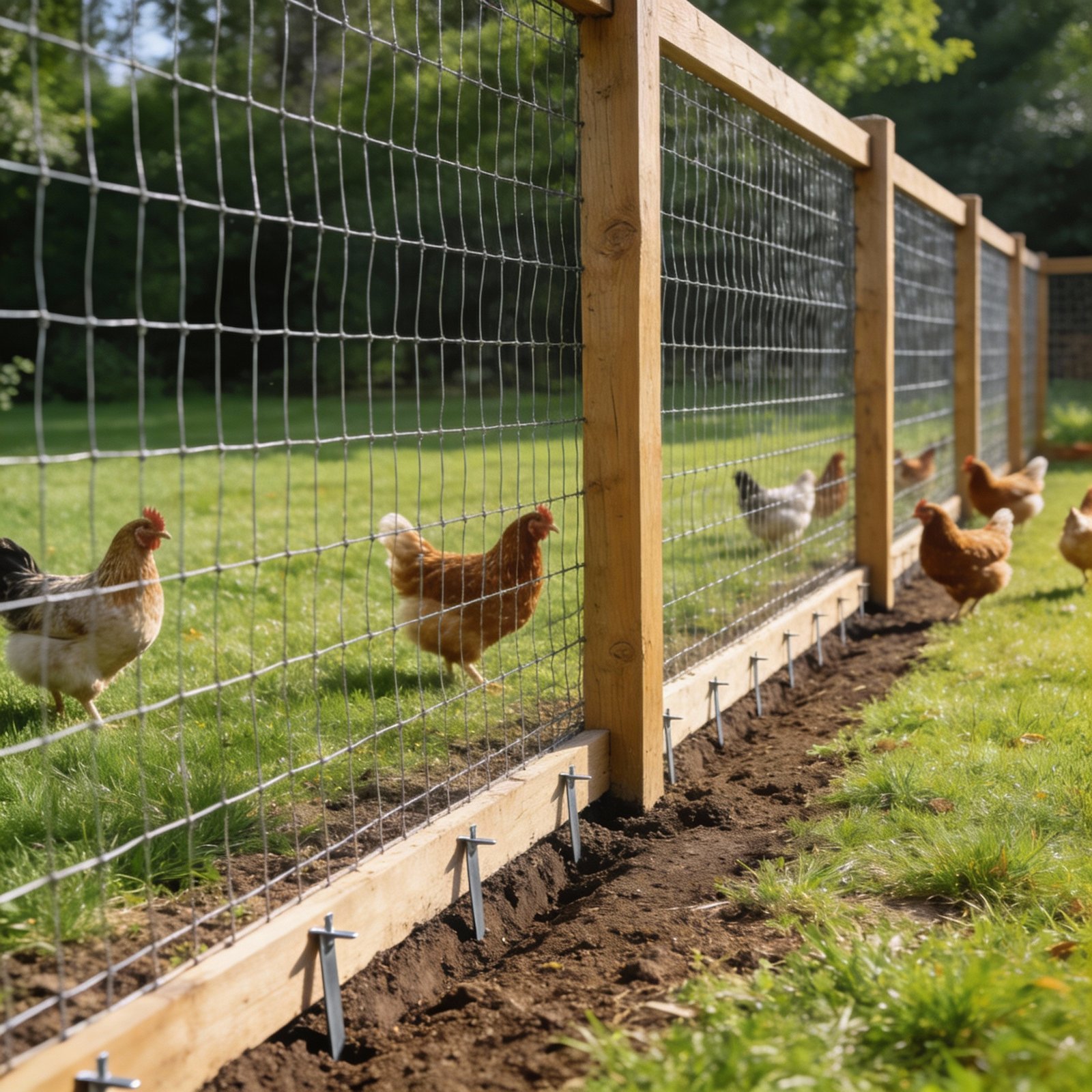
Hardware cloth and welded wire fencing perform best because their small openings prevent predators from reaching through and grabbing birds. Unlike chicken wire, which is thin and flexible, these materials resist tearing, bending, and chewing. When installed with tight ground contact or a buried or pinned bottom edge, they also stop digging attempts. This makes them ideal for permanent chicken runs, coop enclosures, and areas where chickens spend the night.
Electric poultry netting is another top-performing option, especially for free-range or pasture-raised chickens. Instead of relying on physical strength, it creates a psychological barrier that predators learn to avoid after one contact. Because the shock occurs before predators apply force, it dramatically reduces fence testing. While it requires power and vegetation control, electric netting is one of the most effective all-in-one solutions for mobile systems.
Chicken wire still has a place, but only as a containment layer for chickens—not as predator protection. Using it alone is the most common fencing mistake and the reason this question matters so much.
Practical Extensions
Permanent Chicken Runs vs Pasture Systems
For fixed chicken runs, rigid fencing materials perform best because they can be secured tightly to posts and the ground. Hardware cloth or welded wire creates a stable enclosure that resists long-term predator pressure. In pasture systems where chickens are moved frequently, portability matters more. Electric poultry netting excels here because it balances predator deterrence with flexibility, allowing quick relocation without rebuilding fence lines.
Predator Pressure and Location
In areas with heavy raccoon, fox, or dog activity, fencing choice becomes critical. Larger mesh sizes or flexible materials fail faster under repeated attacks. Smaller openings and electrified barriers reduce predator persistence dramatically. In low-pressure environments, simpler systems may work—but fencing should always be chosen for worst-case scenarios, not ideal days.
Ground Contact and Bottom Protection
No fencing type works well if predators can dig underneath it. The best systems combine appropriate materials with ground-level reinforcement such as buried wire, pinned mesh, apron skirts, or low electric strands. Many fencing failures blamed on “weak wire” are actually bottom-edge failures.
When This Works Well
- Hardware cloth or welded wire is installed with tight ground contact
- Electric poultry netting is kept energized and vegetation-free
- Fence openings are small enough to prevent reach-through attacks
- Predator pressure is considered during initial fence design
- Regular inspections catch gaps before predators exploit them
When This Is Not Recommended
- Chicken wire is used as the only predator barrier
- Large mesh fencing allows predators to reach through
- Fence bottoms are left loose or exposed to digging
- Electric fencing is installed without consistent power
- Maintenance is ignored after weather or seasonal changes
Alternatives or Better Options
Electric Poultry Netting
Ideal for pasture-raised chickens and rotational systems. It provides strong predator deterrence with minimal physical material, reducing long-term damage and testing behavior.
Hybrid Systems
A physical fence for structure combined with one or two low electric wires increases reliability without rebuilding the entire enclosure.
Fully Enclosed Runs with Roof Netting
Best for high-predator areas or backyard flocks where losses are unacceptable. This adds cost but provides the highest security level.
Cost, Safety, and Practical Notes
The most expensive chicken fence is usually the one built twice. Chicken wire appears cheap upfront but often leads to bird losses that far outweigh savings. Hardware cloth and welded wire cost more initially but last longer and prevent repeated predator damage. Electric poultry netting sits in the middle: moderate upfront cost, high effectiveness, and lower physical wear. From a safety standpoint, electric fencing is safe for chickens when properly installed and is often safer than rigid fencing that predators can partially breach. Choosing fencing based on predator control rather than bird containment consistently delivers better long-term results.
This video shows how the fencing types discussed above are installed and function in real chicken setups.
Quick Takeaway
The best fencing for chickens is defined by predator resistance, not chicken behavior. Strong mesh or electric deterrence at ground level matters more than fence height or appearance.