Short Answer
In high-wind areas, the best fencing systems are wind-permeable designs such as high-tensile wire or woven wire with reinforced brace assemblies and deep-set posts. Solid panel or board fencing performs poorly under sustained wind load because it acts like a sail, increasing structural stress and failure risk.
Why This Question Matters
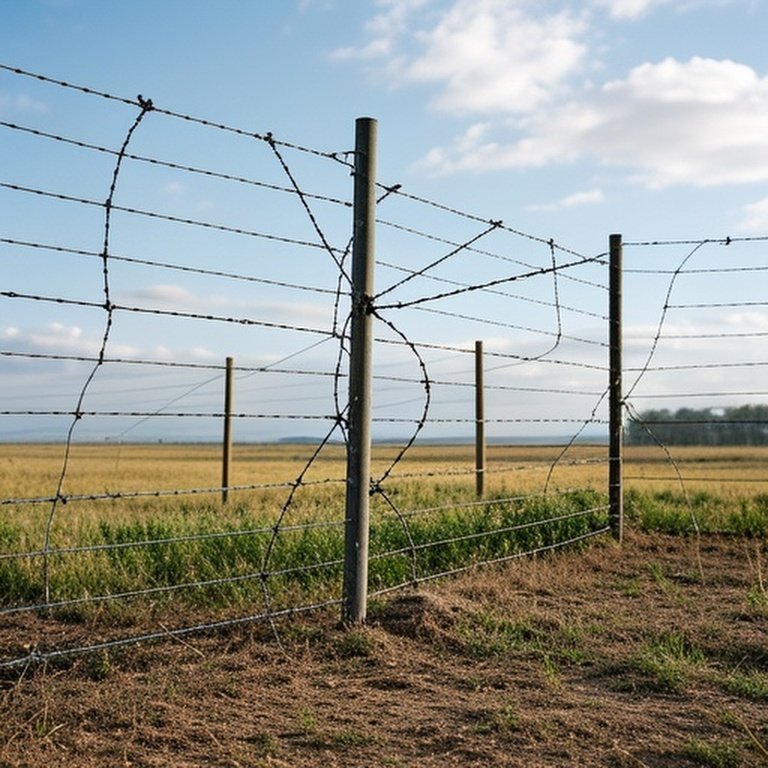
Wind is not just a surface force — it creates continuous lateral pressure that compounds over time. In open pasture, ridge lines, and plains regions, sustained wind speeds and gust events can weaken fence posts, loosen wire tension, and collapse poorly braced sections. Unlike snow or cold, wind applies repeated horizontal force along the entire fence line. If fencing materials block airflow, pressure builds across the surface, amplifying strain on posts and corners. Failures in high-wind areas are often sudden and widespread, especially after storms. Choosing a wind-adapted fence system prevents structural fatigue, reduces maintenance, and protects livestock containment during extreme weather events.
Key Factors to Consider
- Wind-permeable design reduces lateral pressure buildup
- Deep-set posts increase resistance against rotational force
- Reinforced corner bracing stabilizes tension systems
- Flexible materials absorb gust impact better than rigid panels
- Terrain exposure significantly increases wind load intensity
Detailed Explanation
Wind exerts horizontal force that increases exponentially with speed. In open environments, fences experience both sustained pressure and sudden gust impact. Solid fencing materials such as wooden privacy boards, PVC panels, or sheet metal block airflow entirely. This creates a “sail effect,” where wind force transfers directly to posts and brace assemblies. Over time, this repeated stress loosens soil anchoring and can cause posts to lean or snap at ground level.
Wind-permeable fencing, such as woven wire or multi-strand high-tensile systems, allows air to pass through. Instead of absorbing full wind pressure, these designs distribute force along the wire structure while minimizing drag. Because the surface area is reduced, the total lateral load on posts decreases significantly. This is why agricultural fencing systems typically outperform decorative or privacy fencing in exposed environments.
Post depth and anchoring method also play a critical role. Wind does not simply push sideways — it creates rotational torque at ground level. Shallow posts are especially vulnerable to gradual leaning. Installing posts deeper than standard depth recommendations improves resistance to rotational force. Reinforced corner bracing, such as H-brace assemblies, prevents tension collapse when wind load increases wire strain across long runs.
Flexibility is another key factor. High-tensile wire systems have slight elasticity under gust impact. Instead of cracking, they absorb and redistribute energy. Rigid rails, in contrast, transfer force directly to connection points, increasing breakage risk. In high-wind areas, the goal is not to resist all movement — it is to allow controlled movement without structural failure.
How Cattle Behavior Affects This Choice
High winds influence livestock behavior. Cattle often seek windbreaks along fence lines, especially when natural shelter is limited. This creates additional localized pressure on already wind-stressed sections. If fencing is rigid or poorly braced, the combined force of wind and livestock leaning can accelerate failure.
Wind noise can also startle animals, increasing collision risk during gust events. Flexible fencing systems tolerate brief impacts better than rigid panels. Designing for wind resilience means anticipating both environmental pressure and livestock response.
Calves vs Mature Cattle Considerations
Calves are more sensitive to wind exposure and may cluster tightly against fence lines for shelter. If wind pressure has already loosened posts, this additional contact may widen gaps near ground level. Proper tension and consistent spacing reduce escape risk.
Mature cattle exert greater force when leaning or pushing against fencing during storms. A wind-permeable high-tensile system combined with strong bracing prevents tension loss under these combined stresses. Structural integrity must account for both wind load and animal weight.
Terrain, Visibility, and Pressure Zones
Wind intensity varies significantly depending on terrain. Ridge tops, open plains, and unobstructed pastures experience higher sustained speeds. Valleys may experience turbulent gust patterns that create uneven pressure along fence lines.
Pressure zones often develop at corners and gate openings where wind direction changes. These areas require stronger bracing and deeper post installation. Evaluating prevailing wind direction before installation improves long-term durability and reduces storm damage.
When This Works Well
- Open pasture environments with consistent wind exposure
- Deep-set posts below stable soil layers
- Reinforced H-brace corner systems
- High-tensile or woven wire with proper tension control
- Regular seasonal inspection after major storms
When It Is Not Recommended
- Solid privacy panel fencing in exposed plains
- Shallow post installations in sandy or loose soil
- Decorative rail systems without cross-bracing
- Long unsupported fence spans without intermediate posts
- Coastal zones with combined wind and salt corrosion risk
Alternatives or Better Options
Electric Offset with Structural Base Fence
Installing a woven wire base with interior electric offset reduces physical livestock pressure during high-wind clustering while maintaining wind permeability.
Steel T-Posts with Multi-Strand High-Tensile Layout
Driven steel posts combined with multi-strand wire perform well in open plains where soil stability allows deep anchoring.
Windbreak Integration with Fence Planning
Strategically planting windbreak rows or installing semi-permeable barriers reduces overall wind load before it reaches fencing systems.
Cost, Safety, and Practical Notes
Wind-adapted fencing often costs less than repeated storm repairs. High-tensile systems typically require lower material mass but demand proper installation technique. The most expensive failures occur at corners and gate posts where bracing was insufficient.
From a safety perspective, wind-damaged fencing creates unpredictable weak points. Leaning posts and loose wires increase entanglement risk. Storm inspections are essential, especially after extreme gust events.
Practically, designing for wind is about airflow management rather than resistance. Allowing wind to pass through reduces long-term structural fatigue. Investing in deeper posts and reinforced braces during installation prevents large-scale fence collapse later.
Quick Takeaway
The best fencing for high-wind areas is wind-permeable, deeply anchored, and properly braced. High-tensile and woven wire systems outperform solid panels because they reduce lateral pressure instead of fighting it. In windy environments, flexibility and depth prevent failure — rigidity invites it.