Short Answer
The most effective fencing for keeping predators out of livestock areas is a properly installed electric fence with multiple energized wires and adequate grounding. When designed with correct wire spacing, voltage, and maintenance, electric fencing creates both a physical and psychological barrier that deters most predators before they attempt to breach the enclosure.
Why This Question Matters
Predator pressure is one of the most common and costly risks faced by livestock owners, especially in rural and mixed-use landscapes. Many losses happen not because fencing is absent, but because the wrong type of fence was chosen or installed incorrectly. A fence that looks strong to humans may be meaningless to predators that dig, climb, or test boundaries repeatedly. Misjudging this can lead to livestock injuries, repeated night losses, stress-induced weight loss, and escalating predator behavior over time. This question reflects a real decision point where the wrong answer can compound costs month after month, while the right answer can quietly prevent problems before they start.
Key Factors to Consider
- Predator species present and their climbing, digging, or jumping behavior
- Fence height, wire spacing, and ability to prevent nose or paw contact
- Power reliability, grounding quality, and vegetation interference
- Livestock type, size, and tolerance for electric fencing
- Terrain features that create pressure points or weak fence sections
Detailed Explanation
Electric fencing works better than most physical barriers because it stops predators at the decision stage, not the breach stage. Predators such as coyotes, wolves, dogs, and foxes rely on repeated probing behavior: they test fences with their nose or mouth before committing. A properly powered electric fence delivers an immediate negative reinforcement that conditions the animal to avoid the area entirely. This psychological deterrence is more effective long-term than relying on height or wire thickness alone.
In contrast, non-electric fences depend on constant physical resistance. Woven wire, field fence, or welded panels can slow predators, but once an animal learns where to dig, climb, or push, the fence becomes a solvable problem. Repairs then become reactive instead of preventative. Electric fencing shifts the balance by making every point of contact a potential deterrent, even at ground level, where most breaches occur.
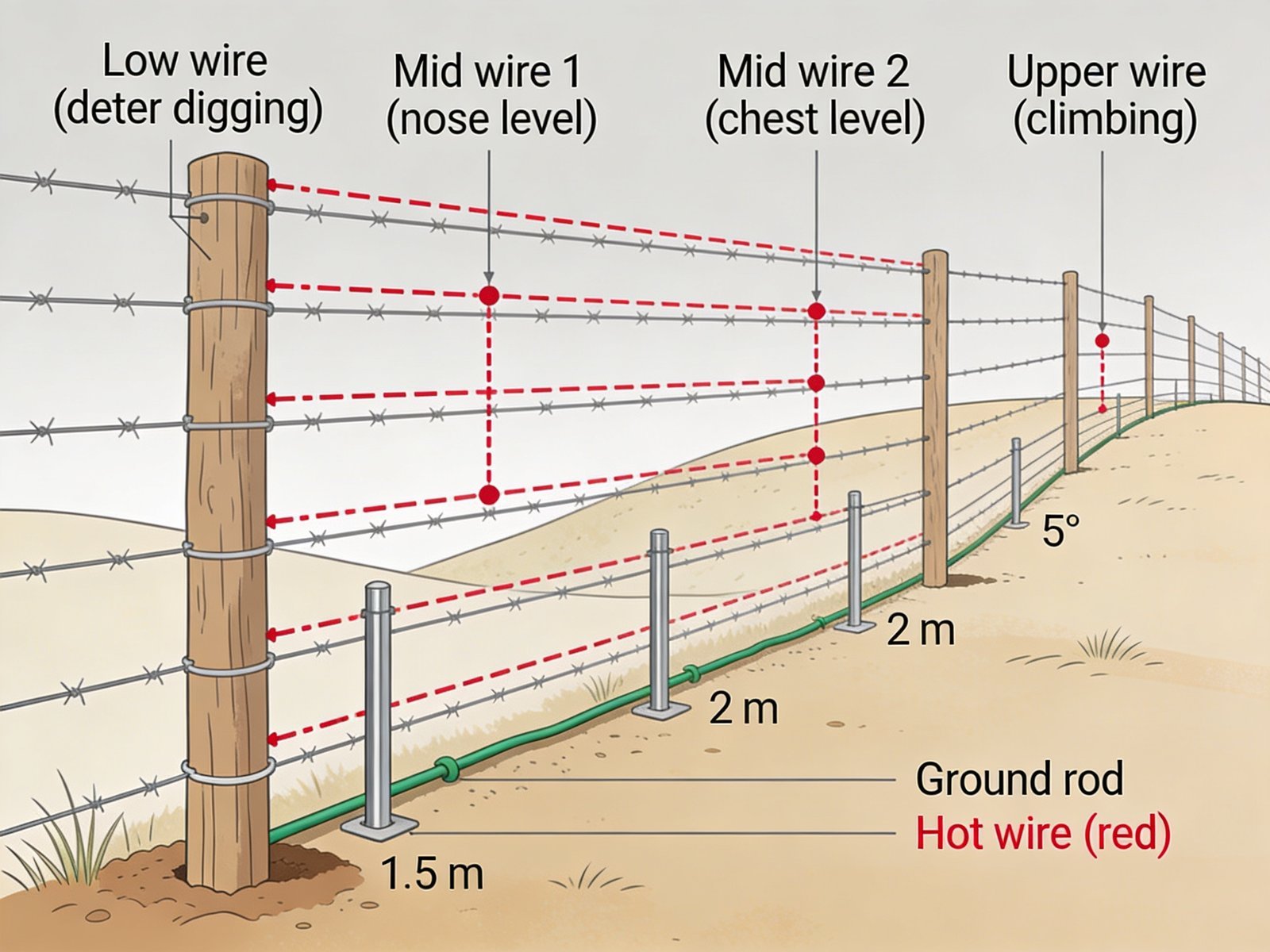
The effectiveness of electric fencing is not about extreme voltage but consistency. Multiple hot wires placed at predator nose height, combined with solid grounding, ensure that even cautious animals receive a memorable shock. When predators encounter this barrier early—before livestock scent or visual access—they are far less likely to escalate attempts. Over time, this reduces repeated pressure, not just single incidents.
Importantly, electric fencing scales across environments and budgets. It can be layered onto existing physical fences, adapted to uneven terrain, and adjusted as predator behavior changes. This flexibility, combined with its deterrent effect, is why it consistently outperforms purely physical fencing for predator exclusion when installed and maintained correctly.
Understanding Predator Deterrence
How Fence Structure Affects Predator Behavior
Predators do not attack fences randomly; they probe for weaknesses at predictable locations. Corners, low spots, gates, and areas with vegetation contact receive the most testing. Electric fencing is effective because it can be configured to protect these pressure zones directly. Lower wires discourage digging, while mid-level wires stop nose and chest contact during climbing attempts. The goal is not to block every possible entry with mass, but to ensure that the first physical interaction produces an aversive response. When this happens consistently, predators redirect their efforts elsewhere rather than learning fence-defeat strategies.
Livestock Type and Electric Fence Compatibility
Most grazing livestock adapt quickly to electric fencing, but compatibility matters. Cattle, sheep, and goats respond well when the fence is clearly visible and consistently powered. Poultry and young animals may require tighter spacing or additional visual cues. The fence must be designed so livestock respect it without panic, while predators experience it as unpredictable and unpleasant. When livestock regularly challenge the fence due to hunger, crowding, or stress, maintenance issues increase, indirectly weakening predator deterrence. Fence design should always reflect animal behavior on both sides of the barrier.
Terrain, Visibility, and Maintenance Pressure
Electric fencing performs best when visibility and access for maintenance are accounted for. Steep slopes, rocky soil, and dense vegetation increase grounding and line-contact challenges. In these environments, additional ground rods and regular trimming are not optional—they are part of the fence’s effectiveness. A fence that loses voltage due to weeds or poor grounding may still look intact while offering little real deterrence. Long-term success depends on treating maintenance as part of the system, not an afterthought.
When This Works Well
- Areas with coyotes, foxes, feral dogs, or mixed predator pressure
- Farms needing flexible layouts or seasonal livestock rotation
- Properties where predators probe repeatedly but avoid injury
- Situations combining electric wire with existing physical fencing
When This Is Not Recommended
- Locations without reliable power or ability to maintain grounding
- Operations unable to perform routine vegetation control
- Situations requiring zero animal contact, such as public boundaries
- Environments with constant flooding that disrupts fence integrity
Alternatives or Better Options
Electric Fence + Woven Wire Hybrid
Combining a physical fence with offset electric wires provides redundancy. The woven wire stops accidental livestock pressure, while electric strands prevent climbing and digging. This is common in high-pressure predator zones.
High-Tensile Non-Electric Fencing
In areas with minimal predator learning behavior, tall high-tensile fences can work. However, once predators adapt, effectiveness drops without electrification.
Temporary Electric Netting
Useful for poultry or rotational grazing, electric netting offers fast deployment but requires more frequent inspection and is less durable long-term.
Cost, Safety, and Practical Notes
Electric fencing is usually the lowest cost per protected acre, but only when installed correctly. Most failures come from underpowered energizers, poor grounding, or neglected vegetation. Safety considerations include proper signage, especially near public access, and training livestock to respect the fence before full deployment. From a practical standpoint, the fence should be viewed as an active system, not static infrastructure. Regular voltage checks and seasonal adjustments are what separate effective predator deterrence from expensive wire decoration.
Quick Takeaway
If predators can test your fence without consequence, they will eventually defeat it. Electric fencing works because it teaches them not to try.